


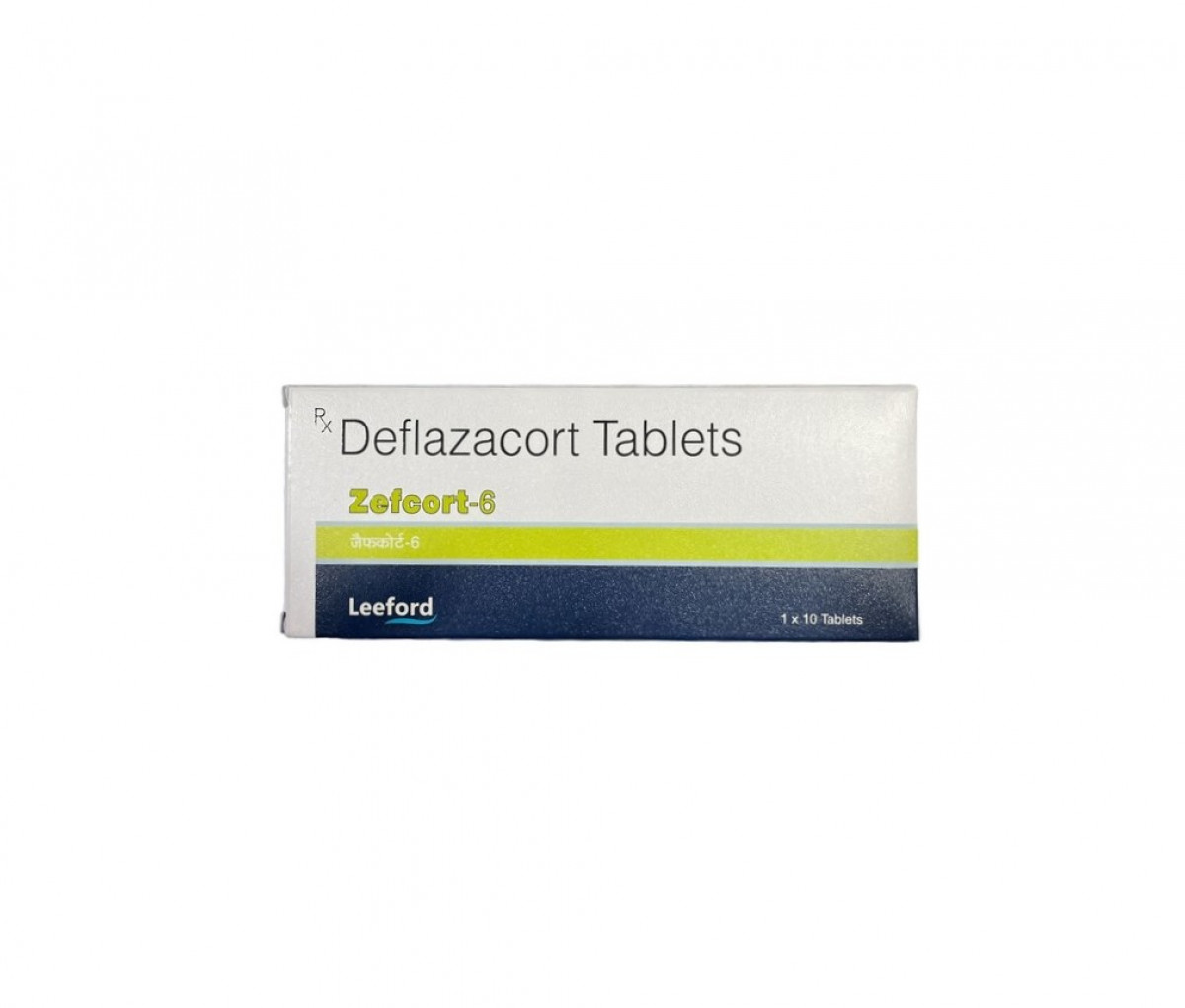
ZEFCORT-6 TABLET
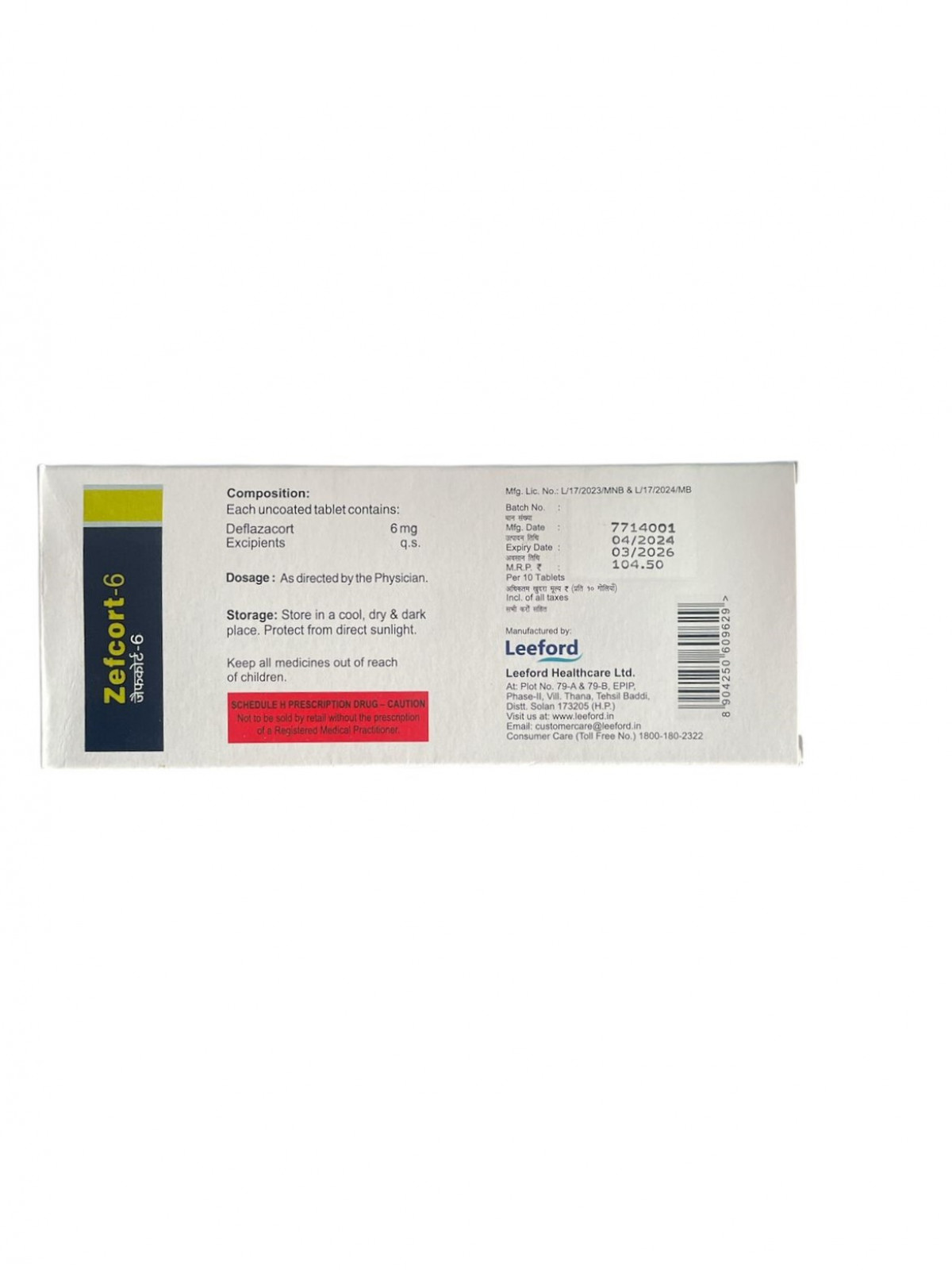
Manufactured By Leeford Healthcare
Composition Deflazacort 6 mg (Strip)
Rs 51.20
MRP Rs 104.50
(51% OFF)
Includes all taxes
Package SIZE
( 1x10 TABLETS )

100% Authentic
Products

Free
Shipping*

Products
Return Policy
Description:
Pregnancy interaction
- Be careful when using. Most people think that deflazacort is fairly safe, but you shouldn't use it unless you have to.
- Long-term or high-dose steroid usage during pregnancy might cause the baby to be born with a low birth weight, slow growth, or problems with the fetal adrenal glands.
- Should only be used with close medical supervision.
- Tell your doctor if you want to get pregnant, are pregnant, or are breastfeeding.
FAQs for Medicine?
Q1. What does Zefcort-6 do?
It is used to treat asthma, allergies, arthritis, autoimmune diseases, skin problems, and some respiratory issues.
Q2. Is Zefcort-6 a kind of steroid?
Yes. It has deflazacort, which is a type of corticosteroid.
Q3. Is it okay to take Zefcort-6 every day?
Only if a doctor says so. Long-term steroid use needs a doctor to keep an eye on it.
Q4: Does it make you gain weight?
It may make you hungrier, make you gain weight, and make you hold onto water, especially if you use it for a long time.
Q5: How long does it take to work?
It normally starts functioning in one to three hours, but it may take one to three days to get all the effects.
Q6. Is it possible for me to end it all at once?
No. Stopping quickly can lead to adrenal insufficiency. It is important to slowly lower the dose with the direction of a doctor.
Expert advice
- Take the drug every day at the same time, preferably in the morning, to help with insomnia.
- Don't stop suddenly; you need to taper off.
- Long-term use may necessitate keeping a check on your blood sugar, blood pressure, body weight, bone density, and ocular pressure.
- To lessen adverse effects, including edema and elevated sugar, eat a diet limited in salt and sugar.
- Stay away from people who have infections (such as the flu or chickenpox) because steroids lower your immune system.
- Tell your doctor before you get any shots, have surgery, or go to the dentist.
- People with diabetes, high blood pressure, osteoporosis, kidney disease, cataracts, or glaucoma should be especially careful when using this.
Side Effects
- More hunger
- Gaining weight
- Changes in mood (such being irritable or anxious)
- Upset stomach, acidity
- Pain in the head
- Not being able to sleep
- Face or leg swelling
- Higher blood sugar
- Weakness
- Side Effects Over Time and in Large Doses
- Osteoporosis
- Eye issues (glaucoma, cataract)
- Skin that is thin and bruises easily
- Higher chance of getting sick
- Weakness in the muscles
- High blood pressure
- If you have severe infection symptoms, changes in your eyesight, edema, or allergic reactions, you should see a doctor.
How it works
- Deflazacort is a kind of corticosteroid that operates by:
- Lessening inflammation
- Putting a stop to immunological reactions that are too strong
- Lessening pain, edema, and redness
- Works well to manage autoimmune and inflammatory illnesses with fewer adverse effects than previous steroids.
Medicine interaction
- NSAIDs (such as ibuprofen and diclofenac) raise the risk of stomach ulcers.
- Steroids can boost blood sugar, which is bad for those with diabetes.
- Antifungals like ketoconazole and itraconazole may raise steroid levels.
- Blood thinners (Warfarin) may change INR
- Live vaccines—don't take them when you're on steroids
- Antibiotics like rifampicin may make it less effective.
- Anti-seizure medicines like phenytoin and carbamazepine may lower the levels of steroids.
- Always tell your doctor about all the medicines you use.
How to Use
- Take as directed by your doctor, usually once a day.
- Take it in the morning if you can.
- Taking it with food can help ease gastrointestinal distress.
- Do not crush; just swallow whole with water.
- If you forget to take a dose, do it as soon as you can unless it's almost time for the next one.
- Don't take two doses.
Uses/indications
- Allergic conditions (allergic rhinitis, urticaria)
- Asthma and COPD attacks
- Arthritis and inflammation of the joints
- Diseases that attack the immune system
- Skin conditions (eczema, psoriasis)
- Nephrotic syndrome
- Bowel illness that causes inflammation
- Pain in the muscles and joints with swelling
- Some blood problems
- Help with organ transplants (with a doctor)