


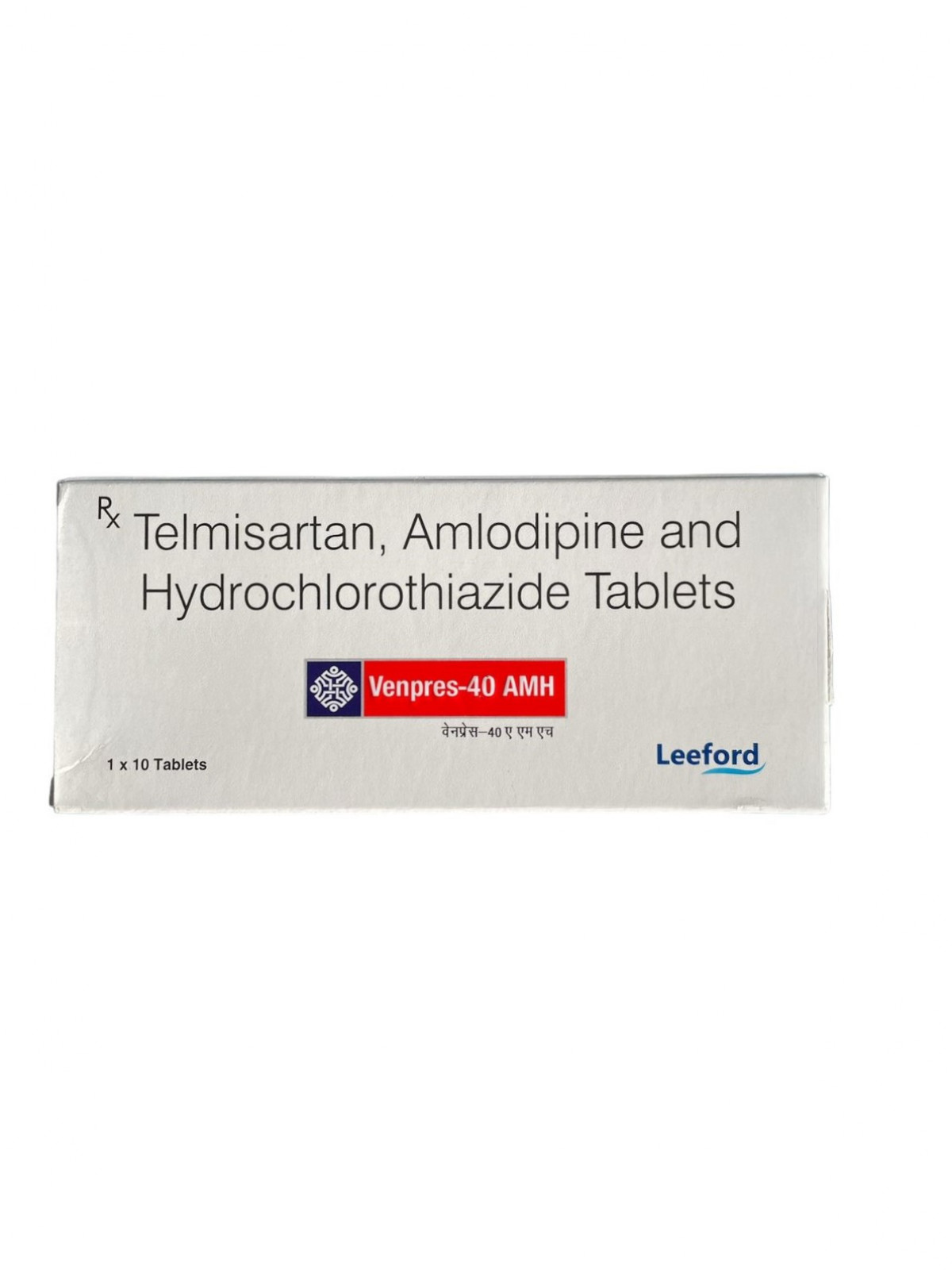
VENPRES-40 AMH TABLET
Manufactured By Leeford Healthcare
Composition Telmisartan 40 mg, Amlodipine Besylate eq. to Amlodipine 5 mg & Hydrochlorothiazide 12.5 mg (Alu-Alu)
Rs 53.76
MRP Rs 93.20
(42.32% OFF)
Includes all taxes
Package SIZE
( 1x10 TABLETS )

100% Authentic
Products

Free
Shipping*

Products
Return Policy
Description:
Pregnancy interaction
- Telmisartan makes it very dangerous to be pregnant, especially in the second and third trimesters.
- Can hurt the kidneys of the fetus, lower the amount of amniotic fluid, slow the growth of the fetus, induce skull problems, or even kill the fetus.
- Hydrochlorothiazide can induce jaundice in newborns, low salt levels, and problems with blood sugar.
- Should not be used by women who are pregnant or who want to get pregnant.
- Under a doctor's advice, switch to safer options like labetalol or methyldopa.
FAQs for Medicine?
Q1. What is the purpose of VENPRES-40 AMH?
For treating high blood pressure that is moderate to severe, especially when two drugs don't work.
Q2. Is it a drug that you take once a day?
Yes. It controls blood pressure all day, every day.
Q3. Does it make you pee a lot?
Yes, because hydrochlorothiazide is a diuretic.
Q4. When will BP start to go down?
The first effect starts in 3 to 6 hours, and the entire effect happens in 2 to 4 weeks.
Q5. Can VENPRES-40 AMH make your ankles swell?
Yes, because of amlodipine. HCTZ helps stop fluid retention, which may lower frequency.
Q6. Can I drink while taking it?
Drinking alcohol may make you feel more dizzy and reduce your blood pressure.
Expert advice
- Every day, take the tablet at the same time.
- Don't eat too much salt, processed meals, or potassium-rich salt substitutes.
- Drink enough water, but don't get dehydrated.
- Check your blood pressure and renal function often.
- Tell your doctor if you keep getting dizzy, have weak muscles, or have swelling.
- Don't use NSAIDs (like ibuprofen or diclofenac) unless your doctor tells you to.
- Get up carefully from a sitting or sleeping position to avoid getting dizzy.
- HCTZ may make you more sensitive to the sun, so stay out of the sun.
Side effects
Common:
- Dizzy
- Pain in the head
- Going to the bathroom often
- Swelling in the ankle
- Low blood pressure
- Cramps in the muscles
- Weakness
- Mouth that is dry
Not as Common:
- Telmisartan has a lot of potassium.
- Low potassium or low sodium (HCTZ)
- Palpitations
- Feeling sick
- Not being able to poop
Very serious (rare):
- Very dry skin
- Worsening kidney function
- Very bad allergic reaction
- Very low blood pressure
- Get medical attention right away if you have serious side effects.
How It Works
- Telmisartan stops angiotensin-II from working, which relaxes blood vessels and reduces blood pressure.
- Amlodipine relaxes the muscles in the arteries and makes blood flow better.
- HCTZ makes you pee more, which lowers your blood volume and blood pressure.
- This three-drug combination works well to lower blood pressure, especially in people with resistant hypertension.
Medicine interaction
- Potassium-sparing diuretics (such as spironolactone and eplerenone) can raise potassium levels.
- ACE inhibitors and other ARBs can cause problems with the kidneys and elevated potassium levels.
- Lithium makes things more hazardous
- NSAIDs (ibuprofen, diclofenac) can lower blood pressure and cause renal problems.
- Other BP drugs can make your blood pressure too low.
- Alcohol makes dizziness worse.
- Antidiabetic drugs like HCTZ may make it harder to control blood sugar.
- Corticosteroids may reduce potassium levels.
- Digitalis (Digoxin)—an imbalance of electrolytes makes it more hazardous
Food Interaction:
- Grapefruit juice might make amlodipine levels go up.
- Eat a balanced diet that has enough electrolytes.
How to Use
- Take one pill every day with water.
- You can take it with or without food.
- Do not crumble or chew; just swallow.
- Take the dose you missed as soon as you can, unless it's close to the next one.
- Don't take twice as much.
- Check your blood pressure often.
Uses/indications
- Hypertension (High Blood Pressure)
- Resistant hypertension necessitating triple therapy
- Patients needing strict BP control because of the danger of:
- Heart attack
- Stroke
- Problems with the kidneys
- Progression of cardiovascular disease