


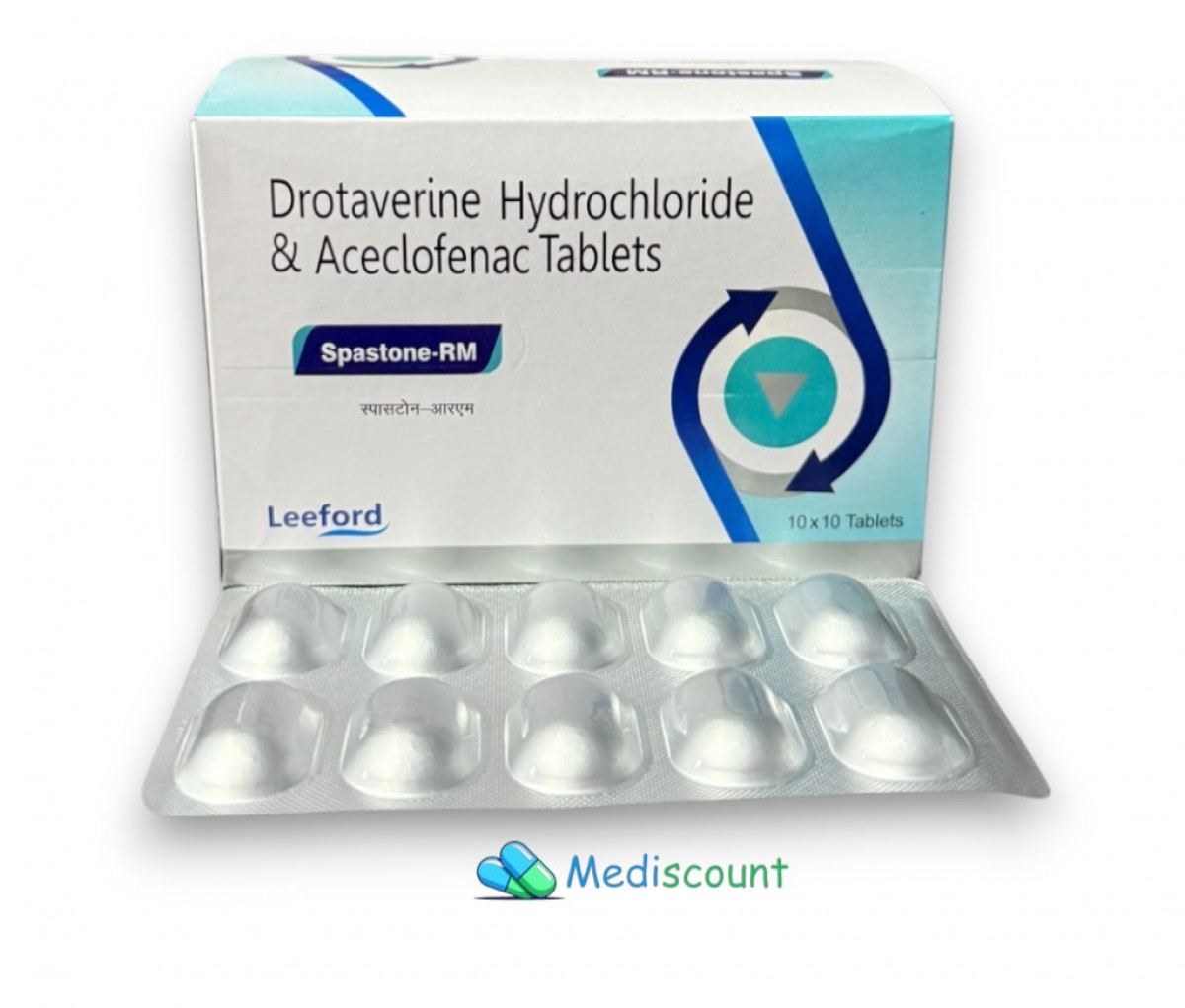
SPASTONE-RM TABLET
Manufactured By Leeford Healthcare
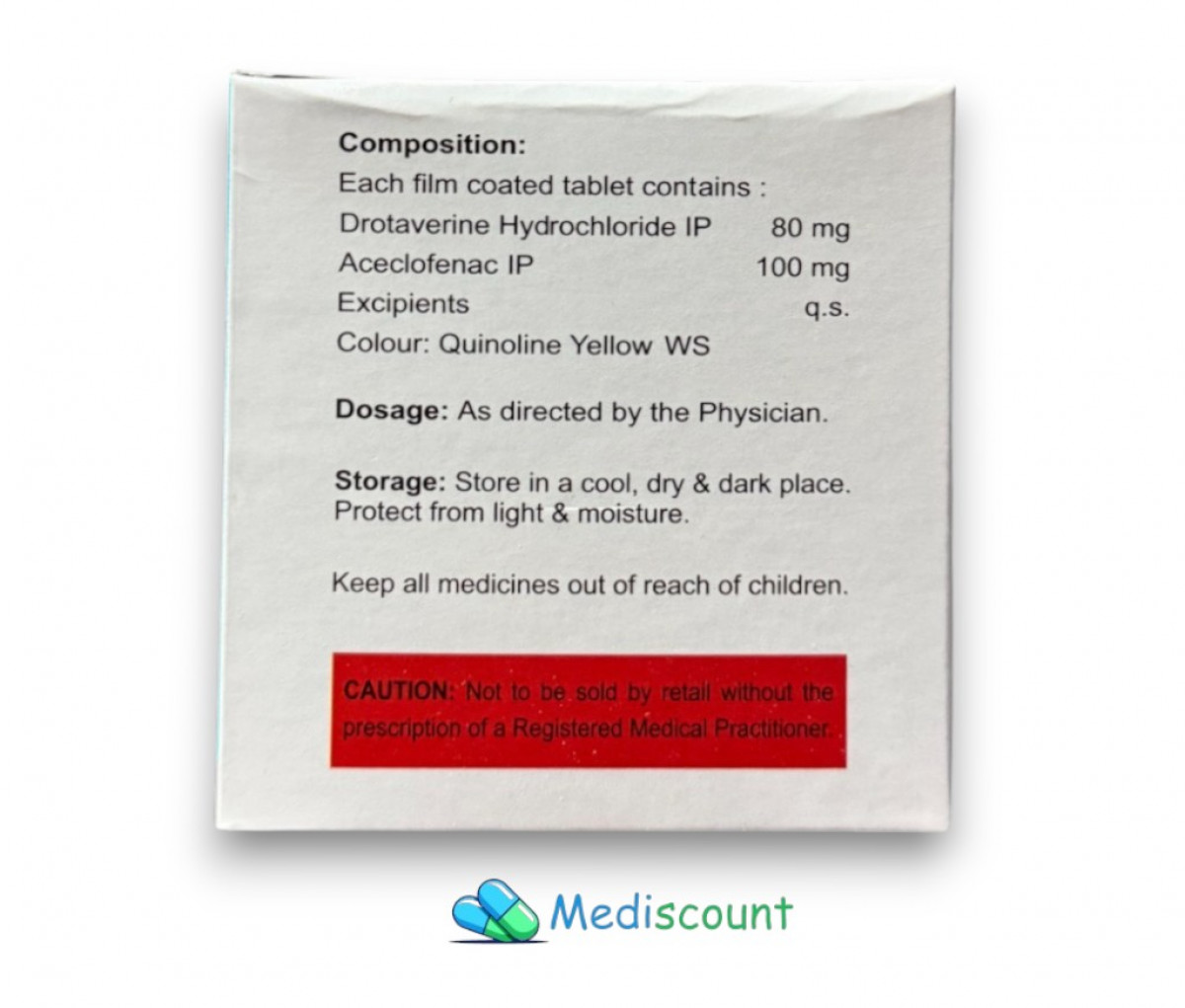
Composition Aceclofenac 100 mg & Drotaverine HCI 80 mg (Alu-Alu)
Rs 42.50
MRP Rs 85.00
(50% OFF)
Includes all taxes
Package SIZE
( 1x10 TABLETS )

100% Authentic
Products

Free
Shipping*

Products
Return Policy
Description:
Pregnant interaction
- Not a good idea during pregnancy, especially in the third trimester.
- Aceclofenac (an NSAID) could cause:
- Less amniotic fluid
- Problems with the fetus's kidneys
- Early closure of the ductus arteriosus
- Bleeding risk and delayed labor
- Drotaverine has little research on how it affects pregnant women; its safety is not known.
- Only use if the doctor says it's okay after weighing the hazards.
- Nursing
- Not safe during breastfeeding.
- Aceclofenac may go into breast milk and make babies' stomachs hurt.
FAQs for Medicine?
Q1. What do you use this mix for?
It is used for unpleasant spasmodic disorders, muscle spasms, menstrual cramps, renal colic, and stomach pain.
Q2. Can I take this pill without eating first?
No. Take after meals to keep your stomach from getting upset.
Q3. Is it safe for pain during your period?
Yes. It is frequently employed to alleviate dysmenorrhea (menstrual cramps).
Q4. Is this medicine safe for people with renal or liver problems?
Only use with a doctor's permission. Aceclofenac could change how your kidneys and liver work.
Q5. Does it make you want to do it again?
No, it doesn't make you want to do it again.
Q6. How quickly does it work?
Usually gives relief in 30 to 60 minutes.
Experts advice
- Always take it after a meal to avoid stomach pain or acidity.
- Don't drink alcohol because it makes adverse stomach and liver effects worse.
- If you feel dizzy after taking it, don't drive.
- If you are pregnant or breastfeeding, don't do it unless you have to.
- Don't take this with other painkillers unless your doctor says it's okay.
- If you start to get blood in your stools, severe stomach pain, vomiting, an allergy, or swelling, stop right away.
Side effects
- Feeling sick
- Pain in the stomach
- Upset stomach
- Pain in the head
- Feeling dizzy
- Stools that are too loose or too hard
Not as Common/Serious
- Bleeding in the stomach
- Very high acidity or ulcers
- Allergic responses like rashes, swelling, and trouble breathing
- Increase of liver enzymes
- Problems with how the kidneys work
- If you have serious symptoms, get medical attention right away.
How It Works
- Drotaverine (antispasmodic)
- It stops the PDE-4 enzyme, which relaxes muscles.
- Helps with spasms in the smooth muscles, intestines, uterus, bile ducts, and urinary system.
- Aceclofenac is a nonsteroidal anti-inflammatory drug (NSAID) that helps with pain.
- Stops the COX-1 and COX-2 enzymes from working.
- Lowers prostaglandins, which are natural substances that cause pain and swelling.
- They work together to relieve both pain and muscular spasms at the same time.
Medicine interaction
- Other NSAIDs include aspirin, ibuprofen, and diclofenac.
- Warfarin, apixaban, and heparin are blood thinners.
- Steroids (Prednisolone, Dexamethasone)—ulcers are a danger
- Antihypertensive drugs: NSAIDs may make blood pressure treatment less effective.
- Diuretics put more stress on the kidneys.
- Lithium – danger of toxicity
- Methotrexate – risk of toxicity
- Alcohol can cause significant stomach discomfort.
- Always tell your doctor about any medications you are taking.
How to Use
- Take one tablet once or twice a day, or as directed.
- Always take it after eating.
- Do not chew or crumble; just swallow whole with water.
- Only use for a short time.
- Missed Dose
- Take when you recall.
- Don't double dose; just skip if it's near to the following dose.
Uses/indications
- Spasms in the stomach and intestines
- Colic in the intestines
- Spasms connected to irritable bowel syndrome
- Cramps in the stomach
- Uses in Gynecology
- Dysmenorrhea (menstrual cramps)
- Spasms in the uterus
- Spasms in the bladder and urinary tract
- Pain from kidney stones (renal colic)
- Pain from biliary colic (gallbladder spasm)
- Other Conditions That Cause Spasmodic Pain
- Pain from spasms after surgery
- Pain from muscle spasms
- Spasmodic discomfort in the stomach and intestines