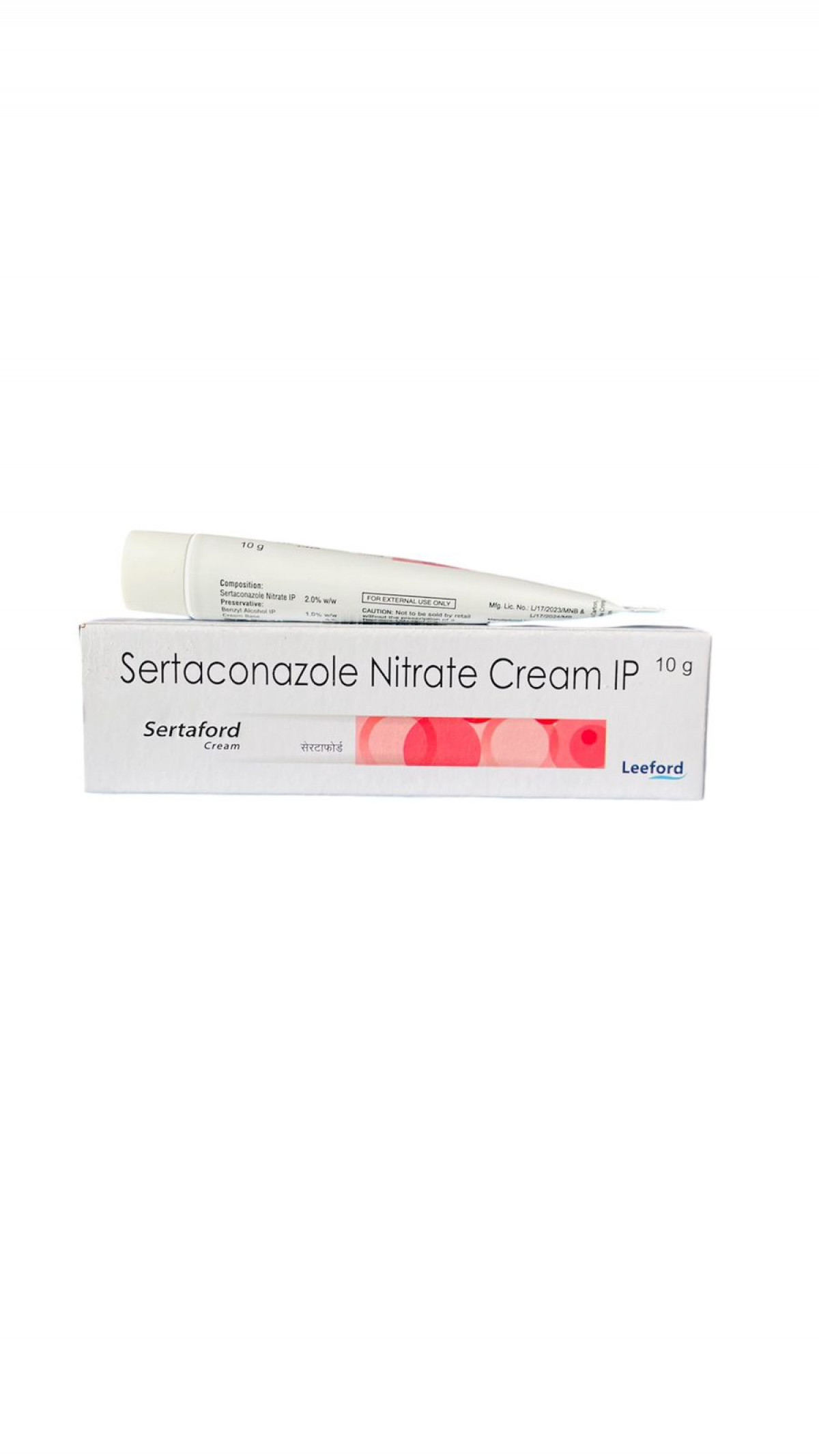
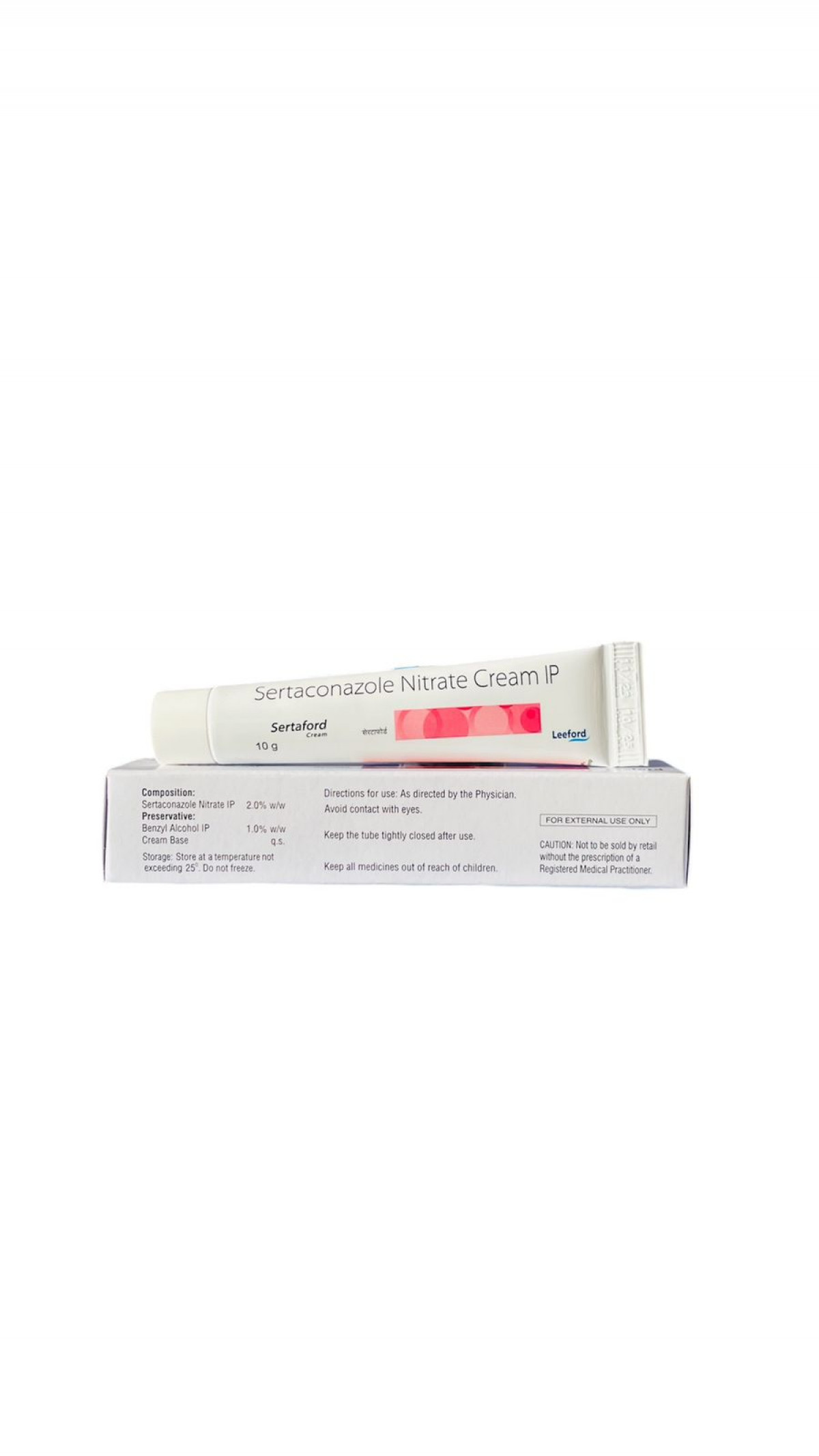
SERTAFORD 10 g Cream
Manufactured By Leeford Healthcare
Composition Sertaconazole Nitrate 2% w/w
Rs 50.00
MRP Rs 90.00
(44.44% OFF)
Includes all taxes
Package SIZE
( 10 g )

100% Authentic
Products

Free
Shipping*

Products
Return Policy
Description:
Pregnancy interaction
- Sertaconazole is typically regarded as safe due to its limited systemic absorption.
- Only use if a doctor tells you to, and only if you really need to, especially in the first trimester.
- Feeding your baby breast milk
- You can use it, but don't put it on or near the nipples to keep the baby from getting it.
In conclusion:
Safe to use on the skin, but only under a doctor's care during pregnancy.
FAQs for Medicine?
Q1. What is the purpose of SERTAFORD Cream?
It helps with fungal infections like ringworm, athlete's foot, jock itch, and areas of fungus on the skin.
Q2. How long will it take to become better?
Usually, it takes 1 to 2 weeks; however, it depends on the infection.
Q3: Is it okay to put it on my face?
Only use if your doctor tells you to. Keep away from your lips and eyes.
Q4. Is it safe for kids to use?
Yes, it's safe for kids over 2 years old, unless told differently.
Q5. Is it a steroid?
No. It is a pure antifungal.
Q6. Does it help with itching?
Yes, it helps lessen the itching, burning, redness, and scaling that come with fungal infections.
Q7. Can I quit using it when my symptoms get better?
No. You must finish the whole course to keep it from coming back.
Expert advice
- Use only on skin that is clean and dry.
- Even if your symptoms get better quickly, you should still use it for the full 2–4 weeks.
- Don't wear tight clothes over the area that is infected.
- Keep the area dry because moisture makes fungal infections worse.
- Do not use on wounds that are deep or skin that is very inflamed.
- Do not share towels, socks, or clothes while you are getting therapy.
- Wash and dry the area between your toes well if you have a foot infection.
Side Effects
Common:
- A little burning
- Irritation of the skin
- Reddishness
- Lack of moisture
- Itching at the point of application
Not as Common:
- Skin that is peeling or cracking
- Feeling of stinging
- Not often:
- Reaction to an allergen
- Swelling
- Very bad irritation
- If you have a bad response, stop using it and see a doctor.
How it Works
- Damages the membrane of fungal cells, which leads to leaking and death of the fungus.
- Works against yeasts, dermatophytes, and certain molds.
- It also reduces redness and itchiness because it has anti-inflammatory and antipruritic properties.
- Action as a whole
- Stops fungi from growing
- Treats the infection where it starts
- Itching, scaling, and redness go down.
Medicine interaction
- Using with other antifungal creams (clotrimazole, ketoconazole)
- Using with strong irritants like salicylic acid and benzoyl peroxide
- Corticosteroid creams on the same area without a doctor's advice (may lessen antifungal efficacy)
How to Use
- Make sure the area is clean and dry.
- Put a thin coating of cream on the skin that is diseased and 1 inch surrounding it.
- Gently rub it in until it is gone.
- Use twice a day unless your doctor tells you to just use it once a day.
- Even if your symptoms become better, you should keep going for at least two weeks.
- Before and after use, wash your hands.
- Don't put airtight dressings over the area.
Uses/Indications
- Tinea corporis, or ringworm
- Tinea pedis, or athlete's foot
- Tinea cruris, or jock itch
- Tinea versicolor
- Fungal infections in between fingers and toes
- Skin yeast infections
- Itchy, red, and flaky fungal rash