


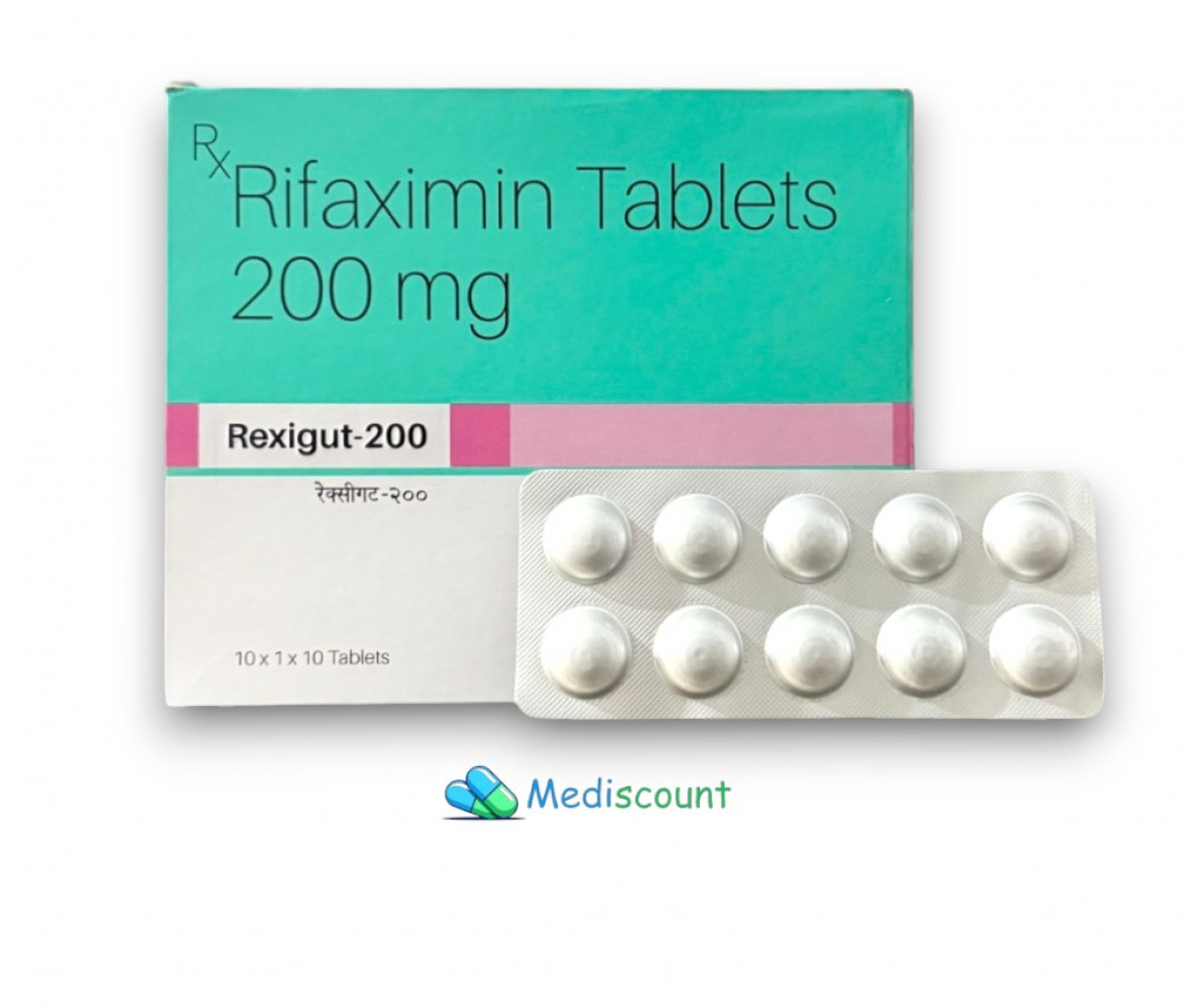
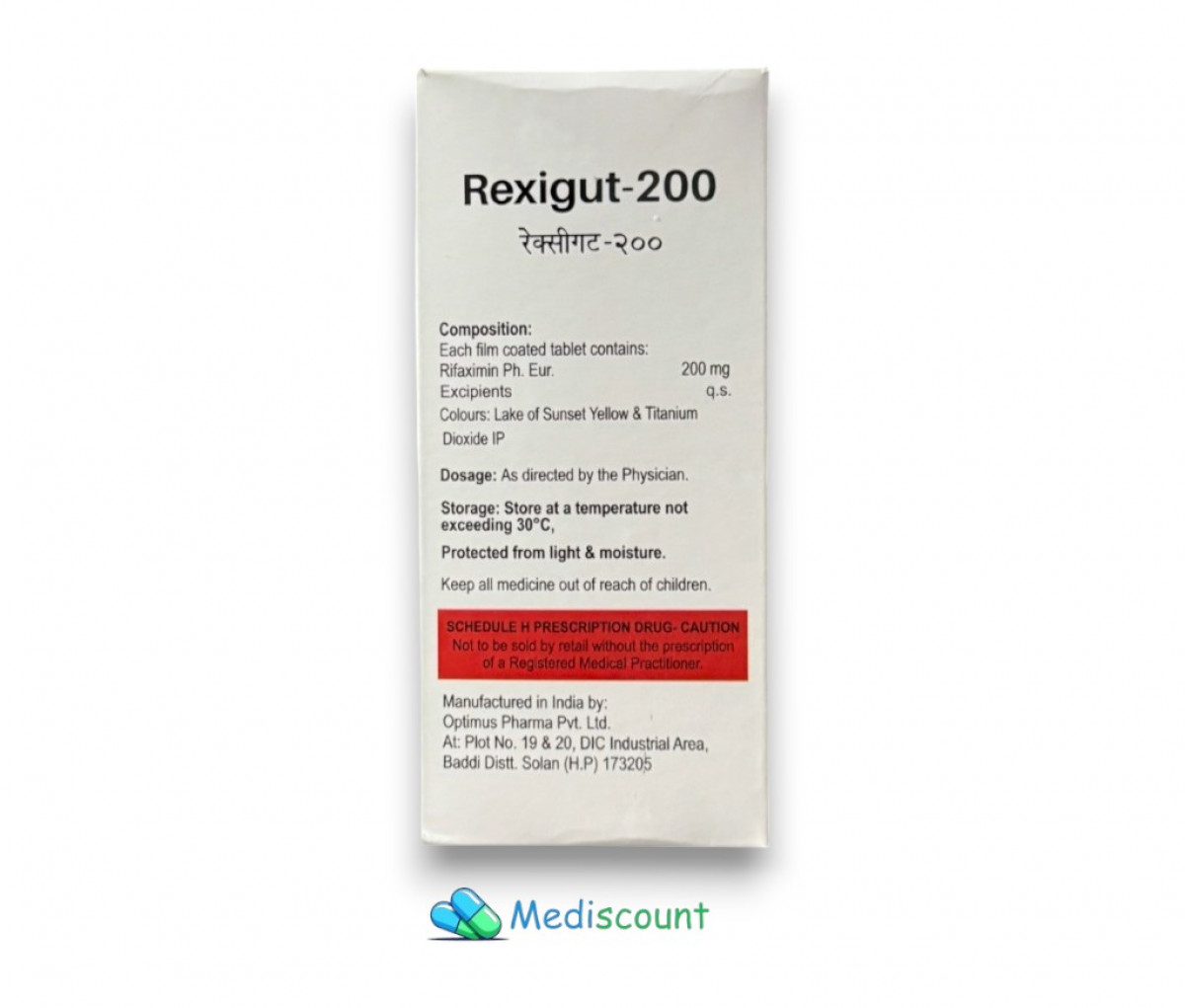
REXIGUT-200 TABLET
Manufactured By Leeford Healthcare
Composition Rifaximin 200 mg (Alu-Alu)
Rs 131.04
MRP Rs 185.00
(29.17% OFF)
Includes all taxes
Package SIZE
( 1x10 TABLETS )

100% Authentic
Products

Free
Shipping*

Products
Return Policy
Description:
Pregnancy Interaction
- Use this with caution.
- Rifaximin exhibits minimal absorption into the circulation, resulting in low systemic exposure.
- Animal research indicates certain risks, and human data remains limited.
- Should be utilized during pregnancy solely when explicitly necessary and prescribed by a healthcare professional.
- Refrain from prolonged or recurrent use during pregnancy unless explicitly advised.
FAQs for Medicine?
Q1. Is Rexigut-200 considered safe for use during pregnancy?
It should only be used if prescribed, but ordinarily ought to be avoided unless necessary.
Q2. What is the speed at which Rexigut-200 functions?
Relief typically commences within 24 to 48 hours, contingent upon the nature of the infection.
Q3. Does it contribute to the development of antibiotic resistance?
Rifaximin exhibits a minimal potential for resistance due to its confinement within the gastrointestinal tract.
Q4. Is it permissible to consume it alongside probiotics?
Certainly. In fact, probiotics may assist in restoring the normal balance of intestinal microbiota.
Q5. Will it have an impact on my liver or kidneys?
Due to its minimal absorption, it infrequently impacts liver or kidney function.
Q6. Does it address gastrointestinal pain caused by gas or acidity?
No. It exclusively addresses bacterial gastrointestinal infections and diarrhea-predominant irritable bowel syndrome (IBS-D).
Expert advice
- Do not omit doses; ensure the full course is completed even if symptoms diminish.
- Refrain from consuming alcohol, as it may exacerbate dehydration associated with diarrhea.
- Enhance fluid consumption to prevent dehydration.
- If symptoms persist without improvement within 48 to 72 hours, please seek medical advice.
- Not appropriate for bloody defecation, high fever, or severe dehydration—necessitates medical assessment.
- Notify your physician if you have liver cirrhosis, as caution is recommended in cases of advanced liver disease.
Side Effects
- Nausea
- Excessive Gas
- Abdominal discomfort
- Headache
- Uncommon
- Paradoxical diarrhea
- Constipation
- Exhaustion
- Vertigo
- Uncommon but Critical
- Serious hypersensitivity reaction
- Hemorrhagic sputum
- Progressive abdominal discomfort
- Discontinue the medication and consult a healthcare professional if severe symptoms manifest.
How it works
- Rexigut-200 contains rifaximin, a minimally assimilated antimicrobial agent.
- It operates through the following mechanism:
- Eliminating detrimental microorganisms within the gastrointestinal tract
- Minimizing bacterial toxin production
- Enhancing the management of diarrhea and IBS-D symptoms
- Reducing intestinal ammonia levels in cases of liver disease
- Since it remains within the gastrointestinal tract, systemic adverse effects are minimal.
Medicine Interaction
- Due to its minimal absorption within the organism, interactions are limited.
- Possible Interactions
- Cyclosporine—may elevate rifaximin concentrations (rare)
- Warfarin – monitor INR when administered concurrently
- Other antibiotics may disrupt gut microbiota
- Activated charcoal—potential to diminish efficacy
- There are no notable interactions with sustenance.
How to Use
- Standard dosage: 200 mg three times daily, or as prescribed by your healthcare provider.
- Swallow it entirely with a drink of water.
- It may be consumed with or without food.
- Finish the entire prescribed course.
- In the event of a missed dose, take it promptly unless it is near the time of the subsequent dose.
- Avoid administering a double dose.
Uses/Indications
- Infectious diarrhea resulting from non-invasive microorganisms
- Traveler's gastroenteritis
- IBS-D (Irritable Bowel Syndrome—Diarrhea Predominant)
- Hepatic encephalopathy (adjunct therapy) – diminishes microorganisms that produce ammonia
- Proliferation of pathogenic intestinal microorganisms