


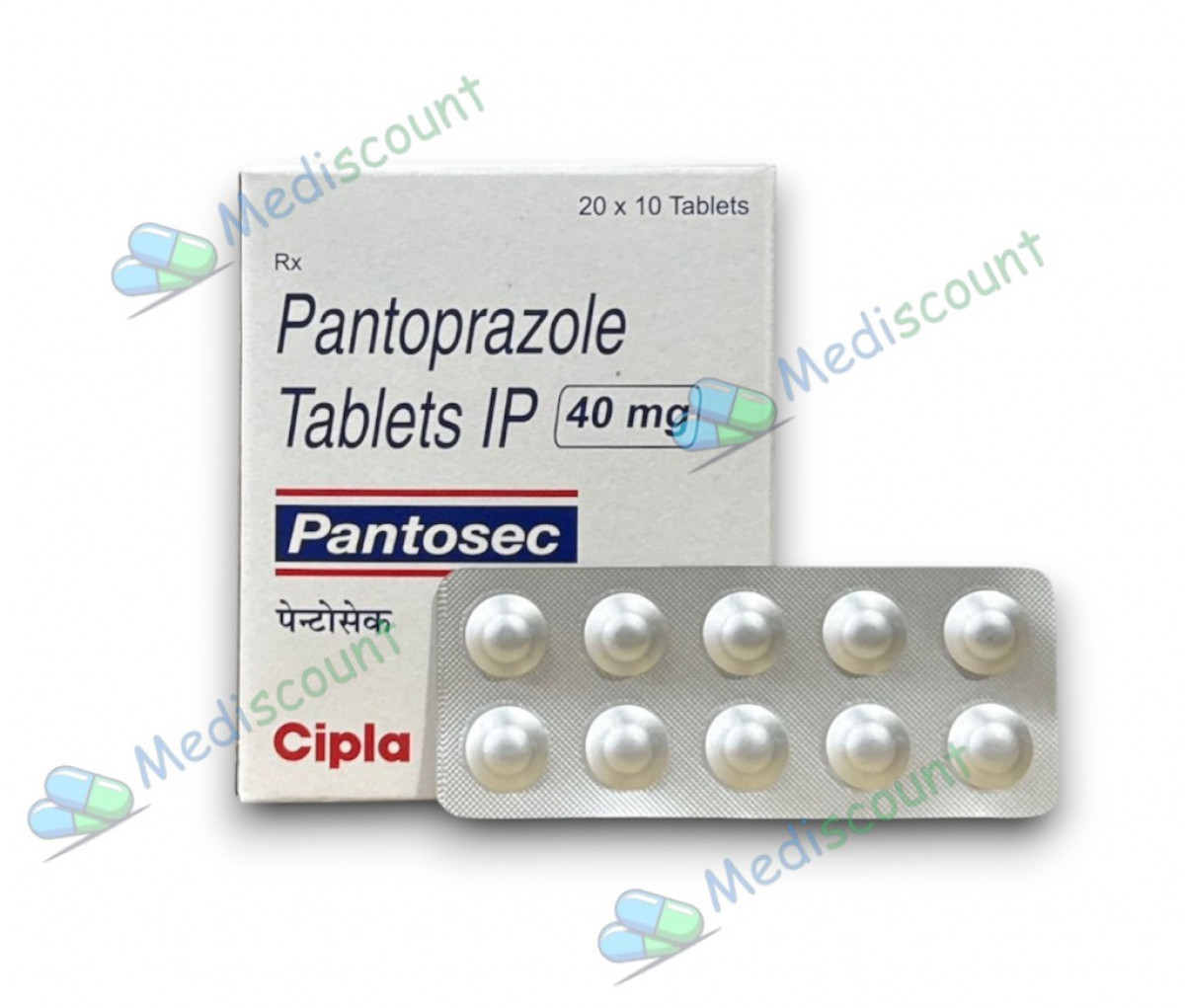
PANTOSEC 40mg TAB 10'S
Manufactured By Cipla
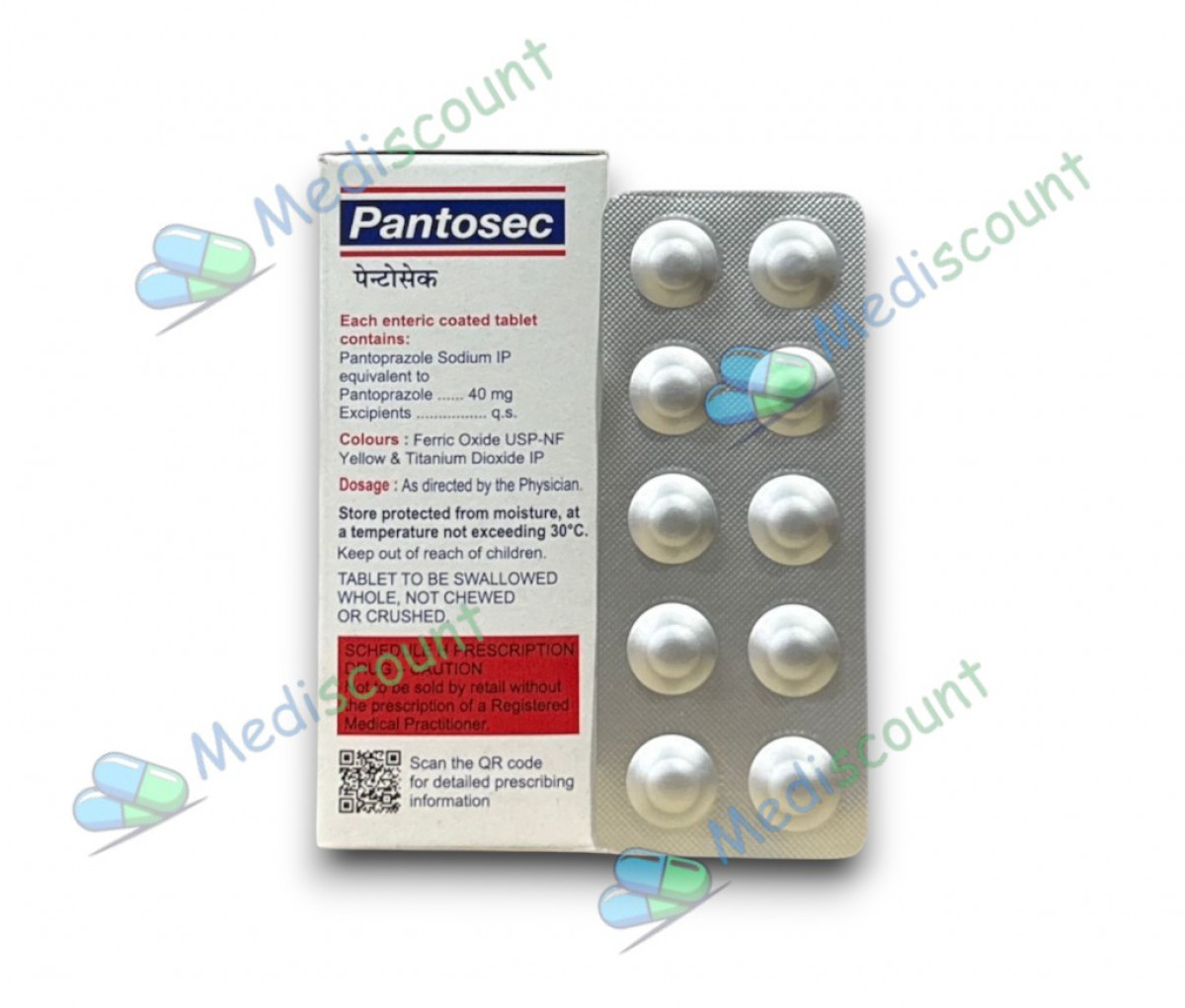
Composition Pantoprazole Sodium Ip Equivalent To Pantoprazole . .40 Mg Tablets
Rs 42.00
MRP Rs 143.56
(70.74% OFF)
Includes all taxes
Package SIZE
( 1x10sTablets )

100% Authentic
Products

Free
Shipping*

Products
Return Policy
Description:
Pregnancy interaction
- When obviously needed and prescribed by a doctor, pantoprazole is thought to be fairly safe during pregnancy.
- There isn't much research on people; thus, it should only be used when the advantages are greater than the hazards.
- There have been no serious risks documented with short-term use, but you should not self-medicate.
- Pantoprazole can get into breast milk in small amounts when breastfeeding. It's usually safe, but a doctor should keep an eye on long-term use.
FAQs for Medicine?
Q1. What is Pantosec 40 mg used for?
It helps with heartburn, GERD, acid reflux, stomach ulcers, and gastritis.
Q2. When is the best time to take Pantosec 40?
Take it first thing in the morning, at least 30 to 45 minutes before breakfast.
Q3. Does it help right away?
Not right away. It starts to work in a few hours, but it takes 2–3 days for full relief.
Q4: Is it okay to use Pantosec with antacids?
Yes, but you should wait 1–2 hours between taking antacids and Pantosec.
Q5. Is it okay for me to take Pantosec every day?
Yes, if a doctor says so. You need to keep an eye on it if you use it for a long time.
Q6. Is it safe to take painkillers?
Yes. It is often used with NSAIDs to stop ulcers from forming.
Q7. Does Pantosec make you want to keep taking it?
No, it doesn't get you hooked.
Expert advice
- Do not crush or chew the tablet; take it whole.
- Changes to your lifestyle can help with treatment:
- Don't eat spicy or oily foods, drink tea or coffee, smoke, or drink alcohol.
- Don't lie down right after you eat.
- Eat smaller meals more often.
- Long-term use of PPIs may lower levels of vitamin B12, magnesium, and calcium. Your doctor may check these levels from time to time.
- Tell your doctor if you have symptoms like diarrhea that doesn't go away, severe stomach discomfort, chest pain, or blood in your stools.
- If symptoms persist for over 14 days, a re-evaluation is necessary.
Side Effects
- Pain in the head
- Feeling sick
- Constipation or diarrhea
- Pain in the stomach
- Gas and bloating
- Dizziness
- Not as Common, but Important:
- Long-term lack of vitamin B12
- Not enough magnesium
- Pain in the joints
- Lower stomach acid raises the risk of intestinal infections.
- If you have a severe allergic response, diarrhea that won't go away, or unusual weakness, see a doctor right away.
How It Works
- Stops H⁺/K⁺ ATPase pumps in the stomach's parietal cells.
- Stops the release of acid at the last step.
- Helps ulcers heal, lowers heartburn, and stops damage from acid.
- Result: The acidity in the stomach is lowered for a long time and effectively.
Medicine Interaction
- Atazanavir and nelfinavir are HIV drugs that don't work as well when they are absorbed.
- Antifungals: ketoconazole and itraconazole (reduced absorption because to low acidity)
- Warfarin is a blood thinner that you should keep an eye on.
- Methotrexate: levels could go up
- Iron supplements: absorption can go down
- Digoxin: more likely to cause negative effects
- Take antacids 1–2 hours apart.
- Always tell your doctor about any medications or supplements you are taking.
How To Use
- Take one pill per day, or as directed.
- Do not break, chew, or crush the tablet; just swallow it whole with water.
- Before breakfast, take 30 to 45 minutes.
- Keep it up by taking it at the same time every day.
- Don't just stop after using it for a long time; do it slowly with the help of a doctor.
Uses/indications
- Heartburn and acidity
- Gastroesophageal Reflux Disease (GERD)
- Sour taste, acid reflux, and regurgitation
- Gastritis
- Ulcers in the stomach and duodenum
- Preventing ulcers with painkillers (NSAIDs)
- Syndrome of Zollinger–Ellison
- Long-term treatment for chronic acidity