
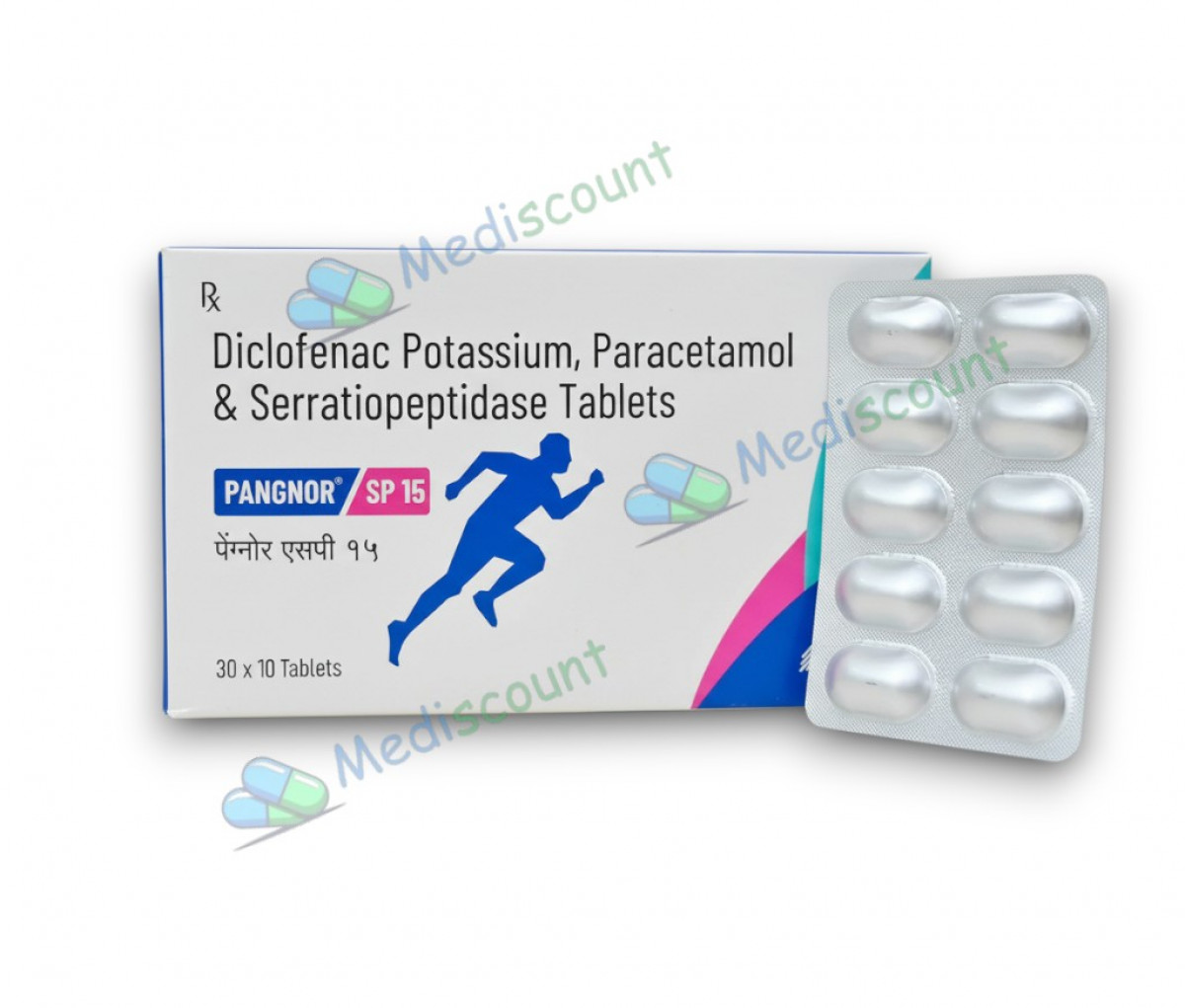
Uses / Indications:
People usually take Pangnor SP 15 when they have pain, edema, or inflammation. Some of the most prevalent signs are:
Musculoskeletal discomfort includes joint pain, arthritis, sprains, and strains.
Injuries to soft tissues, such as torn muscles or ligaments
Pain and edema after surgery
Inflammatory disorders affecting bones and joints
Pain in the teeth and pain after minor operations
Other situations where you require both pain relief and anti-inflammatory effects
It is extremely useful for getting rid of swelling or inflammation because it contains serratiopeptidase.
Pregnancy interaction:
Using it when pregnant is a controversial subject. Based on NSAID and combo medication principles, this is what is usually recommended. There may not be specific human research for Pangnor SP 15; prudence is the rule.
NSAIDs like diclofenac are usually not used during pregnancy, especially in the third trimester, because they might cause problems like early closure of the fetal ductus arteriosus, hemorrhage, and poor fetal kidney function.
In the first and second trimesters, use is cautious and only if the possible benefit outweighs the danger (i.e., only under close doctor supervision).
So, Pangnor SP 15 is not usually prescribed during pregnancy unless the doctor thinks it is required and keeps a close eye on it.
Many places that sell comparable combinations (like Fenaclo-SP) say "not recommended if you are pregnant or breastfeeding."
1mg + 1
If a woman is pregnant or wants to get pregnant, the doctor needs to weigh the risks and advantages very carefully.
So, pregnancy interaction: it's a medicine that needs a lot of caution; don't use it in the last few months of pregnancy; talk to your physician before using it.
Expert advice:
Do not take this medicine unless a skilled doctor tells you to.
Take the smallest amount that works for the shortest amount of time.
To lower the chance of gastrointestinal upset, always take with food.
Be careful with individuals who have liver, renal, heart, or stomach problems.
Don't take other NSAIDs or drugs that raise the risk of bleeding at the same time.
Don't use it late in pregnancy unless you have to, or only under close supervision.
Watch for indications of GI bleeding, like dark stools or vomiting blood, changes in urine production, edema, or jaundice.
Tell your doctor about any other medicines you take and any health problems you have.
Tell your doctor right away if you have any worrying symptoms, like severe stomach pain, black stools, swelling, yellowing of the skin, or shortness of breath.
Side Effects:
Pangnor SP 15 might produce negative effects, just like any other medicine. Some are common and not very bad, while others are rare but very bad. The danger goes up with bigger doses, longer periods of time, or in people who are more likely to get sick. Some side effects that are known or possible are:
Common and not as serious:
Problems with the stomach or digestion include stomach discomfort, indigestion, heartburn, nausea, and vomiting.
Not wanting to eat
Diarrhea
Dizzy and sleepy
Higher levels of liver enzymes (a symptom that the liver is working too hard)
Skin reactions: rash and itching
Gas
Serious / not as often:
Bleeding in the stomach and intestines, ulcers, and perforation, especially in people who have had peptic ulcer disease in the past
Kidney impairment or deterioration, particularly with prolonged use or in individuals with pre-existing kidney conditions.
Damage to the liver, hepatotoxicity
Hypersensitivity or allergic reactions, such as a rash, swelling, or trouble breathing
Risk of bleeding (hemorrhagic risk)
Effects on blood counts, like changes in platelets
Risk in heart disease NSAIDs may make heart failure and high blood pressure worse.
If you have severe abdominal discomfort, black stools, bleeding, unusual tiredness, swelling, jaundice (yellowing of the skin and eyes), or any other worrying symptoms, stop taking the medicine and visit a doctor.
How to use:
A skilled doctor should decide the exact dose and length of time based on the patient's condition, severity, and other health variables.
You should not crush, chew, or break the tablet before you swallow it.
Taking it with food or a light meal (or milk) is typically a good idea to lower the risk of stomach discomfort or irritation.
To lower hazards, use the lowest effective dose for the shortest time that is still in line with treatment goals.
Do not increase the dose on your own.
If you forget to take a dose, do it as soon as you remember, unless it's too near to the next one. But don't take twice as much.
If your doctor has told you to take it for a certain amount of time, don't just stop taking it.
How it works:
Diclofenac and paracetamol together work as both pain relievers and anti-inflammatory drugs.
Serratiopeptidase may assist minimize swelling and edema and get rid of inflammatory debris, which would make the NSAID work better.
Using more than one mechanism can let you take lower doses of each part, but there is still a chance of negative effects.
It is a combination of an analgesic, an anti-inflammatory, and an enzyme, so it is usually used to quickly relieve pain, swelling, and inflammation.
Faq for medicine:
Is it safe to use Pangnor SP 15 for a long time?
Not usually, no. Due to the potential of negative effects on the stomach, kidneys, and liver, it should only be used for a limited time.
Is it okay to use Pangnor SP 15 for a headache or fever?
Maybe sure (for pain relief or fever), but a doctor should determine because this combination is stronger and there are safer options (such basic paracetamol). Using it when you don't need to increases hazards.
What should I do if my stomach hurts after taking it?
You can take it with food, milk, or after a light meal. Don't take it on an empty stomach. If the symptoms don't go away, stop and talk to someone.
Is it okay to take it with other painkillers?
Not without a doctor's advice. Taking this with other NSAIDs or medications that contain paracetamol raises the risk of overdose or negative effects.
What if I take too much?
Overdose can make adverse effects worse, include nausea, vomiting, liver damage, renal damage, and bleeding. Get medical help right away.
Do I need to get tests every now and then when I use it for a long time?
Yes, if the treatment lasts a long time, you may need liver function testing, renal function tests, a complete blood count, and checks for GI bleeding.
Can kids tolerate it?
Most of the time, these combinations are for adults. If a child needs to take them, a pediatrician must decide and give them the right amount. Using it on kids is more dangerous.
Medicine interaction:
Pangnor SP 15 is a combination, thus interactions and warnings apply to its constituents, especially diclofenac and paracetamol. Some important interactions are:
With other drugs:
Other NSAIDs, aspirin, or medications that stop platelets from sticking together or stop blood from clotting (such warfarin, heparin, or clopidogrel) can make you more likely to bleed, especially in the stomach.
Corticosteroids (like prednisolone) raise the risk of GI problems.
ACE inhibitors, ARBs, and diuretics—NSAIDs may lessen the efficacy of these drugs on blood pressure and make renal function worse.
Lithium, methotrexate, ciclosporin — NSAIDs may raise blood levels and toxicity.
Some anticonvulsants, anti-TB medications, isoniazid, and other drugs that stress the liver all put the liver at danger.
Other drugs that have paracetamol in them can cause an overdose of paracetamol.
Drugs that change how well the kidneys work (such NSAIDs plus diuretics)
Any anticoagulants, SSRIs, etc., may increase the risk of bleeding.
In several diseases or conditions, you should be careful or not do it:
History of peptic ulcer disease and gastrointestinal hemorrhage
Severe liver illness or liver disease that is getting worse
Serious kidney problems
Heart failure and high blood pressure
Conditions that cause bleeding
Hypersensitivity to any element
Asthma in certain individuals (NSAIDs may worsen bronchospasm in NSAID-sensitive asthma)
Older patients (more likely to have side effects)
Tell your doctor about all the other drugs you are taking and any health problems you have.