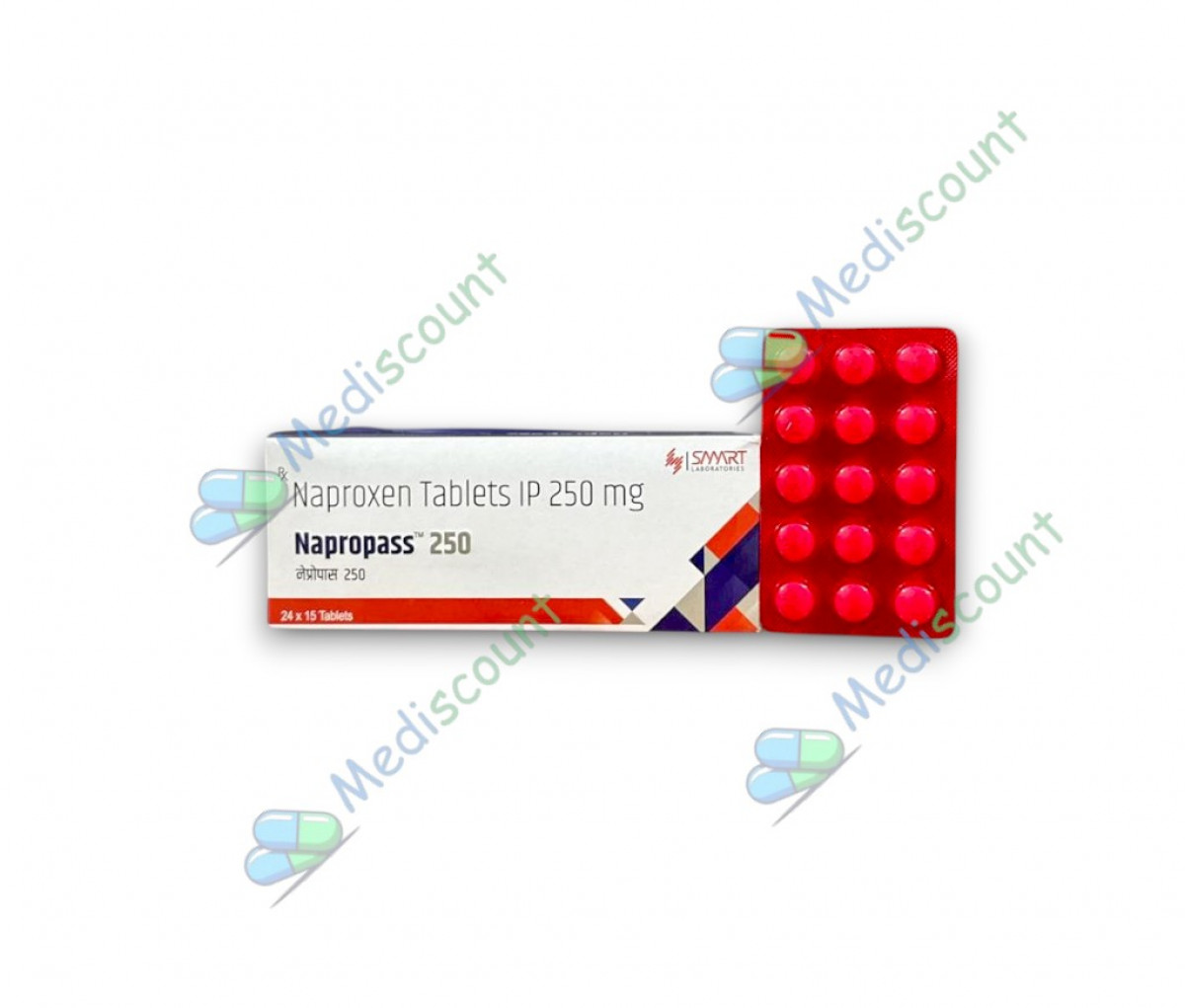
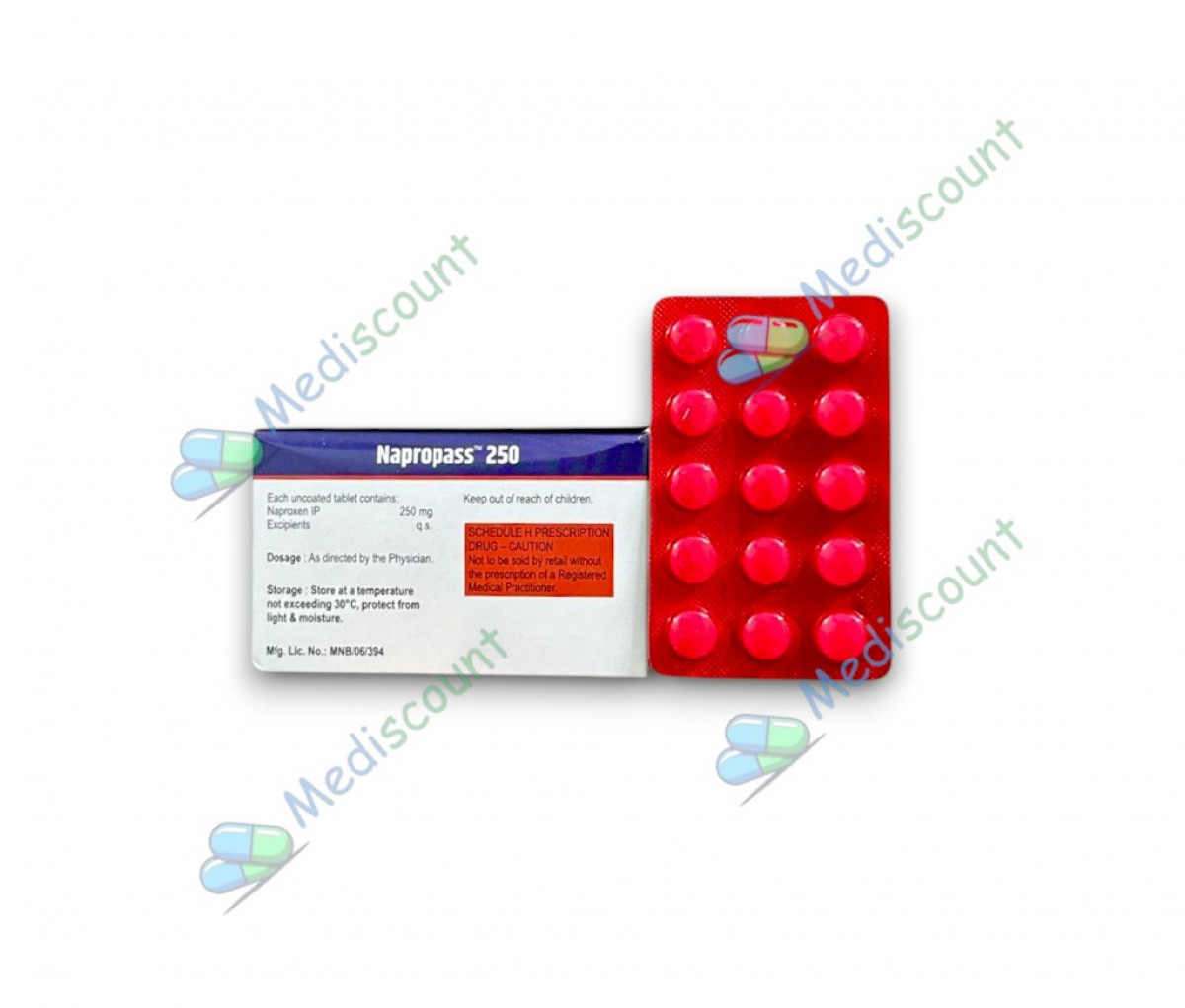
Uses / Indications:
The NAPROPASS 250 Tablet is an NSAID, or non-steroidal anti-inflammatory medicine, that helps with pain, swelling, and fever. Doctors often give it to people with diseases like:
Pain in the head with migraines
Pain in the back and muscles
Pain in the joints with arthritis (osteoarthritis and rheumatoid arthritis)
Pain in the teeth or mouth
Dysmenorrhea, or menstrual cramps
Pain and fever after surgery
Pregnancy interaction:
It is not safe to use during pregnancy, especially in the last trimester, because it could hurt the baby or make delivery more difficult.
Naproxen can slow down labor and change the way the baby's heart develops.
If you need pain relief while pregnant, talk to your doctor about safer options like paracetamol.
If your doctor tells you to, you can use Naproxen while nursing. Small amounts of the drug may get into the milk.
Expert advice:
To avoid upsetting your stomach, always take NAPROPASS 250 Tablet after eating.
During the therapy period, stay away from drinking and smoking.
Don't take more than you need or self-medicate.
Keep drinking water and watch for any signs of stomach pain or bleeding.
Tell your doctor if you have ever had ulcers, heart disease, high blood pressure, or problems with your kidneys or liver.
Unless your doctor tells you to, don't take this with other NSAIDs or drugs that contain paracetamol.
Frequently Asked Questions about NAPROPASS 250 Tablet
Side Effects:
Feeling sick or throwing up
Indigestion or heartburn
Pain in the stomach or gas
Headache or dizziness
Constipation or diarrhea
Side effects that are serious but not common:
Bleeding or ulcers in the stomach (black stools, vomiting blood)
Higher blood pressure
Swelling in the hands or feet (holding onto fluid)
Problems with the liver or kidneys (dark urine, yellowing of the skin or eyes)
Rash, itching, or trouble breathing are all signs of an allergic reaction.
If you get chest pain, trouble breathing, or severe abdomen pain, stop taking the drug and get medical care right once.
How to use:
To avoid stomach distress, take the tablet with food or milk.
Do not crush or chew; instead, swallow whole with a glass of water.
Carefully follow the dosing regimen your doctor gives you.
Do not take more than the indicated dose or for longer than the suggested time.
Normal Dose for Adults:
Take one pill (250 mg) every 8 to 12 hours, depending on how bad your pain is. Your doctor may change the dose as needed.
How it works:
Naproxen, an NSAID that stops the body from making prostaglandins, which are molecules that cause pain, fever, and inflammation, is in NAPROPASS 250 Tablet.
Naprosyn helps alleviate pain and swelling by lowering these chemicals. It also helps people with joint or muscular problems move around more easily.
Faq for medicine:
Q1. What is the purpose of NAPROPASS 250 Tablet?
It is used to ease pain and swelling caused by arthritis, headaches, muscle pain, menstrual cramps, and fever.
Q2. Is it okay to take NAPROPASS 250 Tablet on an empty stomach?
To avoid stomach upset, it's better to take it after a meal or with milk.
Q3. Is it safe to do when pregnant?
No, you shouldn't do anything while you're pregnant, especially in the latter few weeks. Talk to your doctor before using.
Q4. Is it okay to drive after taking NAPROPASS?
If you feel dizzy, sleepy, or lightheaded after taking the drug, don't drive.
Q5. Can I drink alcohol with this?
No, don't drink alcohol. It could make your stomach bleed more and make your liver sick.
Q6. Is it okay to use NAPROPASS with paracetamol?
If your doctor says it's okay, you can take it with other painkillers. Don't combine things on your own without help.
Q7. How long does it take to see results?
You might feel better 30 to 60 minutes after taking the dose, but the anti-inflammatory effects might take a few days to kick in with daily use.
Q8. Is it safe to use for a long time?
Long-term use should only happen under close medical supervision because it could cause stomach ulcers, kidney problems, and heart problems.
The NAPROPASS 250 Tablet is an NSAID, or non-steroidal anti-inflammatory medicine, that helps with pain, swelling, and fever. Doctors often give it to people with diseases like:
Pain in the head with migraines
Pain in the back and muscles
Pain in the joints with arthritis (osteoarthritis and rheumatoid arthritis)
Pain in the teeth or mouth
Dysmenorrhea, or menstrual cramps
Pain and fever after surgery
Medicine interaction:
Several drugs, such as the following, may interact with NAPROPASS 250 Tablet:
Other NSAIDs or painkillers, such ibuprofen and aspirin, may make stomach bleeding more likely.
Blood thinners like Warfarin and Heparin make bleeding more likely.
Antihypertensives (e.g., ACE inhibitors, diuretics) may make these medications less effective.
Steroids (such Prednisolone) make ulcers more likely to happen.
Antidepressants (SSRIs/SNRIs) – might make bleeding more likely
Methotrexate or Lithium – might make toxicity levels higher
Drinking alcohol raises the risk of liver or stomach hemorrhage.
Before starting NAPROPASS, always tell your doctor about all the medicines and supplements you are taking.