


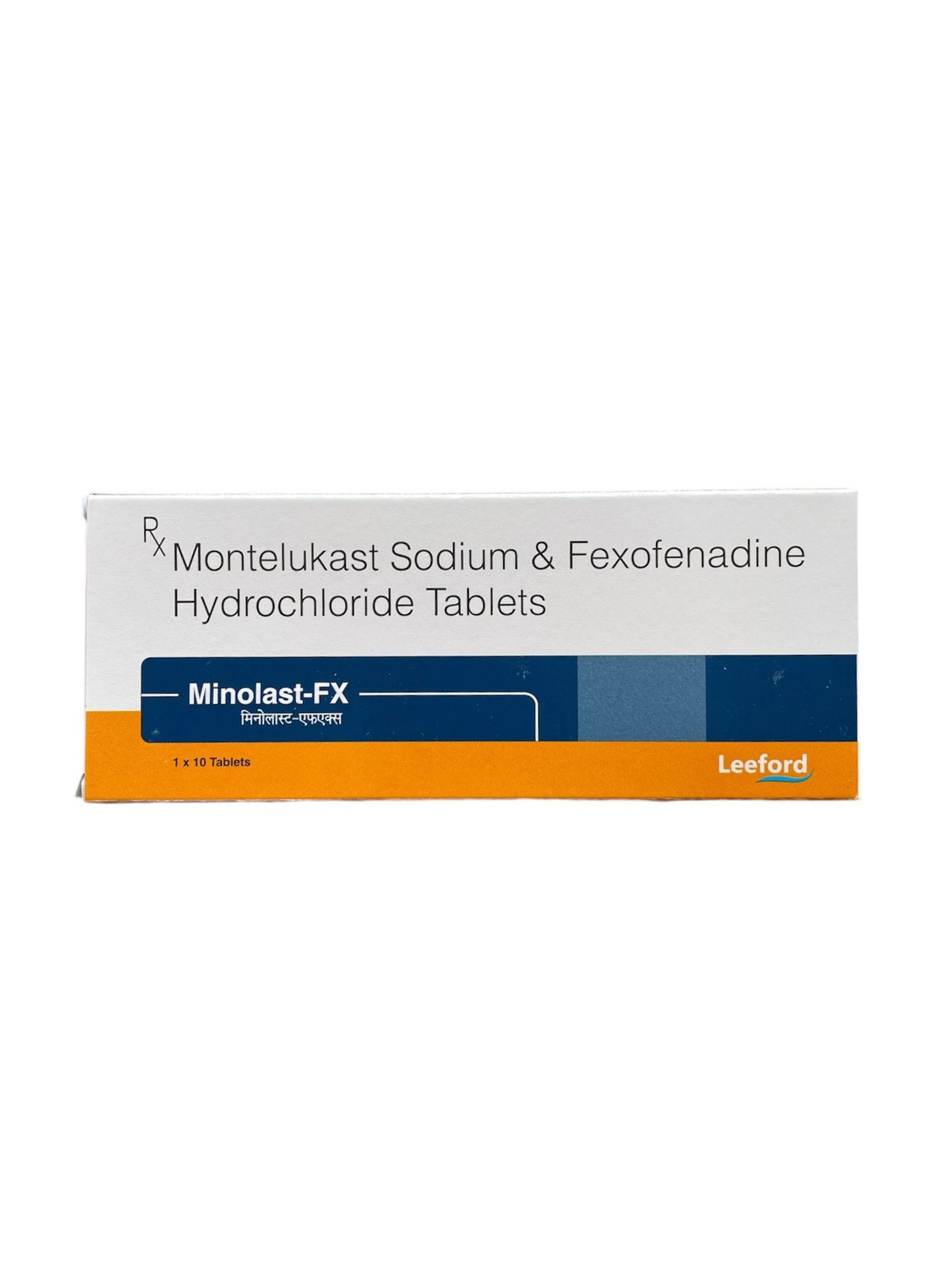
MINOLAST-FX TABLET
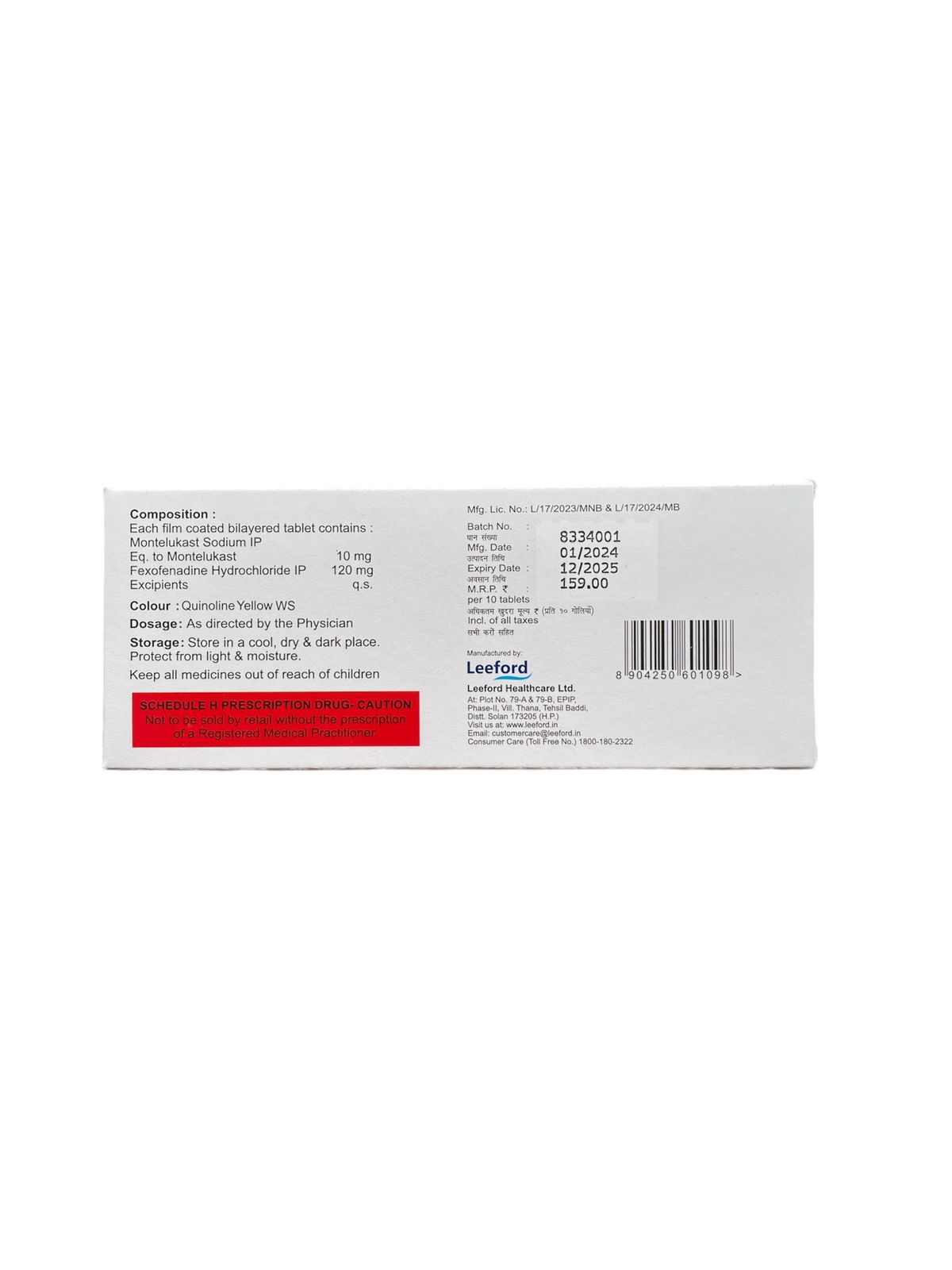
Manufactured By Leeford Healthcare
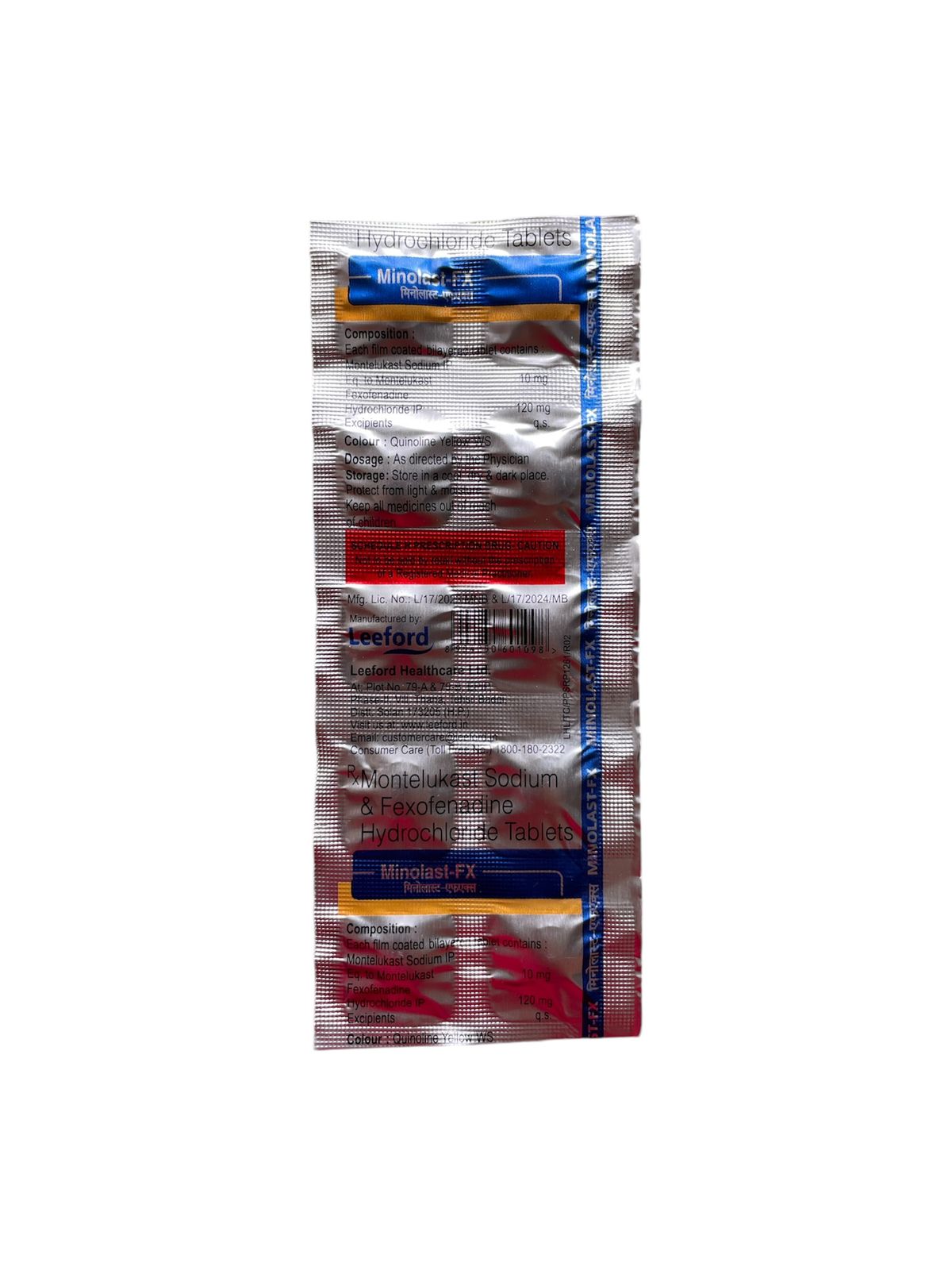
Composition Montelukast Sodium eq. to Montelukast 10 mg & Fexofenadine Hydrochloride 120 mg (Strip)
Rs 71.66
MRP Rs 159.00
(54.93% OFF)
Includes all taxes
Package SIZE
( 1x10 TABLETS )

100% Authentic
Products

Free
Shipping*

Products
Return Policy
Description:
Pregnancy Interaction
- Montelukast: Typically associated with a low risk during pregnancy; however, it should be administered solely when plainly indicated.
- Fexofenadine: Classified as Category C; limited human data available. Apply exclusively when the advantages surpass the potential risks.
- Overall: MINOLAST-FX should be administered during pregnancy solely under the guidance of a healthcare professional.
- Breastfeeding: Fexofenadine is excreted into breast milk in minimal quantities. Use with caution; observe the infant for signs of irritability or lethargy.
FAQs for medicine?
Q1. Does MINOLAST-FX induce drowsiness?
Fexofenadine is non-drowsy, and therefore the tablet typically does not induce lethargy. Montelukast also does not induce sedation.
Q2. May I take this medication at night?
Certainly. Many physicians favor administering medication at night to achieve more effective management of nocturnal allergies.
Q3. Is MINOLAST-FX suitable for daily use in terms of safety?
Yes, it is frequently employed on a daily basis for the prevention of allergic rhinitis and asthma.
Q4. May I utilize it for abrupt asthma attacks?
No. It contributes to prevention rather than emergency response.
Q5. Is this tablet suitable and secure for use by children?
Typically advised for adults and senior adolescents. For pediatric patients, formulations of montelukast designed for children are utilized.
Q6. May I consume it with food?
Yes, but refrain from consuming fruit juices (grapefruit, orange, apple) as they may decrease the absorption of fexofenadine.
Expert advice
- Refrain from consuming fruit juices one to two hours prior to and following the intake of the tablet.
- It is advisable to take it at nightfall to manage asthma-related symptoms.
- Should symptoms of behavioral changes or mood disturbances manifest, it is advisable to seek medical consultation (rare with montelukast).
- Continue taking the tablet as directed if prescribed for long-term allergy management.
- Refrain from consuming alcohol to minimize the likelihood of adverse effects.
Side Effects
Common:
- Headache
- Xerostomia
- Gastrointestinal distress
- Exhaustion
- Symptoms resembling influenza
Uncommon:
- Disruptions in sleep patterns
- Dermatological eruption
- Arrhythmia sensations
- Vertigo
- Alterations in mood or behavior (rare, associated with Montelukast)
- Obtain medical assistance if:
- Severe hypersensitivity
- Respiratory distress
- Chronic fluctuations in temperament
How it works
- Montelukast 10 milligrams
- Leukotriene receptor antagonist
- Diminishes airway inflammation
- Assists in preventing asthma symptoms
- Manages allergic rhinitis, particularly nocturnal symptoms
- Fexofenadine at a dosage of 120 milligrams
- Rapid-onset, non-sedating antihistamine
- Inhibits histamine (allergy mediator)
- Alleviates sneeze, nasal discharge, itching, and watery eyes
- Does not penetrate the blood-brain barrier; therefore, it does not induce sedation.
- Synergistic Impact
- Effective management of allergy and airway inflammation
- Suitable for patients requiring non-sedating daytime respite and nocturnal asthma and allergy management.
Medicine Interaction
- Antacids containing magnesium or aluminum diminish the absorption of fexofenadine.
- Fruit juices, particularly grapefruit, orange, and apple, can reduce fexofenadine levels.
- Erythromycin or Ketoconazole: potential to elevate Fexofenadine plasma levels
- Anti-seizure medications (phenytoin, phenobarbital): decrease Montelukast concentrations
- Alcohol: may elevate dizziness or fatigue
- Always notify your healthcare provider of all medications currently being taken.
How to use
- Standard dosage: One tablet once daily, preferably administered at night.
- Swallow the entire substance with water.
- May be administered with or without sustenance; however, it is advisable to avoid fruit juices near the time of dosing.
- If a dose is missed, omit it and proceed with the following day's dose—do not administer a double dose.
- Maintain consistent use for optimal management of allergies and asthma.
Uses/Indications
- Allergic Disorders
- Seasonal reactive rhinitis
- Chronic allergic rhinitis
- Allergy to dust
- Allergy to pollen
- Pet hypersensitivity
- Sneezing, rhinorrhea, and nasal congestion
- Allergic conjunctivitis with pruritus and lacrimation
- Respiratory Disorders
- Prevention of Asthma
- Nocturnal Asthma Symptoms
- Exercise-induced bronchospasm
- Persistent wheeze caused by allergy
- Dermatological Allergies
- Chronic urticaria (hives)
- Allergic pruritus