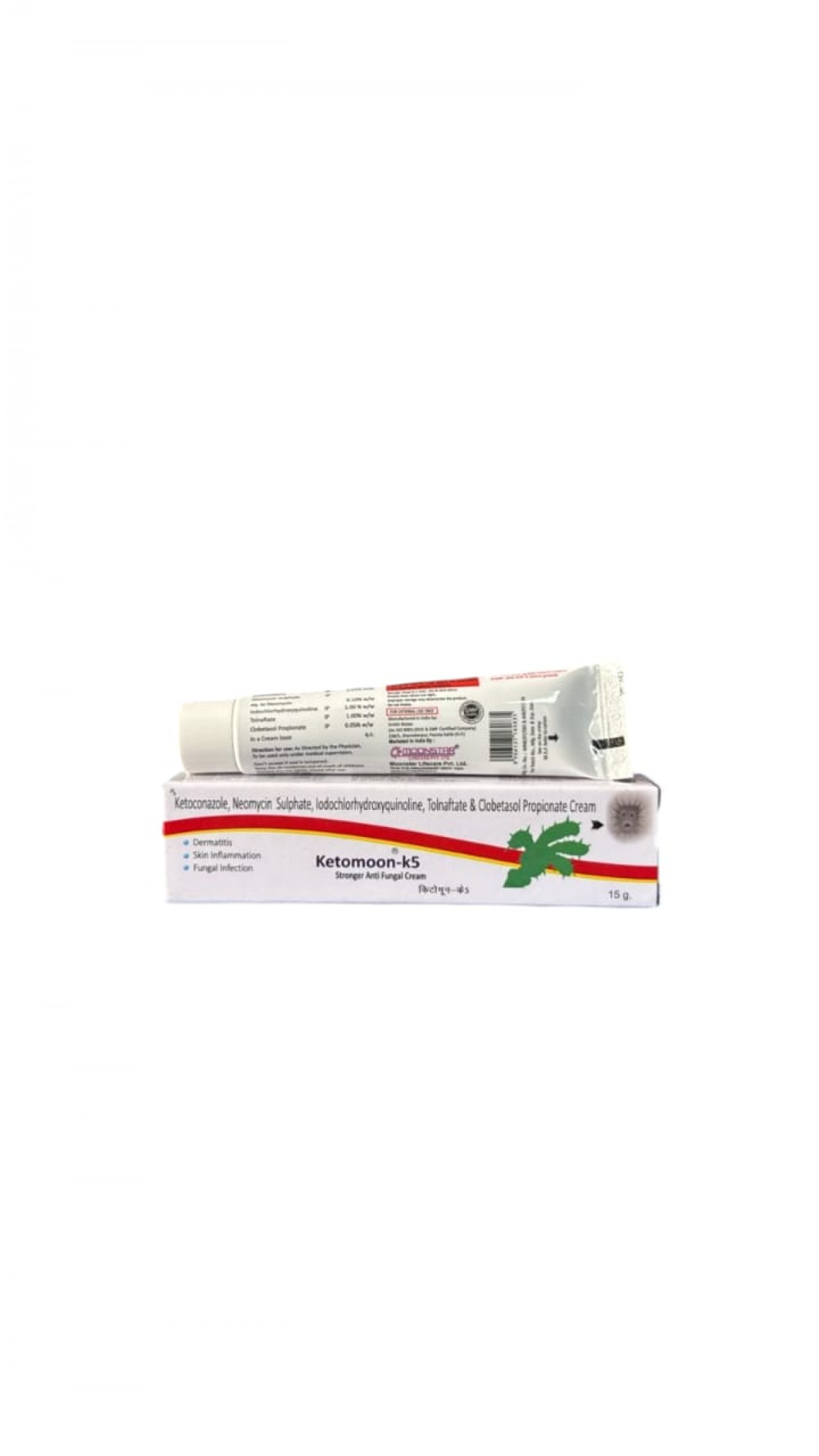
Uses / Indications:
People usually use KETOMOON K5 Cream for skin infections that are not very deep and have both fungal and bacterial parts, as well as swelling. Some signs that might be present are:
Tinea (ringworm) of the skin
Fungal infections of the skin (for example, in grooves and folds)
Dermatitis or eczematous skin with subsequent fungal or bacterial infection
Fungal skin lesions that are inflamed and need steroids to ease the pain
This kind of combo cream is usually only used when there is a lot of inflammation because it includes a lot of steroids in it.
Pregnancy interaction:
KETOMOON K5 has both antifungals and a strong corticosteroid, therefore pregnant women need to be extra careful.
Topical ketoconazole: There is not much data on humans. Some sources argue that using topical ketoconazole in modest dosages shouldn't be too risky because it doesn't get absorbed into the body that much.
Drugs.com +1
Animal studies have shown that taking ketoconazole by mouth can cause birth defects, so you should be careful.
Drugs.com +1
Clobetasol is an extremely strong corticosteroid. Topical steroids are used with caution during pregnancy; systemic absorption is often minimal, however there exists a potential risk when applied to extensive areas or under occlusive dressings.
In general, strong topical steroids are only used during pregnancy when the benefits are greater than the hazards.
Use only if you really need to, with medical supervision, at the lowest effective dose for the shortest amount of time. Don't use it on big sections of skin or when your skin is covered.
Expert advice:
Because clobetasol is a strong steroid, therapy should not last longer than two weeks, unless your doctor says otherwise. Long-term use raises the risk of skin thinning, adrenal suppression, and other problems.
Don't use on your face, groin, armpits, or skin folds for long periods of time unless your doctor says it's okay.
Don't use occlusive dressings unless your doctor tells you to, because they make absorption easier.
If you are using steroids across a big area or for a long time, watch for symptoms of adverse effects.
If you don't feel better after a week or if things get worse, go to your doctor.
Follow the directions and don't use it for longer than you should.
Only use on mucosal areas if told to.
Because of an increased risk of absorption and negative effects, be careful with kids, the elderly, or anyone with sensitive skin.
Side Effects:
A burning, stinging, or tingling feeling at the site of application
Irritation or redness
Skin that is dry or peeling
Itching
Skin thinning or atrophy, particularly with extended steroid use.
Changes in skin color or hypopigmentation in the area that was treated
Less Common / Serious:
Rash, swelling, and hives from an allergic reaction
Secondary infection (if the immune response is suppressed)
Telangiectasia (small blood vessels that can be seen)
Stretch marks (striae) may occur with prolonged use or extensive application.
Inhibition of local adrenal function (attributable to the powerful steroid)
Systemic absorption that causes steroid adverse effects (rare, but more likely with long-term or high-dose use)
Stop using it right once and visit a doctor if you detect extreme irritation, blisters, worsening infection, or any other unusual symptoms.
How to use:
Before putting on the cream, clean the area well and let it dry completely.
Put a thin coating of cream on the lesion and a small area of skin around it.
Gently rub it in till it goes away.
Follow your doctor's instructions for how often to use it (usually once or twice a day).
Do not use on open wounds, broken skin, or mucous membranes unless your doctor tells you to.
Wash your hands before and after applying (unless your hands are in the area being treated).
Using more often or in larger doses than recommended raises the chance of negative effects.
If the cream gets in your mouth, eyes, or other mucous membranes, rinse it off right away with water.
How it works:
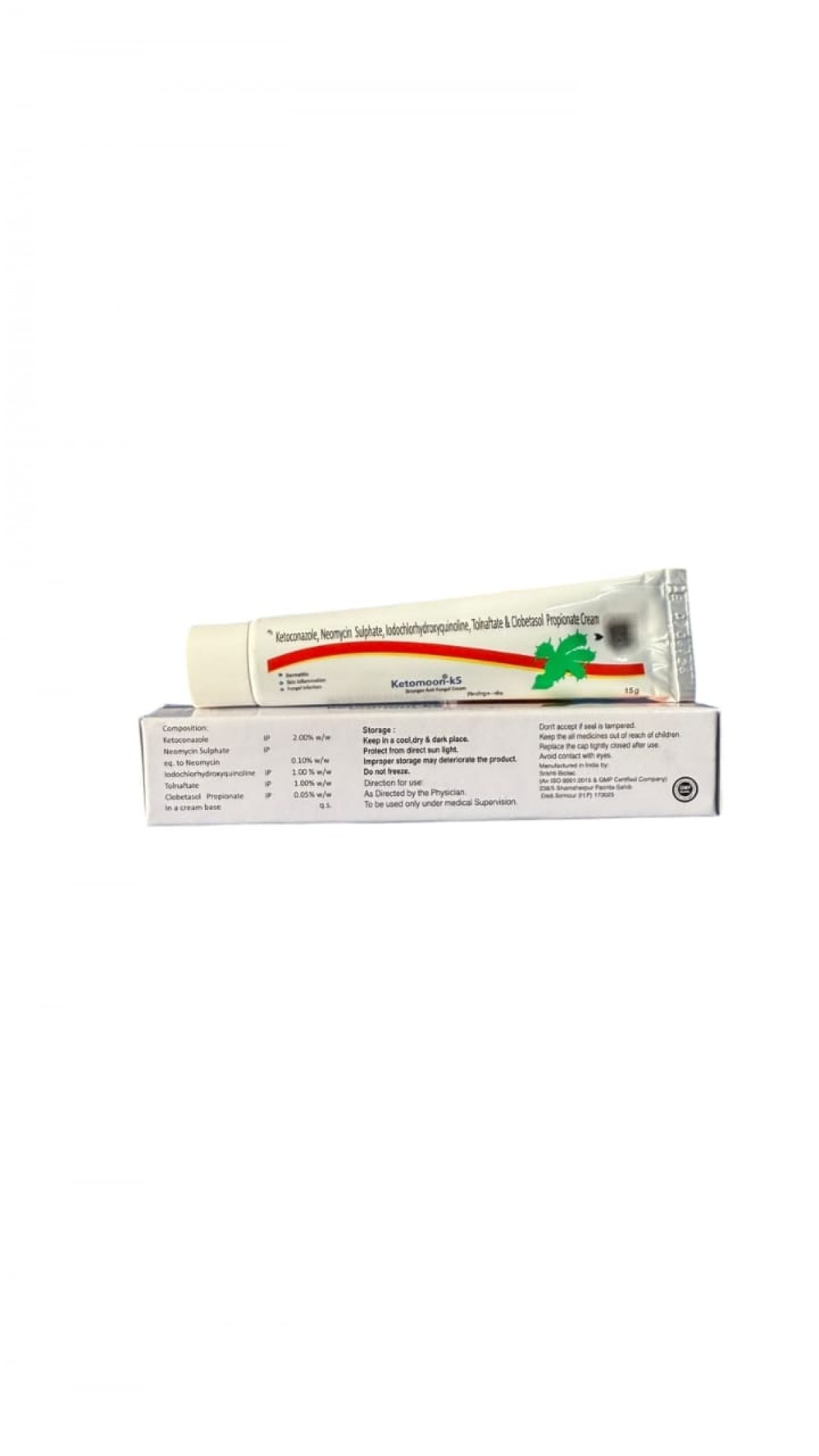
KETOMOON K5 15 gm Cream is a mix of active substances, according to the product listings:
Ketoconazole (2 mg) is an antifungal.
Neomycin (0.5%) — kills bacteria
Iodochlorohydroxyquinoline (1.0%) is an antibacterial and antiseptic.
Tolnaftate is an antifungal.
Clobetasol propionate (0.5%) is a strong corticosteroid that reduces inflammation.
mediscount.in
Because it is a cream with more than one part, it works in several ways:
Ketoconazole and tolnaftate are antifungal agents that stop or kill fungal organisms (such dermatophytes and yeasts) by breaking down their cell membranes or messing with their metabolism.
Neomycin is an antibiotic that fights bacterial contamination or a subsequent bacterial infection.
By stopping immunological activity in the area where it is applied, the corticosteroid clobetasol lowers swelling, redness, itching, and inflammation.
Faq for medicine:
Q: Is it okay to use this when pregnant?
A: There isn't much information. Only use it when the advantages outweigh the hazards and under the care of a doctor because it contains strong steroids and antifungals.
Q: Is it okay to put it on my face?
A: Not usually suggested for long-term use on facial skin because it might cause thinning, telangiectasia, and other problems. Only use it if a doctor tells you to.
Q: How long should I keep using it?
A: As your doctor tells you to, usually until the lesion goes away and then a few more days to keep it from coming again. Don't keep going on and on.
Q: What should I do if I forget to take my medicine?
A: If you recall, apply the missing dose, but only if it's not too close to the next planned application. Do not take twice as much.
Q: Can I use this on skin that is damaged or has an ulcer?
A: No, don't put it on broken, ulcerated, or open wounds unless your doctor tells you to.
Q: What if it gets in my eyes?
A: Rinse well with water right away and see a doctor.
Q: Is it okay to use when nursing?
A: Not much information. People often think it's okay to use it every now and again because systemic absorption is low. But don't put it on your nipples or anywhere else the baby might touch it, and wash it off before breastfeeding. Talk to your doctor.
Medicine interaction:
Systemic drug-drug interactions are rare with this topical treatment. But there could be interactions or things to think about, such as:
Using additional corticosteroids at the same time may make steroid side effects more likely (additive effect).
You should keep an eye on the use of additional topical antifungals, antibiotics, or other skin products in the same area to make sure they work well together and don't have any overlapping effects.
Do not use strong skin absorption inducers or inhibitors (such keratolytics) in the same area at the same time unless your doctor tells you to.
If the patient is taking systemic immunosuppressants or steroids, be careful; local suppression could make the systemic effects worse.
Always tell your doctor or pharmacist about all the medicines you are taking, whether they are topical or systemic.