


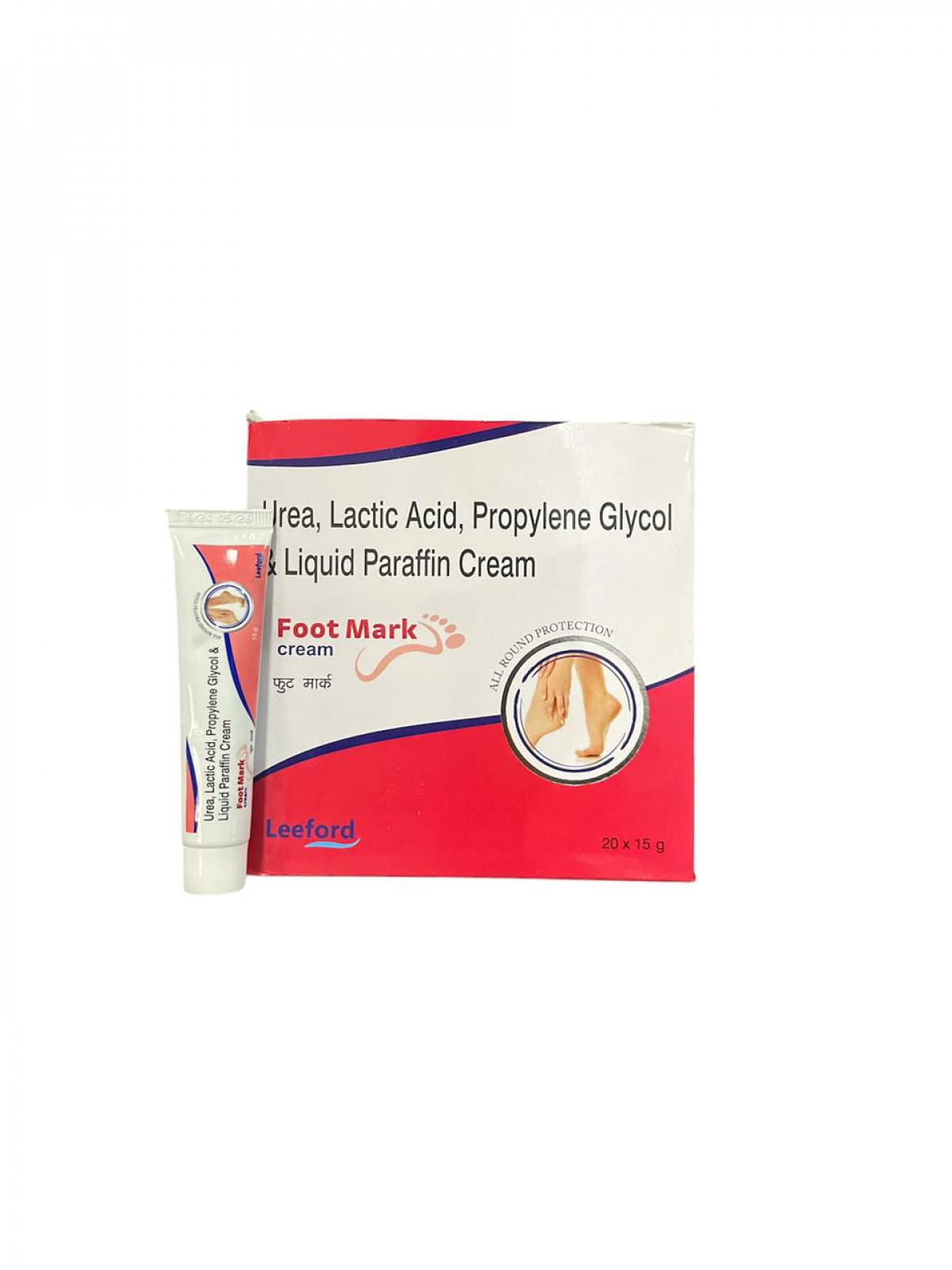
FOOTMARK CREAM 15 g
Manufactured By Leeford Healthcare
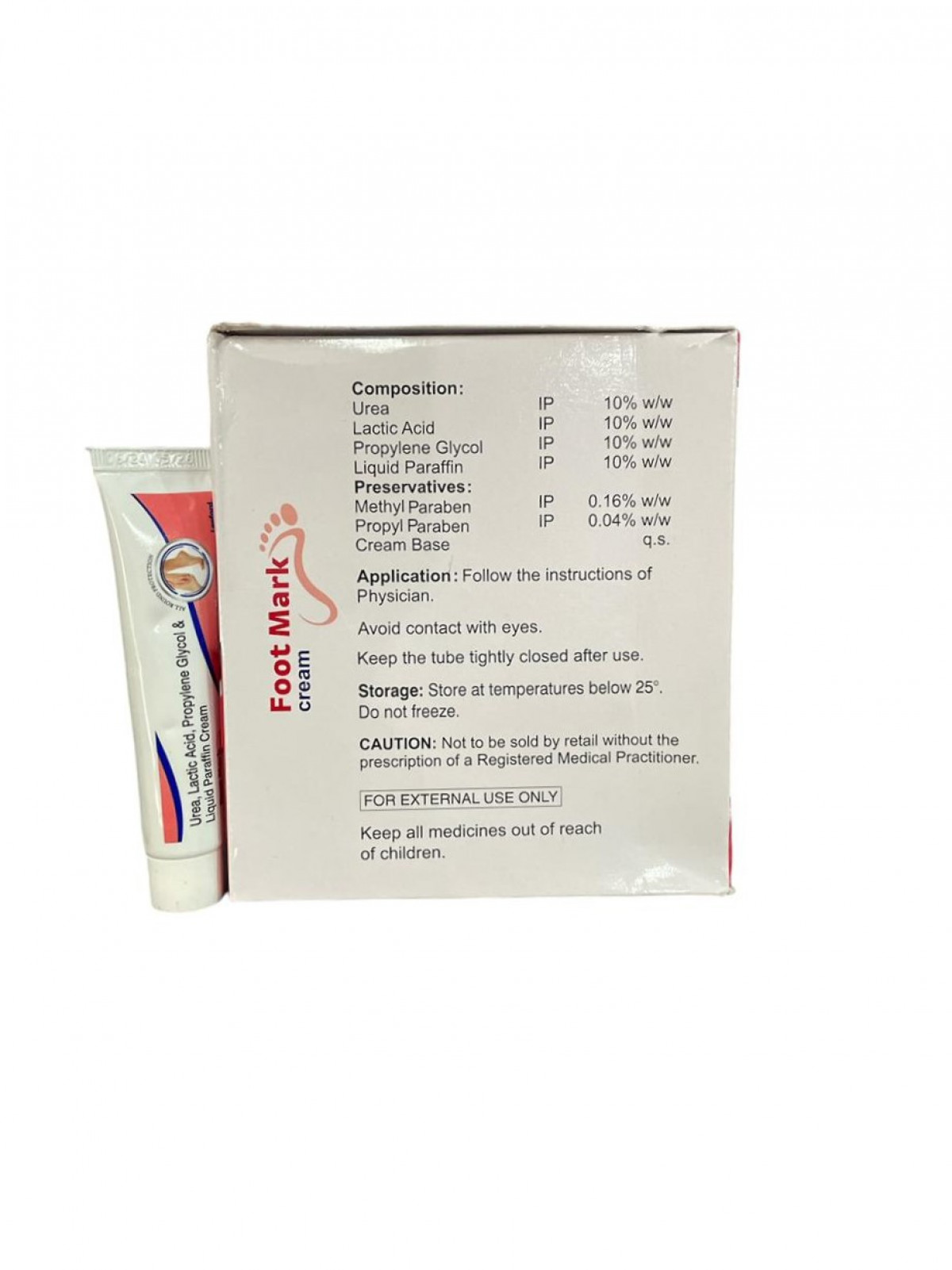
Composition Urea 10% w/w, Lactic Acid 10% w/w, Propylene Glycol 10% w/w & Liquid Paraffin 10% w/w
Rs 42.50
MRP Rs 85.00
(50% OFF)
Includes all taxes
Package SIZE
( 15 g )

100% Authentic
Products

Free
Shipping*

Products
Return Policy
Description:
Pregnancy interaction
- This mix is only for use on the outside of the body, and it doesn't get into the bloodstream very much.
- Usually safe to use during pregnancy on minor areas like heels, elbows, or thicker skin.
- Don't use it on skin that is fractured, bleeding, or badly wounded, as this may make it easier for urea and lactic acid to get into the skin.
- Lactic acid (AHA) might irritate the skin of pregnant women who have sensitive skin.
- Always talk to a doctor before using it for a long time or on a broad region.
FAQs for Medicine
Q1: What is this cream for?
It helps with dry skin, cracked heels, calluses, corns, keratosis, rough skin, and hyperkeratosis.
Q2. Is it safe to use every day?
Yes, but start with once a day, and if that works, move up to twice a day.
Q3. Does it get rid of dead skin?
Yes. Urea and lactic acid gently remove dead skin that is thick and hard.
Q4. Is it safe for people with diabetes to use?
Yes, however, they shouldn't put them on ulcers, sick regions, or deep cracks without talking to a doctor first.
Q5. Is it okay to apply this cream on my face?
No. Because of the strong exfoliants (urea + lactic acid), it is not good for facial skin.
Q6. Does it make the skin lighter?
No. It doesn't lighten skin; it makes it smoother and heals it.
Q7. Is it safe for kids to use?
Should only be used by kids over 12 years old unless a doctor says otherwise.
Q8. How long does it take for things to go better?
If you use it regularly, you should see results in 3 to 7 days.
Expert advice
- Apply to skin that is clean and dry to make sure it absorbs well.
- For best results, use at night and wear cotton socks over your heels.
- Don't use on cuts, infections, or open wounds that are bleeding.
- Don't put it between your toes to keep moisture from building up (which is important for diabetics).
- If you get irritated, cut back on how often you do it from twice a day to once a day.
- Don't let the treated areas get too much sun because lactic acid makes them more sensitive.
Side effects
- A little scorching or stinging
- Skin that is red
- Itching
- Peeling or flaking skin
- Skin that is sensitive gets irritated.
- Allergic rash or edema is rare.
- If your symptoms don't go away or get worse, stop using it and visit a doctor.
How It Works
- Urea (10%)
- Works as a keratolytic, which means it breaks down thick, dry, hard skin.
- It draws water into the skin and keeps it there, which keeps the skin moist.
- 10% Lactic Acid
- AHA, or alpha hydroxy acid.
- Promotes mild exfoliation, gets rid of dead skin cells, and makes skin feel smoother.
- Improves the skin's natural barrier, which makes it more hydrated.
- 10% Propylene Glycol
- It works as a humectant, which means it pulls moisture into the skin.
- Makes it easier for urea and lactic acid to be absorbed.
- 10% Liquid Paraffin
- Creates a barrier that keeps moisture in.
- It preserves and softens skin that is cracked.
- Overall, it: → softens thick skin → removes dead skin cells → deeply hydrates → fixes cracks → keeps skin from getting drier.
Medicine interaction
- Do not use strong topical steroids and this product on the same location at the same time.
- Don't use this with any AHA/BHA exfoliating creams, retinoids, or salicylic acid at the same time.
- If you are using antifungal or antibiotic lotions, wait 20 to 30 minutes between applications.
- Don't use with things that make your skin dry, such as skin creams that include alcohol.
How to Use
- Use lukewarm water to wash the region that hurts.
- Dry off completely.
- Put on a thin, even coating of cream.
- Gently rub it in until it is gone.
- Use once or twice a day, depending on how bad it is.
- For cracks in the heel, put on at night and cover with cotton socks.
- Do not put it on skin that is infected, open, or bleeding.
Uses/indications
- Fissures in the heels (cracked heels)
- Corns and calluses
- Very dry, rough, and hard skin
- Hyperkeratosis
- Ichthyosis
- Keratosis pilaris (lumpy skin)
- Skin that is thick on the palms, knees, and elbows
- Skin that is chapped in the cold