


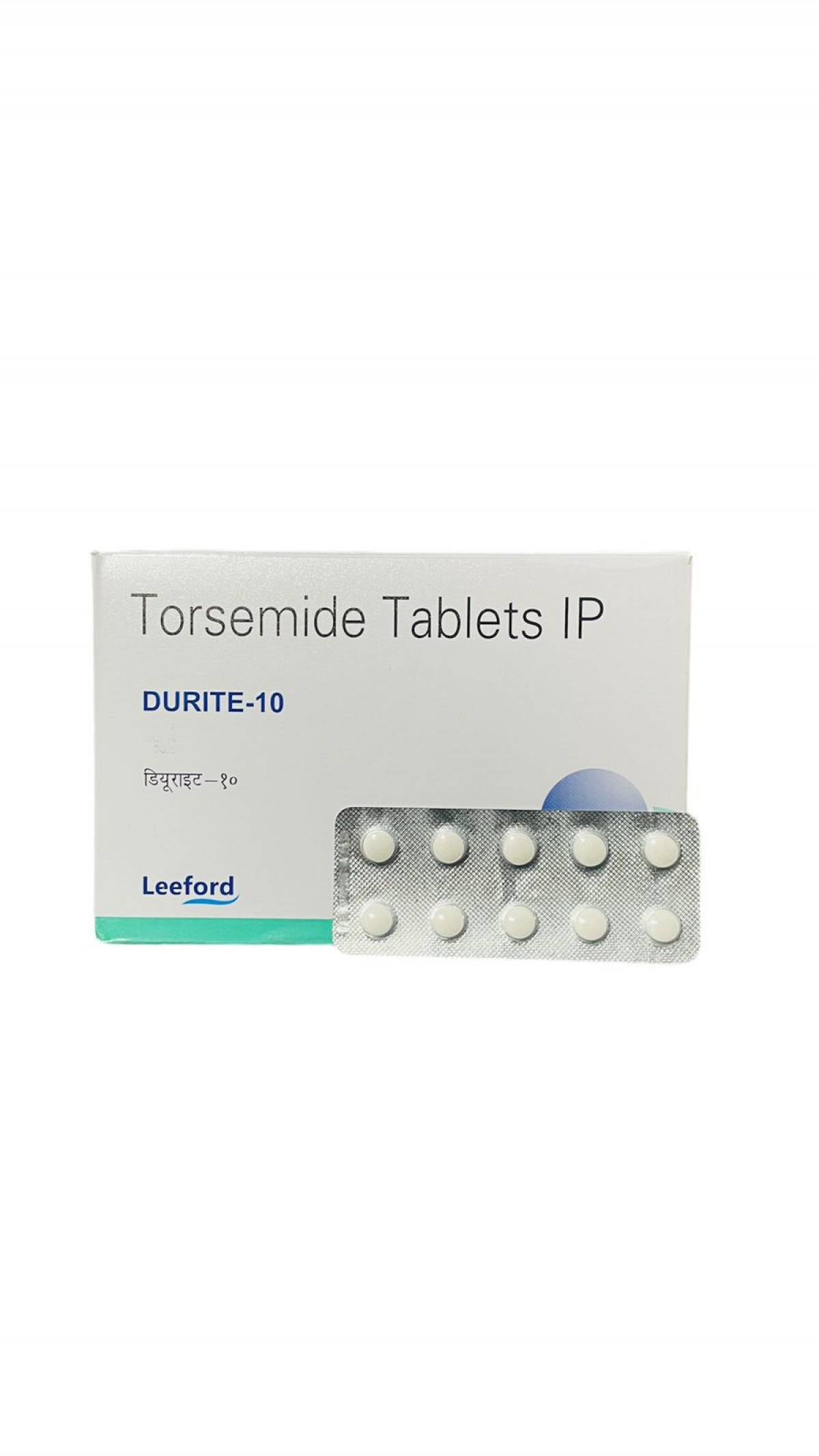
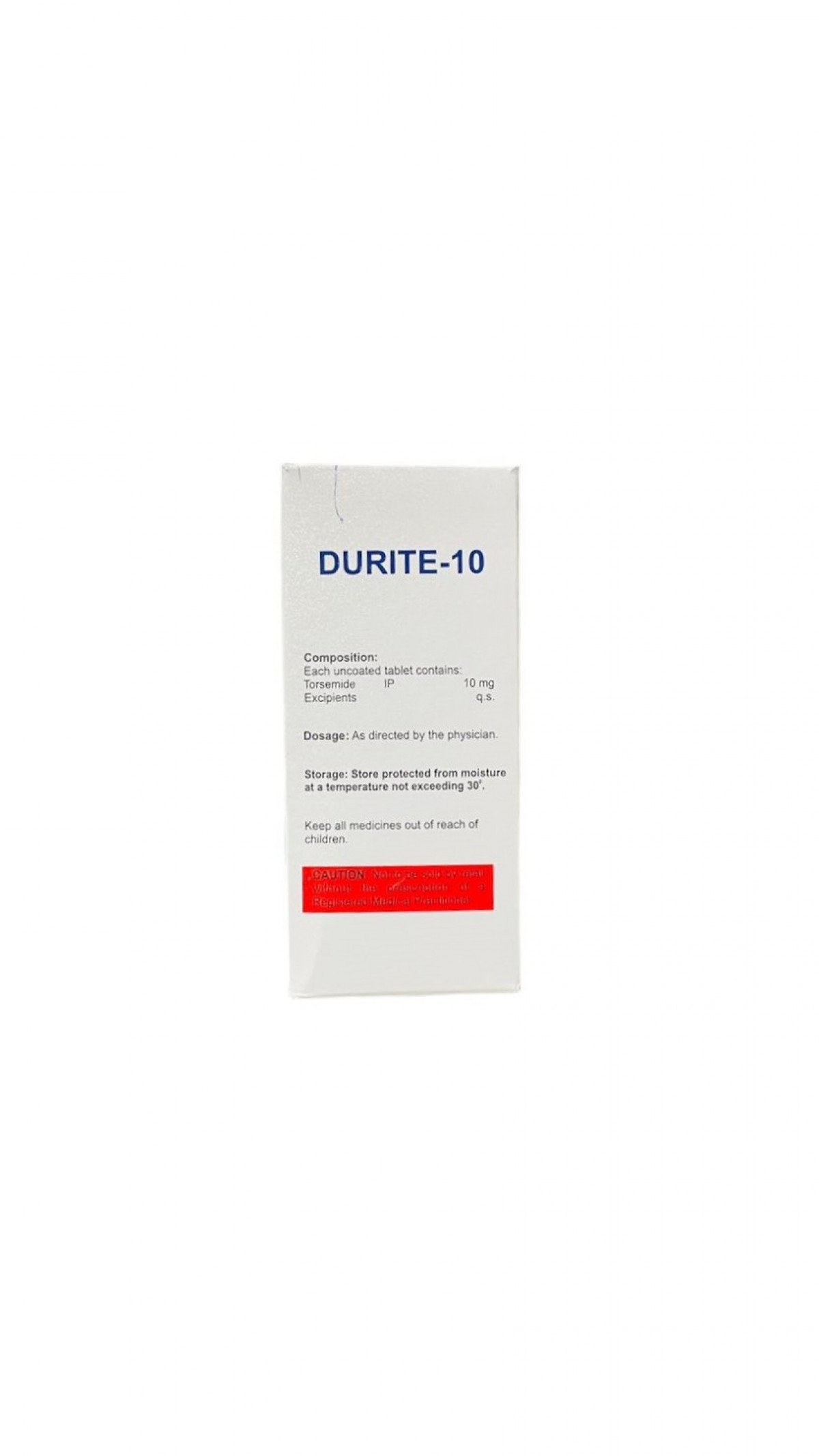
DURITE-10 TABLETS
Manufactured By Leeford Healthcare
Composition Torsemide 10 mg (Blister)
Rs 29.03
MRP Rs 60.00
(51.62% OFF)
Includes all taxes
Package SIZE
( 1x10 TABLETS )

100% Authentic
Products

Free
Shipping*

Products
Return Policy
Description:
Pregnancy interaction
- Only use if you really need to. During pregnancy, torasemide should only be given if the possible benefit is greater than the risk.
- It might throw off the balance of electrolytes and fluids in the fetus.
- Studies on animals show a possible risk, but there isn't much data on people.
- Don't do anything during the first trimester unless you have to.
- Not recommended for breastfeeding since torasemide may get into breast milk and harm the baby.
FAQs for Medicine?
1. What is the purpose of the DURITE-10 Tablet?
It is used to treat swelling (fluid retention) caused by heart failure, kidney problems, or liver cirrhosis, and to assist in lowering high blood pressure.
2. How long does it take for DURITE-10 to work?
It starts to work 30 to 60 minutes after you take it and can last up to 12 hours.
3. Is it okay to take DURITE-10 every day?
Yes, but only if your doctor tells you to. Using it regularly helps keep fluids from building up and lowers blood pressure.
4. Is DURITE-10 safe to use while pregnant?
Only use with close medical supervision. Usually, you shouldn't do it unless you have to.
5. What will happen if I miss a dose?
As soon as you recall, take it. If it's almost time for your next dose, don't do it. Do not take two doses.
6. Is it okay to drink alcohol while taking DURITE-10?
Stay away from alcohol since it can make you feel dizzy or faint if your blood pressure is low.
7. Is Lasix (furosemide) the same as DURITE-10?
Both are loop diuretics; however, torasemide works for a longer time and may not create as many problems with electrolytes as furosemide.
Expert advice
- To stop having to go to the bathroom a lot at night, take DURITE-10 in the morning.
- Drink enough water, but don't drink too much.
- Check your blood pressure, electrolytes (particularly potassium and salt), and kidney function on a regular basis.
- Only take more diuretics if your doctor tells you to.
- To avoid feeling dizzy, get up carefully after sitting or lying down.
- If you have muscle cramps, weakness, or an abnormal heartbeat, call your doctor right away.
- Don't mix with alcohol or NSAIDs without first talking to a doctor.
Side effects
- More frequent urination
- Feeling dizzy or lightheaded
- Pain in the head
- Thirsty or dry mouth
- Tiredness
- Muscle spasms
Not as common or serious:
- Low amounts of potassium or sodium (an imbalance of electrolytes)
- Not drinking enough water
- Low blood pressure (hypotension)
- Fast heartbeat
- Gout flare-ups
- Hearing problems (rare and dose-dependent)
How It Works
- Torasemide stops the kidneys from reabsorbing salt and chloride in the loop of Henle.
- This helps the body get rid of water and electrolytes, which lowers blood pressure and stops tissues from becoming too full of fluid.
- It works well to reduce edema and shortness of breath that can happen with heart failure or kidney illness.
Medicines interaction
- NSAIDs (such as ibuprofen and diclofenac) lower the diuretic impact.
- Aminoglycosides (gentamicin, amikacin) raise the chance of losing hearing.
- Lithium: May raise lithium levels and make them more dangerous.
- Corticosteroids and laxatives: may make potassium loss worse.
- Other antihypertensives: Additional decrease in blood pressure.
- Low potassium levels may make digoxin more harmful.
- Always tell your doctor about any additional medications, supplements, or herbal products you are using.
How to Use
- Follow your doctor's instructions exactly when you take the DURITE-10 Tablet.
- Usually taken once a day in the morning after breakfast.
- Do not crush or chew the tablet; just swallow it whole with water.
- Without talking to your doctor, don't change or discontinue the dose all at once.
- If you use this medicine for a long time, you should have your blood pressure and kidney function checked regularly.
Uses/indications
- Heart failure
- Chronic kidney disease (CKD)
- Cirrhosis of the liver
- High blood pressure (hypertension)
- Pulmonary edema (as an adjunctive treatment)