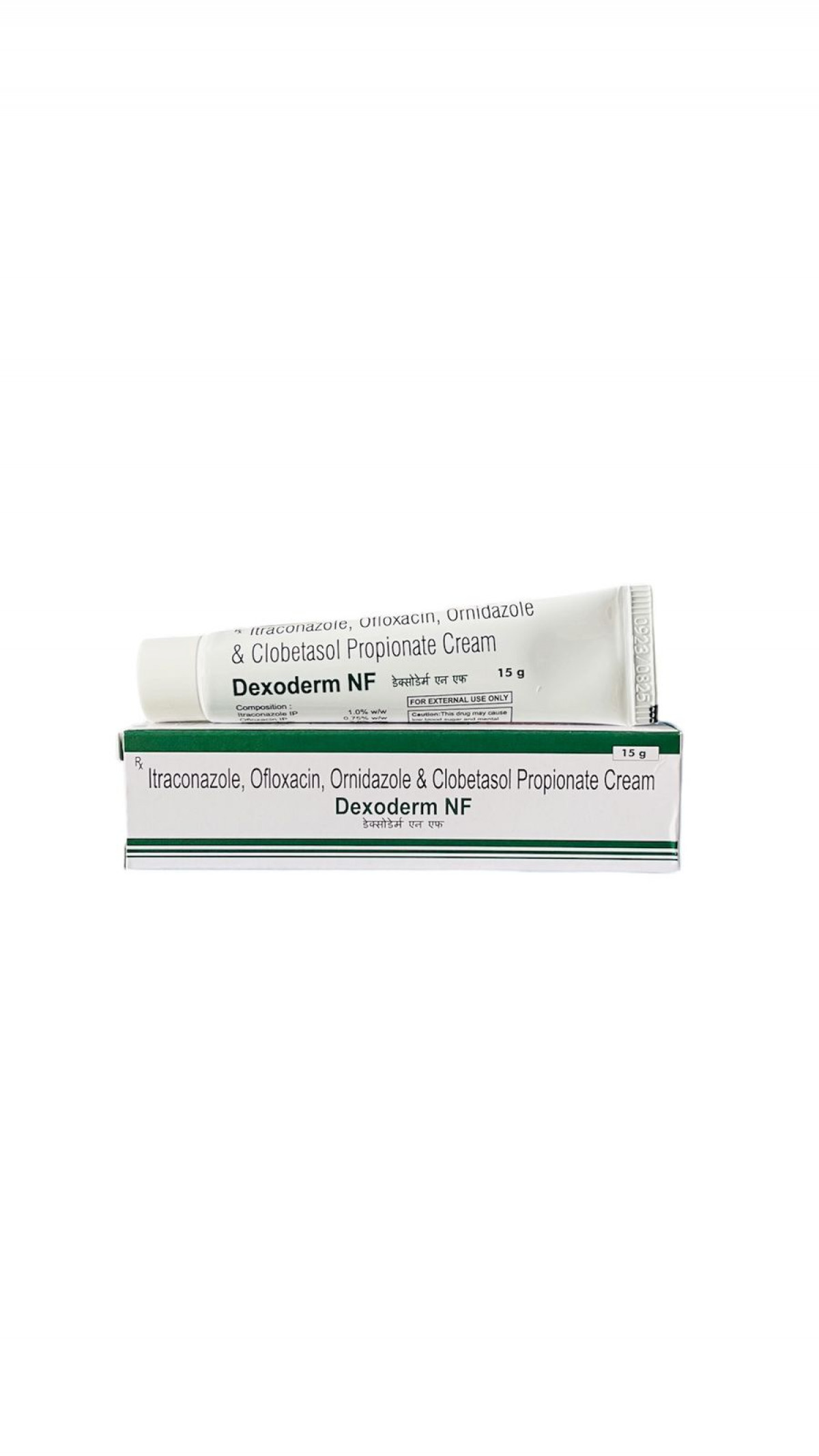
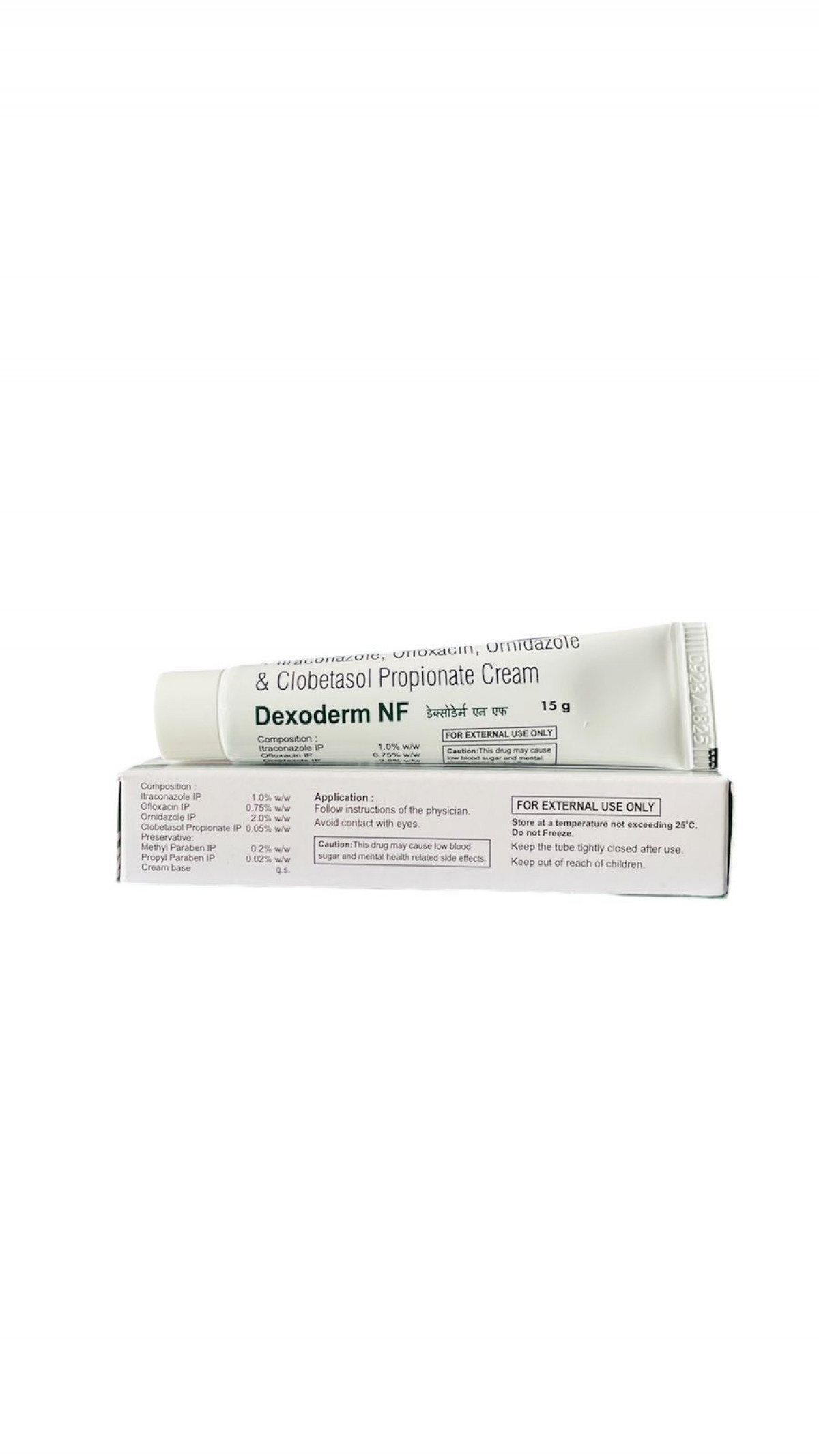
Uses / Indications:
Dexoderm NF Cream is usually used (with a doctor's supervision) for skin infections that are mixed or complicated and involve fungi, bacteria, and inflammation. Some common signs are:
Dermatological disorders characterized by both fungal and bacterial involvement (e.g., dermatomycosis with subsequent bacterial infection)
Hospitals run by Medicover
+2
PharmEasy
Dermatitis that has been infected or dermatitis that has become infected
PharmEasy +1
Psoriasis or eczema with a secondary infection or a high risk of infection (when you need something that works against both inflammation and bacteria)
Practo +1
Tinea (also known as athlete's foot, jock itch, or ringworm) and a bacterial infection at the same time
Practo +2 Medicover Hospitals +2
It is not usually used for mild, non-infected eczema or dermatitis (unless there is an infection) because strong steroids can be dangerous.
Pregnancy interaction:
There is very little information on how safe Dexoderm NF Cream is to use while pregnant.
Netmeds +3 genericure.in +3
Practo +3
Animal studies in certain components have demonstrated detrimental prenatal consequences associated with systemic steroid absorption; therefore, vigilance is warranted.
genericure.in +1
Only use if your doctor has carefully weighed the pros and cons and decided that it is really necessary (particularly when it contains a strong steroid).
Practo +2 genericure.in +2
There is not much information available on nursing. The advice is to stay away from putting it on the areola or other places where the baby could lick or touch it.
PharmEasy +2 Practo +2
In short, it's not completely against the law, but it should only be used under medical supervision during pregnancy and breastfeeding.
Expert advice:
Use the least amount of medicine that works for the shortest length of time needed to treat the disease.
Don't use it on big areas of skin or for long periods of time.
Check for bad effects (skin thinning, bruising, changes in pigmentation) on a regular basis.
Your dermatologist should check on you every so often. If your symptoms don't go away or get worse, you should think about changing your diagnosis or treatment.
Unless your doctor tells you to, don't use other strong steroids or immunosuppressants at the same time.
To avoid getting sick again, keep the area clean, don't scratch, and practice proper hygiene.
If you see any evidence of an allergic reaction, a worsening infection, or systemic symptoms, stop using it.
Talk to your obstetrician or pediatrician before using if you are pregnant or breastfeeding.
If you see any unexpected results, such changes in your skin or indicators of a systemic problem, always follow up.
Side Effects:
Dexoderm NF Cream is only applied to the skin, however it can nevertheless produce local and (rarely) systemic side effects. Some of these are:
Reactions that happen a lot or in your area
A burning, stinging, or irritating feeling at the application site Medicover Hospitals +3
PharmEasy +3 Practo +3
Itching, redness, or a rash
Peeling, flaking, and dryness of the skin
Truemeds +2
Medicover Hospitals +2
Skin thinning (atrophy), especially when steroids are used for a long time
Medicover Hospitals +2
Practo +2
Some people have stretch marks or small blood vessels that may be seen under the skin (telangiectasia), which is common with strong topical steroids used for a long time. However, this is not usually reported for this product.
Less Common / Systemic Risks (Uncommon)
Using steroids over a large area or under occlusion can promote systemic absorption, which can lead to problems with the adrenal glands or the HPA axis, changes in blood glucose, and other issues.
Medicover Hospitals +1
Allergic symptoms, such swelling, a bad rash, or hives, are rare but can happen.
Practo +1
Secondary infections: Steroids can lower local immunity, which might lead to the overgrowth of other organisms (fungi or bacteria) if they are not handled correctly. Medicover Hospitals
2+
Practo
If you are allergic to any of the ingredients (clobetasol, itraconazole, ofloxacin, or ornidazole),
Stop using the product right away if you see your symptoms getting worse, your skin getting thinner, or any signs of systemic effects including weight gain, tiredness, or hormonal changes.
How to use:
These are the rules for how to use it:
Only for use on the outside; do not put in your mouth or eyes.
PharmEasy +1
Before using Truemeds, gently clean and dry the region of skin that is affected.
Put a tiny layer on the area that hurts (and maybe a little bit beyond) and rub it in gently until it is absorbed.
PharmEasy +2
Practo +2
1–2 times a day, or as directed by the doctor
Practo +2
PharmEasy +2
Don't use too much—don't put it on a bigger area or in bigger amounts than you need to.
PharmEasy +2
Practo +2
Don't cover it with airtight dressings unless your doctor tells you to. This is because occlusion makes absorption and side effects more likely.
PharmEasy +1
If you forget a dose, use it when you remember. If the next dose is coming up soon, skip the missed one. Don't take two doses.
Practo +2
PharmEasy +2
If you accidently get it in your eyes or mouth, wash it out with a lot of water.
PharmEasy +2 Practo +2
If your skin issue has gotten better, don't discontinue therapy suddenly. Follow your doctor's instructions for the full course of treatment.
Practo +1
How it works:
Four medications are combined in Dexoderm NF Cream: Ofloxacin, Ornidazole, Itraconazole, and Clobetasol. The antibiotic ofloxacin kills bacteria by stopping them from self-repair and reproduction. Ornidazole is an antibiotic that damages the DNA of bacteria and other pathogenic microorganisms. One antifungal drug is itraconazole. It treats your skin infection by killing the fungus and halting its growth by rupturing its cell membrane. One steroid medication is clobetasol. It prevents the synthesis of prostaglandins, which are chemical messengers that cause skin to become red, puffy, and itchy.
Faq for medicine:
Q. When will I see a difference?
You might notice less redness or itching in a few days, but it could take longer for everything to go away. Even if your symptoms get better quickly, you should always finish the full course as directed.
Practo +1
Q. Can I put Dexoderm NF on my face or in the creases of my skin?
Generally, you shouldn't use it on places with thin skin, such the face, groin, or underarms, unless a dermatologist tells you to. This is because the skin absorbs more and the negative effects of steroids are more likely.
PharmEasy +2
Practo +2
Q. Can I stop using the cream when I feel better?
No, stopping early could cause the infection to come back. Follow your doctor's advice and use it for the whole amount of time.
Practo +1
Q. What should I do if I put on too much?
Overdosing is not likely to cause major harm because it is topical. However, it can happen if you eat it or put it on huge areas for a long time. If you eat it or develop systemic signs, get medical care right away.
Practo +1
Q. Does this medicine make you want to take it again?
No, there have been no reports of habit-forming properties.
Practo
Q. Is it okay to drink beer while using it?
There is no known direct interaction with alcohol. If you have any worries, talk to your doctor.
Practo +1
Q. Is it safe for kids to use?
Children should only use them under rigorous medical supervision because they are more likely to have negative effects from strong steroids.
Practo +1
Medicine interaction:
Dexoderm NF Cream is a topical medicine, thus systemic drug-drug interactions are less common. However, you should always be careful, especially if a lot is absorbed or if it is used with other topical or systemic treatments. Some possible interactions are:
Using more than one topical corticosteroid at the same time raises the likelihood of steroid side effects such thinning and additive suppression.
PharmEasy +2
Practo +2
Other antifungal medications (such as systemic itraconazole, ketoconazole, and fluconazole) may exhibit potential additive toxicity or interactions at the enzyme level (cytochrome P450).
Truemeds +1
Systemic medications that cytochrome P450 enzymes break down—these interactions are just theoretical because itraconazole is a CYP inhibitor. However, if you use it topically, the effect may not be very strong until a lot of it gets absorbed.
PharmEasy +1
Drugs that injure skin or disrupt the skin barrier, including keratolytic agents, occlusive dressings, or agents that damage skin, may make absorption and side effects worse.
medications that raise the risk of systemic effects when taken with steroids (such diabetes medications and immunosuppressants) should be watched for further effects if they are absorbed.
Practo +1
Always tell your doctor about all the medicines you take because interactions rely a lot on things like how much skin you use, how healthy your skin is, and what other prescriptions you are taking.