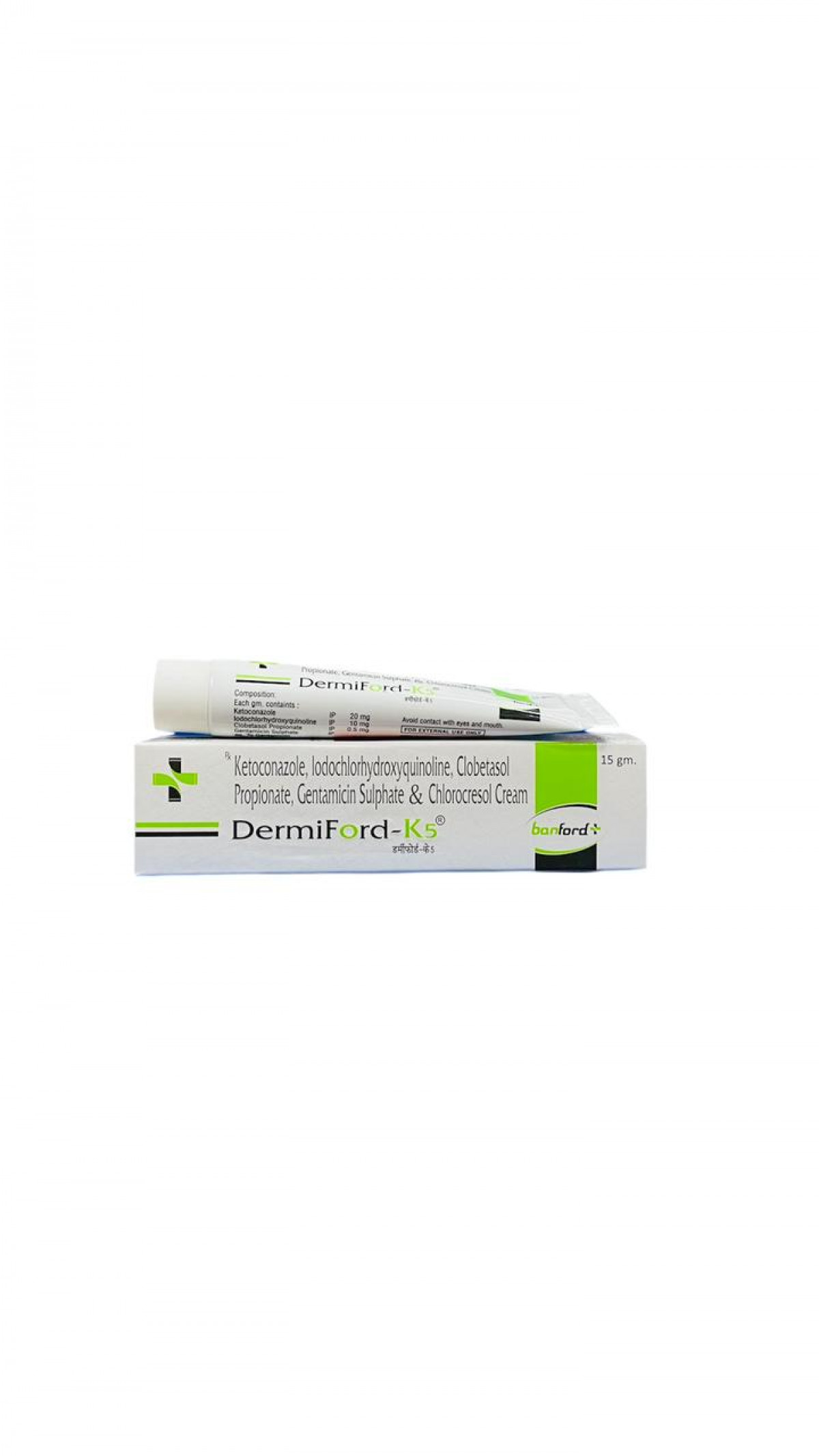
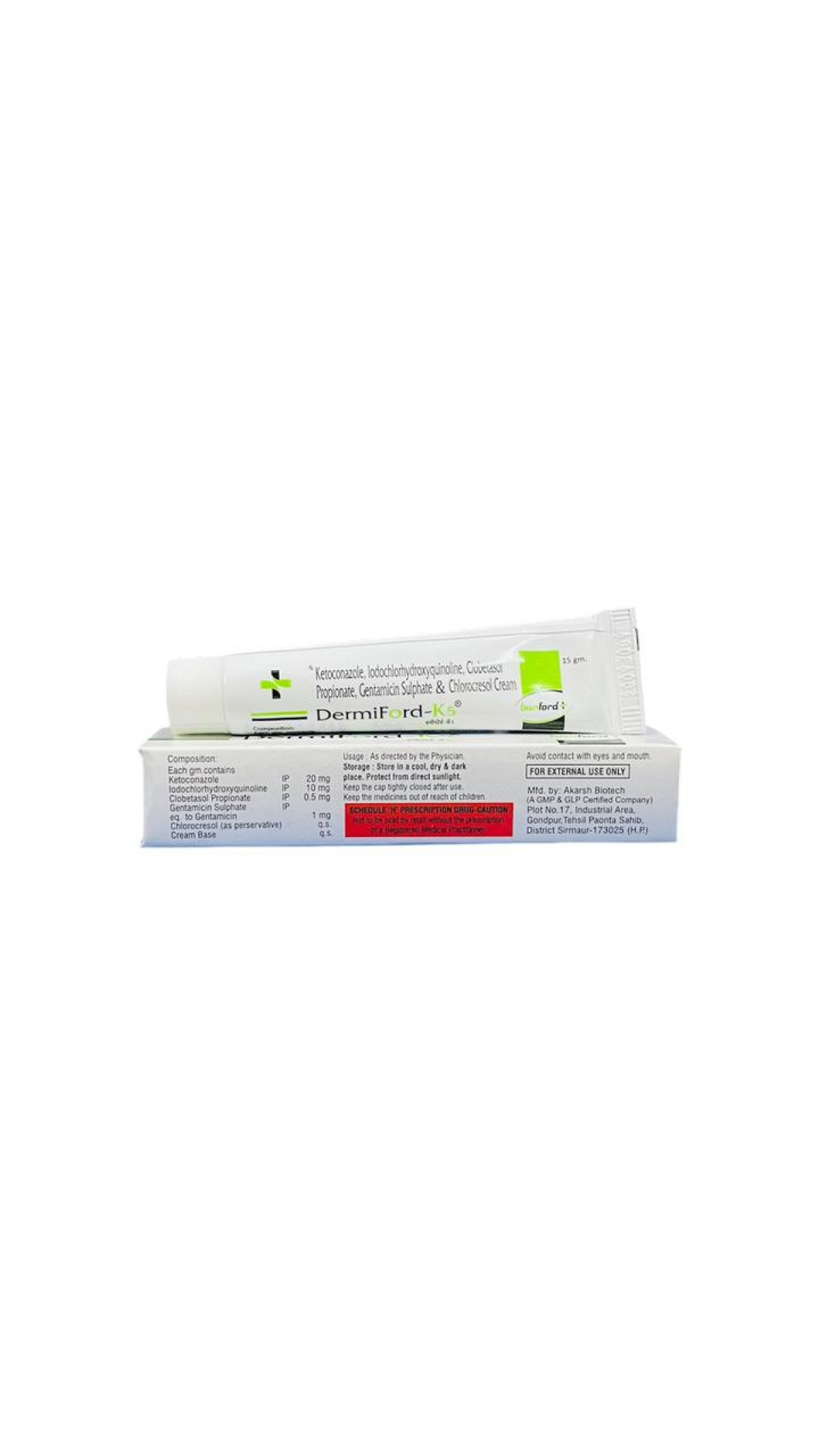
Uses / Indications:
Dermiford K5 Cream is usually prescribed for the following reasons:
Superficial fungal skin infections, such tinea and ringworm, are more likely to happen when there is or is a danger of a secondary bacterial infection.
Eczematous or dermatitis lesions that are inflamed and have too many microbes growing on them
Skin diseases caused by both bacteria and fungi
Situations that require both antifungal and antibacterial treatments as well as anti-inflammatory treatment
Not for general skin whitening, cosmetic use, or rashes that haven't been diagnosed yet.
Pregnancy interaction:
This is a really important area where there isn't much data and you need to be careful.
Being pregnant
Clobetasol is under Category C, which means that there is a chance of risk.
Drugs.com
+2
Today in Medical News
A review of topical corticosteroid safety during pregnancy identified evidence linking the use of powerful or highly potent topical steroids to low birth weight, particularly with elevated cumulative dosages.
PMC
Dermiford K5 contains a strong corticosteroid, which means the risk may be higher. Therefore, it should only be used during pregnancy if the advantages outweigh the dangers.
Gentamicin (an aminoglycoside) has a theoretical risk of fetal toxicity when administered systemically, even though systemic absorption from topical usage is low.
Drugs.com
So, Dermiford K5 should only be used during pregnancy with close medical supervision, on small areas, and for a short time.
Nursing
We don't know if clobetasol topical is highly secreted into breast milk, but we should be careful.
Drugs.com
+1
If you use it near the breast or nipple, you should wipe the area clean before nursing to keep the baby from getting sick.
Drugs.com +1
Don't let the baby touch places that have been treated.
Only use when absolutely necessary, under supervision, and for the minimum amount of time.
The NHS (UK) says that "very little of it gets into your blood and almost none gets to your baby" if you apply topical clobetasol correctly.
nhs.uk
Expert advice:
You should only use Dermiford K5 if your dermatologist tells you to and watches you closely.
Use the lowest strength that works for the shortest amount of time.
Do not apply to large regions of the body, especially if you are pregnant or have children, unless it is absolutely necessary.
Don't use it on sensitive areas like your face, groin, or armpits until told to.
To lower the possibility of systemic absorption, don't cover treatment regions (unless told to).
Watch for adverse effects such thinning, changes in pigmentation, and the spread of infection.
Stop and check in if there is no improvement in a fair amount of time or if things get worse.
Tell all of your doctors, including your dermatologist and obstetrician, that you are using this cream, especially if you are pregnant or breastfeeding.
If you can, use gentler or moderately strong topical medicines with superior safety profiles during pregnancy, unless the clinical condition calls for stronger therapy.
Don't use more than one strong topical treatment on the same location at the same time.
If you need to use it for a long time or at a high dose, especially in vulnerable groups, you should think about checking your adrenal function from time to time.
Side Effects:
Dermiford K5 has strong ingredients, therefore side effects can happen (local and, in rare circumstances, systemic).
Side Effects That Happen Often or in Your Area
Burning, stinging, or moderate discomfort at the point of application (particularly at first) nhs.uk +2 1mg +2
A rash, redness, scaling, or peeling
Skin that is dry in the area that was treated
Itching
Skin thinning (atrophy) with long-term or repetitive use
Stretch marks (striae) and telangiectasia (small blood vessels that are easy to see)
Changes in color or pigment
Wounds take longer to heal
Higher chance of getting a second infection (if the barrier is broken)
Less Common / More Serious / Systemic Risks
Long-term usage or use across broad areas of corticosteroids can cause systemic absorption, which can lead to problems with the hypothalamic-pituitary-adrenal (HPA) axis, Cushingoid characteristics, or adrenal insufficiency.
If systemic absorption is high, it could affect blood sugar, blood pressure, and other things.
Allergic responses (swelling, blistering, and a bad rash)
There is a possible danger of nephrotoxicity or ototoxicity from the antibiotic gentamicin if it is absorbed systemically in high amounts, although this is not likely to happen when it is used topically.
Absorption is higher and the risk is higher in youngsters, the elderly, or people with weak skin.
If you have systemic symptoms such unusual edema, weight gain, tiredness, or blurry vision, you should visit a doctor.
How to use:
Here are some general guidelines (always follow your doctor's advice):
Gently clean and dry the area that needs the cream before putting it on.
Put a thin coating of Dermiford K5 Cream on the affected skin, covering the lesion and a small area around it.
Rub in gently until it is all gone.
The dermatologist will tell you how often to do it, although once or twice a day is normal.
Don't put it near your eyes, mouth, mucous membranes, or broken skin unless your doctor tells you to. If you do get it on your skin by accident, rinse it off with water.
Do not cover the region tightly with a bandage or dressing unless your doctor tells you to. This makes the medicine more likely to be absorbed and raises the chance of side effects.
Before and after applying, wash your hands (unless the area being treated is your hands).
Unless your doctor tells you to stop, keep going for the whole amount of time that was suggested, even if your symptoms go better sooner.
If you forget to take a dose, do it as soon as you recall, unless it's almost time for the following dose. Don't take two doses.
Stop and call your doctor if you have adverse effects, your illness gets worse, or it spreads.
Sources that explain how to get there and what to do:
1mg +4
Truemeds +4
Practo +4
How it works:
Dermiford K5 is a topical (skin) combination treatment that is meant to treat skin infections that are both fungal and bacterial and cause irritation. The exact formula may differ from place to place, but it usually includes:
Clobetasol propionate is a strong corticosteroid.
Gentamicin is an antibiotic that belongs to the aminoglycoside class.
Ketoconazole (or another antifungal)
Iodochlorhydroxyquinoline (or a halogenated hydroxyquinoline that is similar)
Each part adds:
Clobetasol, a corticosteroid, stops inflammation, redness, itching, and swelling by blocking local immune mediators.
The antifungal (ketoconazole or something like it) stops the manufacture of fungal cell membranes, which kills or reduces fungal organisms.
Gentamicin is an antibiotic that works against bacteria that are sensitive to it by stopping the synthesis of proteins in such bacteria.
The iodochlorhydroxyquinoline agent has a wide range of antimicrobial actions, including antifungal, antibacterial, and perhaps antiprotozoal activities.
So, the combined action is to treat infections (fungal and bacterial) and lower inflammation and symptoms like itching and redness.
Sources say that Dermiford K5 is used to treat skin infections caused by bacteria and fungi by reducing redness, itching, and swelling.
Truemeds +2
Niche Formulations +2
Faq for medicine:
Q: Is it okay to take Dermiford K5 Cream when pregnant?
A: There isn't a lot of convincing proof that it's safe during pregnancy. It should only be used in small regions and with medical supervision because it has a strong corticosteroid and a mix of antibiotics and antifungals. You need to weigh the risks and benefits.
Q: Can I use it if I'm breastfeeding?
A: Be careful when using. Don't put it on or near the breast or nipple, and make sure to wipe off any extra cream before nursing. Use the least quantity possible for the least period of time, and only with supervision.
Q: When will I start to feel better?
A: You may start to feel better in a few days, with less itching and redness. It could take a few weeks for the problem to go away completely, depending on how bad it is.
Q: Is it okay to use on the face?
A: Strong steroids are usually more dangerous on thin skin on the face, so people usually don't use them on their faces or do so with a lot of care and under supervision.
Q: What happens if I forget a dose?
A: Use it when you remember, but don't take two doses in a row.
Q: When should I stop using and see a doctor?
A: If symptoms get worse, new lesions emerge, you have an allergic reaction (edema, blistering), you see indicators of systemic effects (unusual lethargy, swelling, weight gain), or you don't see any recovery in the expected period.
Q: Is it safe for kids?
A: Children are more likely to have systemic absorption and adverse effects (skin thinning, growth inhibition), therefore use must be careful, limited in area and duration, and done under the advice of a pediatric dermatologist.
Medicine interaction:
Dermiford K5 is a topical medication, therefore systemic drug interactions are rare. However, consider the following:
Other topical steroids or immunosuppressive medicines in the same area may make adverse effects worse, either locally or systemically.
Systemic immunosuppressants may make it more likely that you may have skin infections or absorb them.
You should always talk to your doctor before combining with other topical or systemic antifungals or antibiotics, as this could have extra, opposite, or unexpected effects.
Using it on skin that is damaged (such wounds or burns) makes it more likely to be absorbed and interact with other things.
Clobetasol, one of the primary ingredients, is known to interact with other corticosteroids or immunomodulators.
WebMD +2 Wikipedia +2