


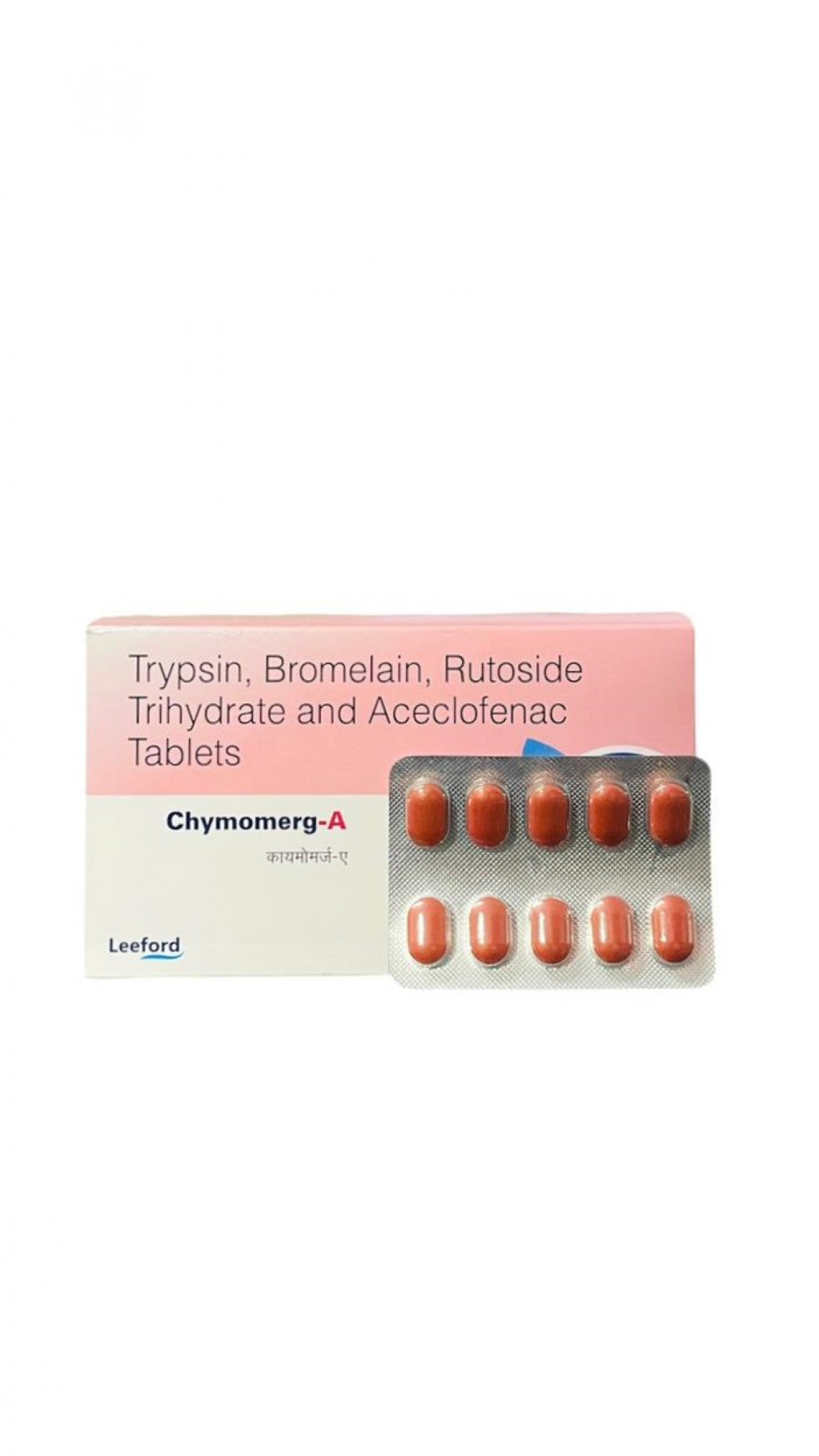
CHYMOMERG - A TABLETS
Manufactured By Leeford Healthcare
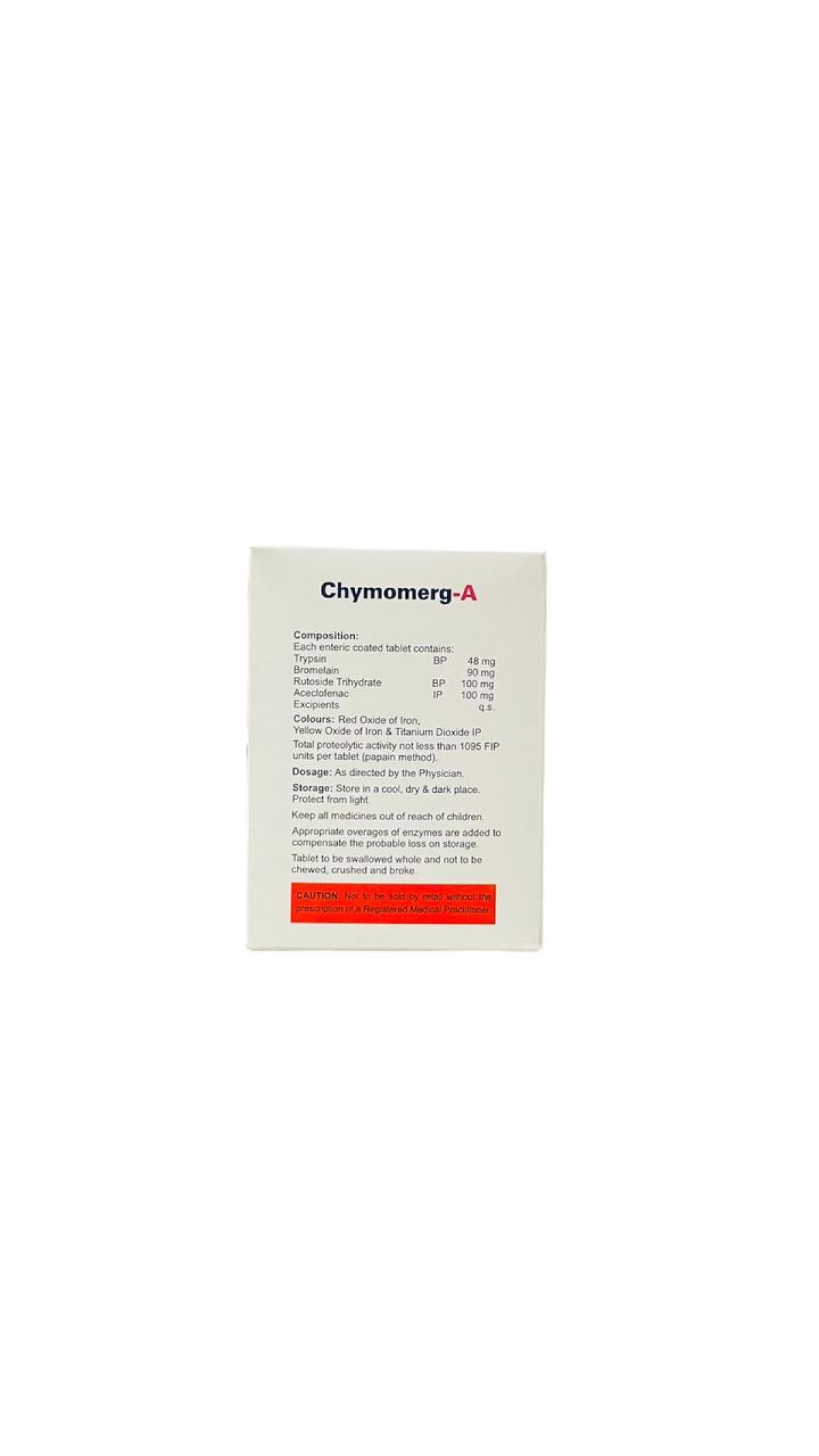
Composition Trypsin 48 mg, Rutoside Trihydrate 100 mg, Bromelain90 mg & Aceclofenac 100 mg (EC) (Blister)
Rs 100.00
MRP Rs 200.00
(50% OFF)
Includes all taxes
Package SIZE
( 1x10 TABLETS )

100% Authentic
Products

Free
Shipping*

Products
Return Policy
Description:
Pregnancy interaction
- Pregnancy: CHYMOMERG-A is a mix of enzymes and a non-steroidal anti-inflammatory medicine (NSAID) that includes trypsin, bromelain, rutoside trihydrate, and aceclofenac.
- There is not much information on how it works during pregnancy.
- Aceclofenac is an NSAID; hence, it is not usually suggested during the third trimester of pregnancy since it could affect the fetal heart (premature ductus arteriosus closure) and kidney.
- Only use throughout the first and second trimesters if your doctor tells you to.
- Breastfeeding: Aceclofenac and enzyme components may enter into breast milk in trace amounts; consequently, use with caution.
- Always tell your doctor if you are pregnant, trying to get pregnant, or breastfeeding before taking this medicine.
FAQs for Medicine?
Q1. What does CHYMOMERG-A do?
A1. It is used to ease pain, edema, and inflammation that happen after surgery, trauma, arthritis, or muscular injury.
Q2. Is it okay to take CHYMOMERG-A after eating?
A2. Yes. It should be taken after meals because it has aceclofenac in it, which might irritate the stomach.
Q3: Is it okay to use CHYMOMERG-A alongside antibiotics?
A3. Yes, doctors commonly give it to people who are recovering from surgery or have an inflammatory condition together with antibiotics to speed up the healing process. However, this should only be done under medical supervision
Q4. Does CHYMOMERG-A make you want to do it again?
A4. No, it does not cause addiction or habits.
Q5. Is it safe to take with other painkillers?
A5. Don't take it with other NSAIDs (such as ibuprofen or diclofenac) unless your doctor tells you to. Doing so can make your stomach more likely to get upset or have ulcers.
Expert advice
- After meals, drink a full glass of water with CHYMOMERG-A.
- Don't drink alcohol or smoke because they can make your stomach hurt more.
- Don't take more than the recommended amount or for longer than the recommended time.
- Tell your doctor if you have ulcers in your stomach, heart disease, kidney or liver problems, or bleeding difficulties.
- If you get a rash, have trouble breathing, have stomach pain, or have black stools, stop taking the prescription and talk to your doctor.
- Do not use throughout late pregnancy unless strictly instructed.
Side effects
- Nausea, pain in the stomach, or acidity
- Diarrhea or indigestion
- A little bit of dizziness or a headache
- Itchy skin or a rash (rare)
- Edema or edema (not typical with long-term use)
- Allergic or bleeding responses are quite rare.
- Stop taking the prescription and get medical care right away if you have severe stomach discomfort, vomit blood, or have trouble breathing.
How It Works
- CHYMOMERG-A has the best of both worlds: it has proteolytic enzymes and an NSAID that helps with pain.
- Trypsin and bromelain are natural enzymes that help break down inflammatory proteins at the site of damage. This makes the swelling go down and speeds up the healing process.
- Rutoside Trihydrate (Rutin) is a bioflavonoid that protects capillaries and has antioxidant actions that help tissues heal and lower oxidative stress.
- Aceclofenac is a non-steroidal anti-inflammatory medicine (NSAID) that stops the body from making prostaglandins, which helps with pain, redness, and swelling.
- They work together to heal and relieve pain in two ways: through enzymes and strong pain relief.
Medicines interaction
- Anticoagulants (Warfarin, Heparin): Might make bleeding more likely.
- Antiplatelet medications (aspirin, clopidogrel): Increase the risk of bleeding.
- Other NSAIDs or corticosteroids: May make stomach irritation worse.
- Antihypertensive medications (ACE inhibitors, diuretics) may diminish their efficacy.
- Methotrexate or Lithium: These medicines may be more toxic than others.
- Always tell your doctor about any other drugs or supplements you are taking.
How to Use
- Take the pill as your doctor told you to.
- Usually, one tablet twice a day after meals.
- Do not crumble or chew; just swallow whole with water.
- Even if you feel better right away, you should finish the whole treatment.
- If you forget to take a dose, do it as soon as you recall. If it's almost time for the next one, skip it.
Uses/Indications
- Pain, edema, and inflammation after surgery
- Injuries from sports (sprains, strains, and bruises)
- Musculoskeletal problems such as osteoarthritis, rheumatoid arthritis, and spondylitis.
- Recovery after dental or ENT surgery
- Damage to tissue or swelling from trauma
- Pain alleviation and swelling of soft tissue