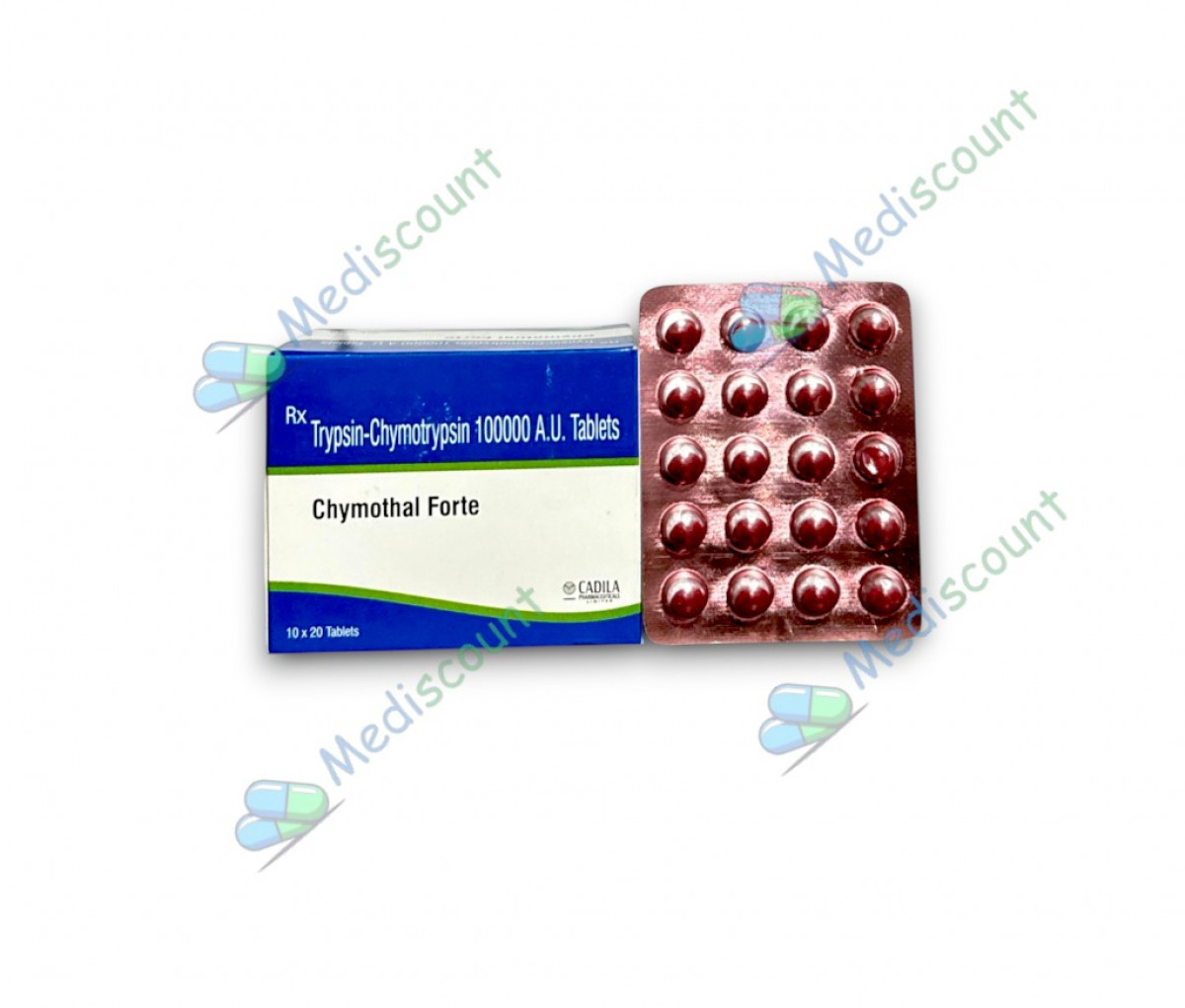
Uses / Indications:
Chymocip Tablet is used to treat and control:
Pain and swelling after surgery
Injuries from trauma or muscle strain
Swelling and bruises from an injury
Inflammation of the sinuses and the respiratory tract
Pain after tooth extraction and recovery from dental surgery
Swelling or discomfort in the joints or arthritis
Healing wounds and repairing tissues
Pregnancy interaction:
Chymocip Tablet contains trypsin and chymotrypsin, two proteolytic enzymes that help reduce inflammation, swelling, and pain in injuries, surgeries, and infections.
Having a baby:
There isn't a lot of information about using Chymocip when pregnant.
It should only be used if a doctor says so and it is plainly necessary.
Animal studies haven't found any adverse consequences, but there isn't enough data on humans.
Breastfeeding:
It is not certain how safe Chymocip is while breastfeeding.
Breastfeeding moms should be careful when using it and talk to a doctor first.
Expert advice:
For optimal absorption, take the Chymocip Tablet on an empty stomach before meals.
Do not crush or chew the tablet; just swallow it whole.
Do not take more than the recommended dose or time.
Talk to your doctor before using this if you are pregnant, nursing, or on blood thinners.
You may need to see a doctor if you have significant pain or swelling that doesn't go away.
Store in a cool, dry location and keep away from kids.
Side Effects:
Some common side effects are
Stomach pain or nausea
Loose stools or diarrhea
A little rash or irritation on the skin
Bloating in the stomach
Side effects that are serious but not common:
An allergic reaction can cause a rash, swelling, and trouble breathing.
Ulcers in the mouth
Very unusual, but severe stomach pain or blood
If you have severe allergic reactions, stop taking the drug and get medical help right away.
How to use:
Follow your doctor's instructions strictly when using Chymocip Tablet.
People usually take it one to three times a day, depending on how serious the problem is.
Take the pill on an empty stomach, at least 30 to 60 minutes before you eat.
Do not chew or crush; just swallow it whole with water.
If you happen to forget a dose, please take it as soon as you remember. If it's nearly time for your next medication, please refrain from doubling the dose. Just skip it.
Even if your symptoms become better, keep taking the medicine for the time it was given.
How it works:
Chymocip Tablet has trypsin and chymotrypsin, which are proteolytic enzymes that speed up the healing process in the body by:
Breaking down proteins where there is inflammation or damage.
Making the tissue less swollen and helping blood flow better.
Improving the healing and regeneration of tissues following surgery or injury.
These enzymes also help with pain relief and speed up healing from infections, wounds, or inflammatory diseases.
Faq for medicine:
What is the Chymocip Tablet used for?
It is used to lessen pain, swelling, and inflammation that can happen after surgery, an injury, trauma, sinusitis, or dental work.
Q2: Can Chymocip help with tonsillitis or swelling in the throat?
Yes. When recommended by a doctor, it may help with throat infections or tonsillitis by lowering inflammation and pain.
Q3. Is Chymocip a painkiller or an antibiotic?
No. It is not an antibiotic or painkiller; it is an anti-inflammatory drug that works by enzymes.
Q4. How long does it take for Chymocip to work?
Depending on the condition, you may feel less pain and swelling within 2 to 3 days of using it regularly.
Q5. Is it safe to take Chymocip alongside painkillers?
Yes, it is often used with antibiotics or painkillers to speed up recovery, but only with a doctor's permission.
Medicine interaction:
Chymocip Tablet might work with:
Anticoagulants, such as warfarin and heparin, may raise the risk of bleeding.
Antibiotics, like amoxicillin, are often given together. This helps the antibiotics get into the body better, but they need to be watched.
Nonsteroidal anti-inflammatory medicines (NSAIDs): Using these together should be watched to avoid gastrointestinal upset.
Alcohol: May make stomach problems worse; don't drink it while you're being treated.
Before you start taking this medicine, always tell your doctor about all the medicines and supplements you are currently taking.