


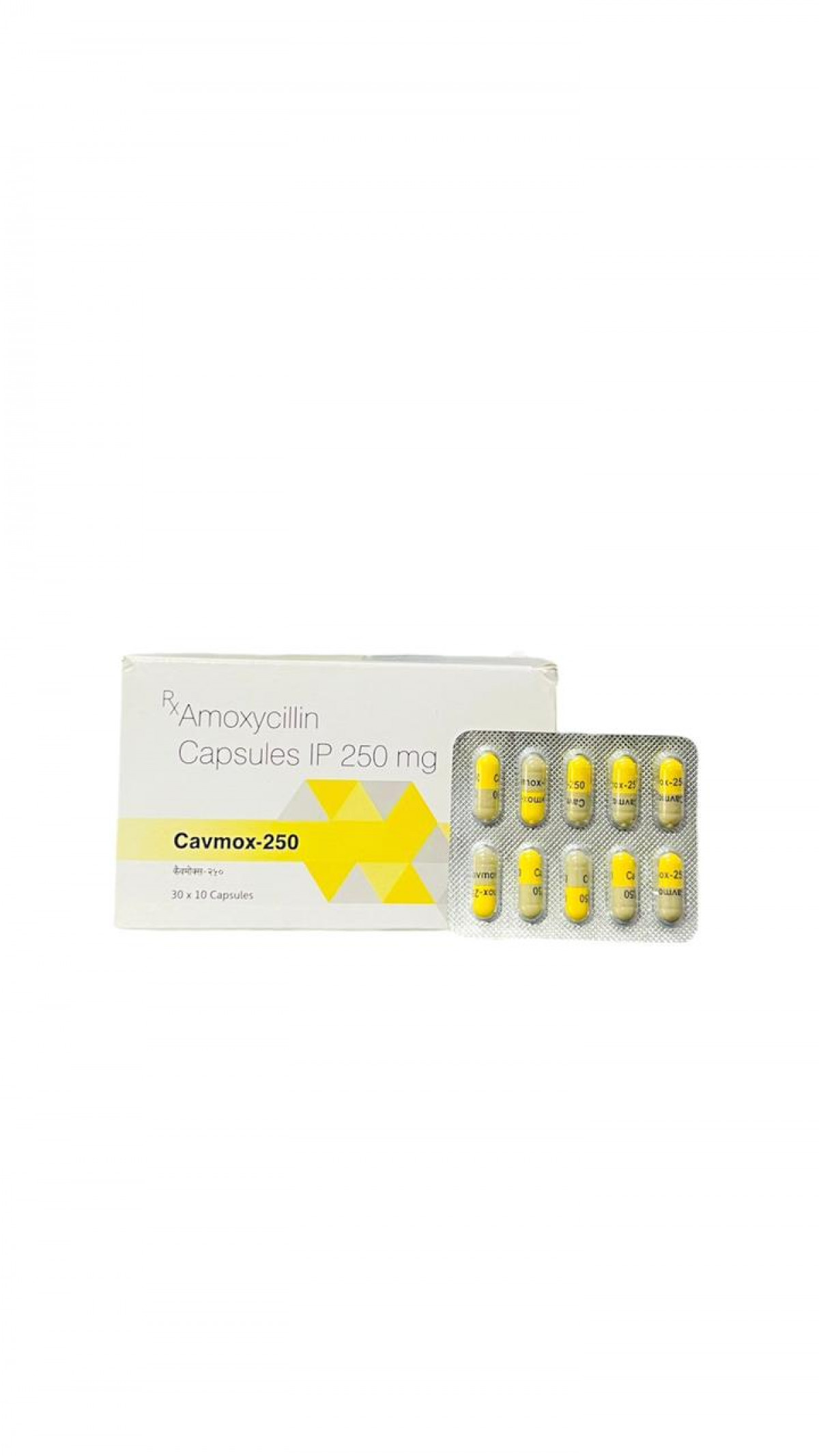
CAVMOX-250 Capsule
Manufactured By Leeford Healthcare
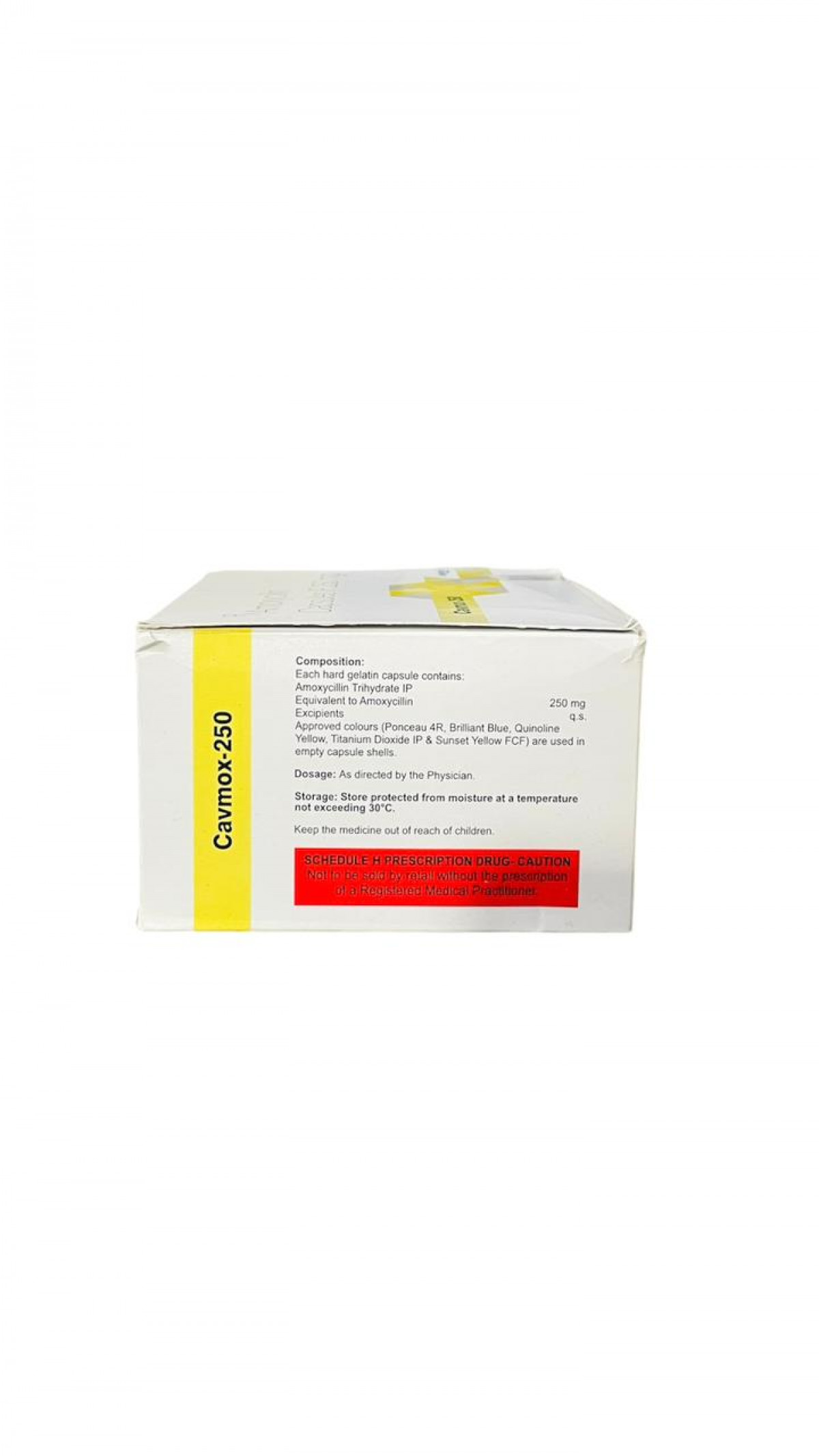
Composition Amoxycillin Trihydrate eq. to Amoxycillin 250 mg (Blister)
Rs 23.80
MRP Rs 27.30
(12.82% OFF)
Includes all taxes
Package SIZE
( 1x10 CAPSULES )

100% Authentic
Products

Free
Shipping*

Products
Return Policy
Description:
Pregnancy interaction
A doctor can give you amoxycillin if you are pregnant and it is safe to take. Studies on humans have not demonstrated any risk to the fetus. But it should only be used when it's really essential and with a doctor's permission.
Amoxycillin is safe for breastfeeding moms because it is only released in minute amounts into breast milk. You should keep an eye on the baby for minor diarrhea, a rash on the skin, or oral thrush.
FAQs for Medicine
Q1: What is the purpose of the CAVMOX-250 capsule?
It is used to treat a lot of different bacterial infections, like those in the soft tissues, skin, throat, ears, and respiratory and urinary tracts.
Q2: Is it okay to take CAVMOX-250 Capsule for viral infections?
No. It only works against bacterial infections, not viral ones like the flu or the common cold.
Q3. Is it okay to take it on an empty stomach?
Taking it after a meal is best because it helps the body absorb it better and doesn't upset the stomach.
Q4. What should I do if I forget to take a dose?
As soon as you recall, take it. If it's almost time for the next dose, omit the one you missed. Don't take two doses.
Q5. Is it safe for kids?
Yes, but only in the amounts that a pediatrician says are safe. Without a proper prescription, children should not be given adult pills.
Q6. Can I stop taking it when I feel better?
No. Follow your doctor's advice and finish the whole course. Stopping too soon can make the infection come back or make the antibiotics less effective.
Experts advice
- Take the capsule with a glass of water after every meal.
- Even if you start to feel better early, you should finish the whole course of therapy.
- If you know you are allergic to penicillin, do not take this drug.
- Tell your doctor right away if you have a rash, itching, swelling, or trouble breathing.
- While taking this medicine, drink a lot of water.
- Let your doctor know if you are taking methotrexate, blood thinners, or allopurinol.
- Don't take medicine on your own or utilize old antibiotics.
Side Effects
- Feeling sick and throwing up
- Diarrhea
- Pain in the stomach
- A little rash or irritation on the skin
- Serious yet uncommon adverse effects:
- Severe allergic responses include swelling of the face, throat, or lips and trouble breathing.
- Yellowing of the skin or eyes (a indication of a liver disease)
- Chronic or intense diarrhea (potential C. difficile infection)
- Bleeding or bruising that isn't normal
- Get medical help if you have serious side effects.
How It Works
Amoxycillin, a broad-spectrum penicillin-class antibiotic, is included in the CAVMOX-250 Capsule.
It works by stopping the bacteria from making their cell walls, which makes them weaker, breaks them apart, and kills them. This stops the illness from getting worse and helps the body heal.
Medicines interaction
- Allopurinol: may make skin rashes more likely.
- Warfarin or other blood thinners may make bleeding more likely; INR levels should be checked.
- Amoxycillin lowers the clearance of methotrexate, which raises the risk of toxicity.
- Oral contraceptives: may make other forms of birth control less effective; adopt a different method.
- Chloramphenicol or tetracyclines may stop amoxycillin from working.
- You should always tell your doctor about any other drugs you are taking.
How to Use
- Take the CAVMOX-250 capsule with water and swallow it whole.
- Take it after eating to avoid upsetting your stomach.
- For constant effectiveness, keep the doses at the same time.
- Don't miss doses or stop the medication too soon.
- Keep it in a cool, dry area out of the sun.
Uses/Indications
- Infections of the respiratory tract: bronchitis, pneumonia, sinusitis, and tonsillitis
- Otitis media and pharyngitis are infections of the ear, nose, and throat.
- Infections of the urinary tract (UTIs)
- Infections affecting the skin and soft tissue
- Infections in the mouth
- Infections in the digestive system (like typhoid, if there are sensitive bacteria)