
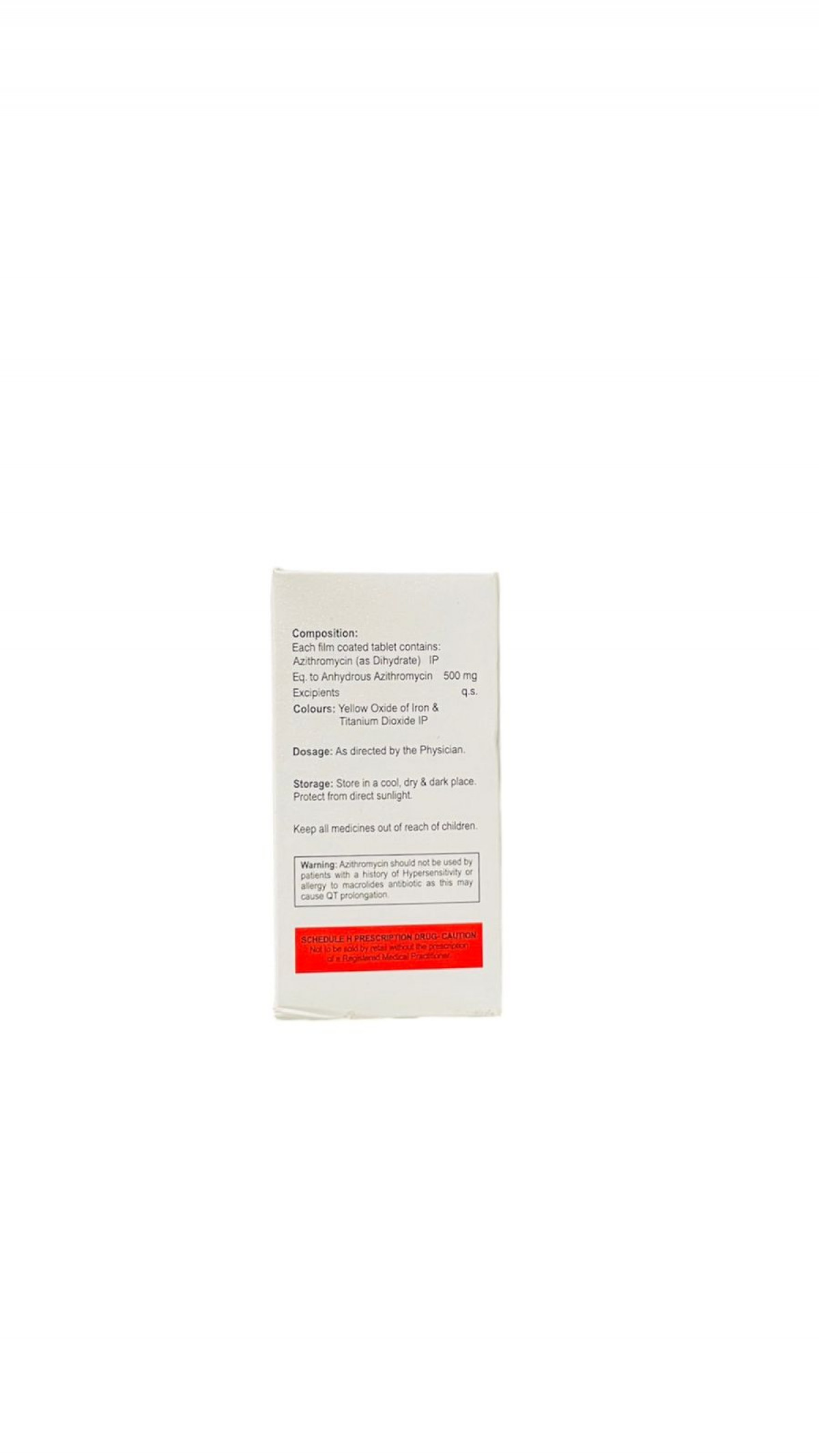
AZIFORD-500 Tablet
Manufactured By Leeford Healthcare
Composition Azithromycin 500 mg (Blister)
Rs 78.00
MRP Rs 131.90
(40.86% OFF)
Includes all taxes
Package SIZE
( 1x5 TABLETS )

100% Authentic
Products

Free
Shipping*

Products
Return Policy
Description:
Pregnancy interaction
- If a skilled doctor prescribes it, AZIFORD-500 Tablet is usually safe to take during pregnancy.
- The U.S. FDA says that azithromycin is in Pregnancy Category B, which means that studies on animals have shown that it doesn't hurt the fetus, and studies on humans haven't shown that it does.
- When it is evident that a pregnant woman has an infection, it is commonly given to her for respiratory or urinary tract infections.
- But you should only take it under the care of a doctor, especially in the first trimester.
- If you have recurrent vomiting, diarrhea, or allergic reactions while taking this prescription during pregnancy, you should always tell your doctor.
FAQs for Medicine
Q1: What is AZIFORD-500 Tablet used for?
It is used to treat several types of bacterial infections, such as those in the throat, lungs, ears, skin, and genitals.
Q2: Is it safe for me to use AZIFORD-500 while I'm pregnant?
If your gynecologist or doctor prescribes it for a verified bacterial infection, it is safe.
Q3: Is it safe to do while breastfeeding?
Azithromycin does go into breast milk, but it's usually harmless. Keep an eye out for signs of diarrhea, a rash, or being cranky in your infant.
Q4: For how long should I take AZIFORD-500?
The length of treatment normally varies from 3 to 5 days, depending on the nature and severity of the illness. Follow all of your doctor's directions.
Q5: Is it okay to quit taking it when I feel better?
No. Stopping too soon could make the infection come back and make antibiotics less effective.
Q6: Is it okay to use AZIFORD-500 with antacids?
Don't take antacids within two hours of this tablet, as they can make it less effective.
Expert advice
- Take the tablet on an empty stomach, either an hour before or two hours after a meal.
- Even if your symptoms get better quickly, you should finish the course.
- Don't take medicine on your own or utilize old antibiotics.
- Don't mix it with alcohol or other medications that lengthen the QT interval unless your doctor tells you to.
- People with liver disease, heart rhythm problems, or kidney problems should talk to their doctor before using this.
- Do not take anti-diarrheal drugs without first talking to a doctor if you have severe diarrhea.
Side effects
- Feeling sick and throwing up
- Diarrhea
- Pain in the stomach
- Headache
- Not wanting to eat
- Feeling dizzy
- Uncommon but dangerous adverse effects:
- An allergic reaction can cause a rash and swelling of the cheeks and tongue.
- Problems with the liver (skin or eyes turning yellow)
- QT prolongation is an irregular heartbeat.
- Severe, long-lasting diarrhea (could be a sign of a Clostridium difficile infection)
- If you have any serious adverse effects, stop taking the prescription right away and call your doctor.
How it works
- The active element of AZIFORD-500 is azithromycin, which is a type of macrolide antibiotic.
- It stops bacteria from growing and multiplying by stopping the production of bacterial proteins.
- It builds up in body tissues, which means it keeps working as an antibacterial even after treatment is over.
- This characteristic makes it possible to take it in short courses once a day.
Medicine interaction
- Antacids with aluminum or magnesium in them: Make it harder for the body to absorb.
- Warfarin and other anticoagulants: These drugs may make you bleed more.
- Digoxin: Could make digoxin levels in the blood higher.
- Ergotamine or dihydroergotamine: Can cause serious vascular reactions; therefore, don't take them together.
- Ciclosporin: It could raise ciclosporin levels; therefore, you might need to change the dose.
- QT-prolonging drugs, like amiodarone, sotalol, and quinidine, may make it more likely that your heart may beat irregularly.
- Before you start taking this antibiotic, always provide your doctor a list of all the drugs and supplements you are currently taking.
How to Use
- Take one tablet every day or as your doctor tells you to.
- Take it all at once with a glass of water.
- For best absorption, take it on an empty stomach.
- Take it at the same time every day.
- If you forget to take a dose, do so as soon as you recall, but don't double the dose if it's almost time for the next one.
- Even if your symptoms get better quickly, you should still take the whole course.
Uses/indications
- Infections in the upper respiratory tract include sinusitis, pharyngitis, and tonsillitis.
- Infections of the lower respiratory tract include bronchitis and pneumonia.
- Otitis media, or ear infections
- Infections affecting the skin and soft tissue, include cellulitis and impetigo
- Infections of the genitals (Chlamydia trachomatis, Neisseria gonorrhoeae)
- Typhoid fever and some gastrointestinal infections (as directed by a physician)
- Dental and mouth diseases instigated by sensitive microorganisms