


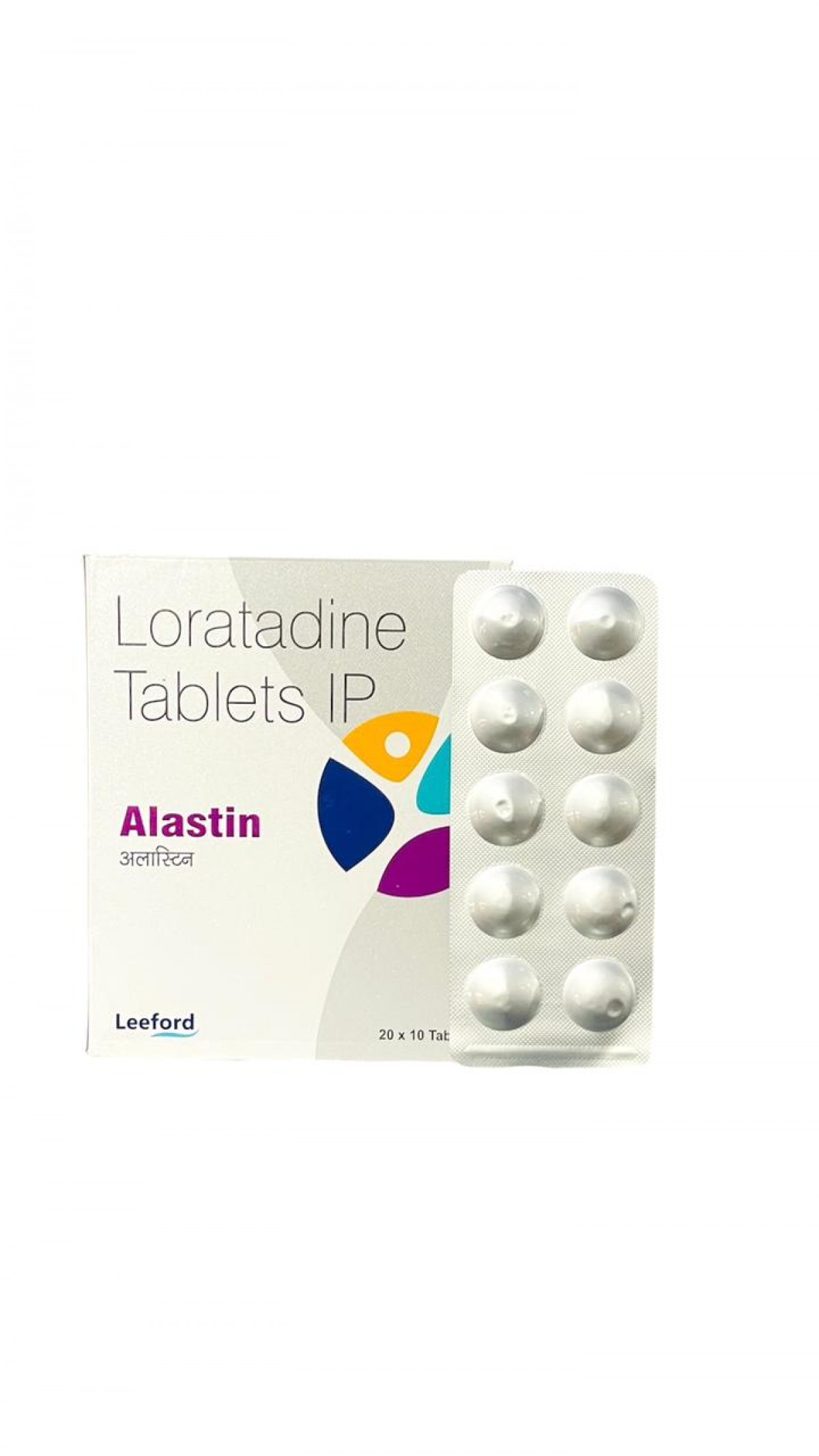
ALASTIN Tablet
Manufactured By Leeford Healthcare
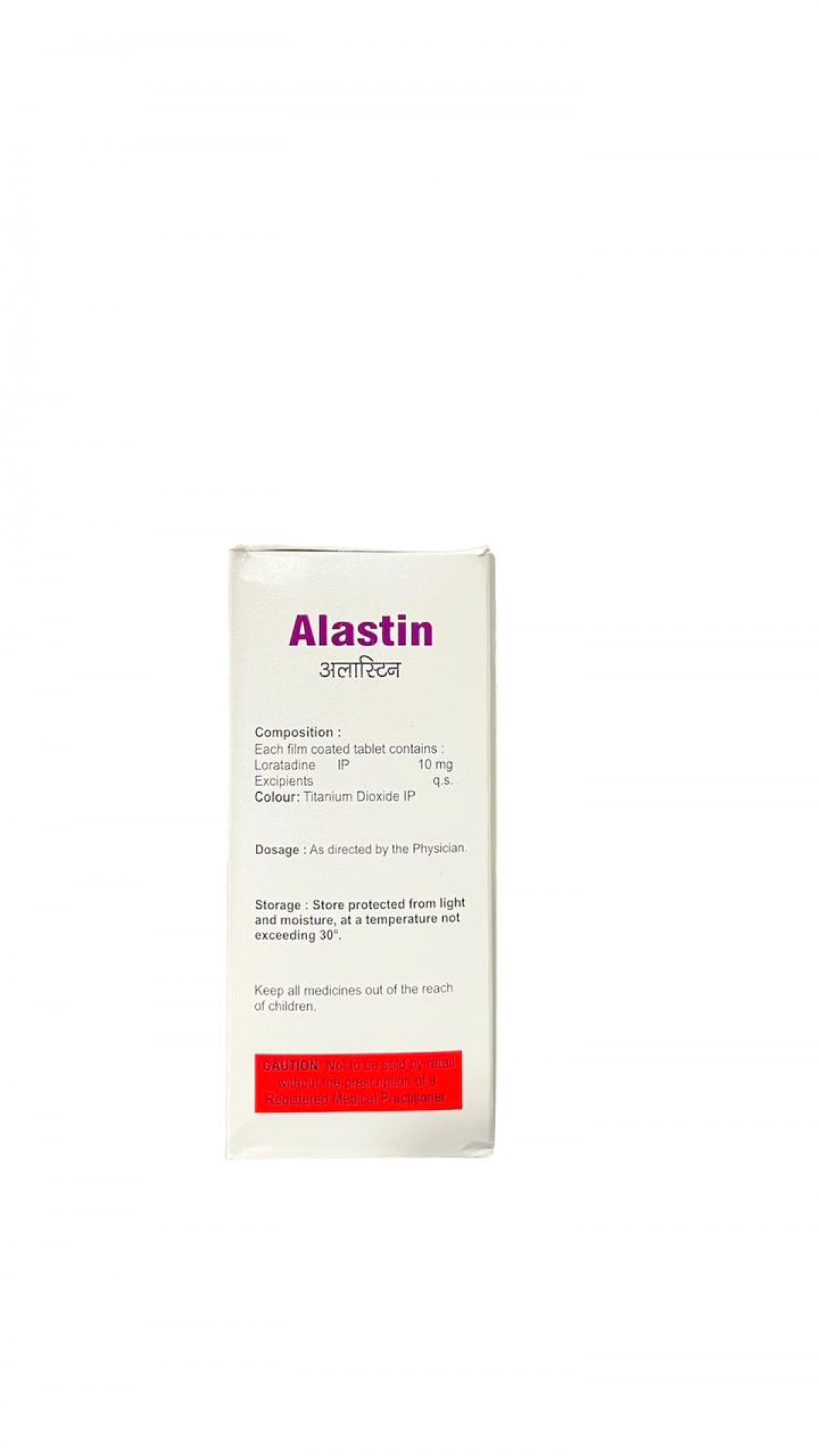
Composition Loratadine 10 mg (Alu-Alu)
Rs 24.50
MRP Rs 49.00
(50% OFF)
Includes all taxes
Package SIZE
( 1x10 TABLETS )

100% Authentic
Products

Free
Shipping*

Products
Return Policy
Description:
Pregnancy interaction
- When a doctor prescribes loratadine 10 mg (ALASTIN Tablet), it is usually safe to use during pregnancy.
- Studies on animals have not revealed any damage to the developing infant, but there is not much data on humans.
- The U.S. FDA says it is a Category B medicine, which means that animal studies have not shown a risk, but there haven't been enough trials in pregnant women.
- Talk to your doctor before using loratadine while pregnant, especially in the first three months.
- If you're pregnant or trying to get pregnant, only use it with a doctor's permission.
FAQs for Medicine
Q1: What is the purpose of the ALASTIN Tablet (Loratadine 10 mg)?
It is an antihistamine that helps with allergy symptoms such as runny nose, sneezing, watery eyes, and itching from allergic rhinitis, hay fever, or skin allergies like urticaria.
Q2: Is it okay to take an ALASTIN tablet every day?
Yes, your doctor may tell you to take it once a day. Do not take more than the suggested amount.
Q3. Does loratadine make you sleepy?
No, loratadine is a non-sedating antihistamine; thus, it doesn't normally make you sleepy like previous antihistamines do.
Q4. Is it okay to take ALASTIN Tablet with food?
Yes, you can take it with or without food. Eating does not change how well it absorbs.
Q5. Is it safe to take ALASTIN Tablet during breastfeeding?
A limited amount of loratadine gets into breast milk. Be careful when using it while breastfeeding. Always talk to your doctor before using.
Q6. What should I do if I forget to take a dose?
Take it as soon as you remember. If it's almost time for your next dose, don't take the one you missed. Don't take twice as much.
Expert advice
- Take loratadine once a day at the same time to keep your symptoms under control.
- Loratadine doesn't make you sleepy, but you should still stay away from alcohol and other sedatives to avoid feeling tired or dizzy.
- Tell your doctor if you have liver problems, because the dose may need to be changed.
- Do not use ALASTIN for longer than necessary; only use it as long as symptoms last.
- If your symptoms get worse or don't go away after 7 to 10 days, see your doctor.
- Most people and children over 6 years old can use it safely, but only with a doctor's permission.
Side effects
- Head pain
- Tiredness
- Mouth that is dry
- Feeling nervous or a little dizzy
- Feeling sick
- Uncommon side effects:
- Rash or swelling from an allergy
- Fast heartbeats (palpitations)
- Changes in liver enzymes (rare and can be reversed)
- Call your doctor right away if you detect any strange or serious symptoms.
How It Works
- Loratadine is a second-generation antihistamine that only targets H1 histamine receptors.
- Histamine is a substance that the body makes when it has an allergic reaction. It makes you sneeze, itch, and have a runny nose and watery eyes.
- Loratadine stops histamine from working, which stops and reduces allergy symptoms without making you very sleepy.
- It usually lasts for 24 hours, so you only need to take it once a day.
Medicines interaction
- Don't take ALASTIN (Loratadine 10 mg) with:
- Alcohol: may make you a little more sleepy.
- Erythromycin, ketoconazole, or cimetidine may boost the levels of loratadine in the blood and make side effects worse.
- Combining other antihistamines may have further effects.
- Drugs that change liver enzymes should be used with care, and their doses should be watched.
- Always tell your doctor about any supplements, drugs, or herbal products you are taking.
How to Use
- Take one pill per day, or as directed.
- Do not crush or chew. Just swallow whole with water.
- You can take it with or without food.
- Unless your doctor tells you to, don't take more than 10 mg in 24 hours.
- Keep it in a cool, dry area away from sunlight and moisture.
- Keep away from kids.
Uses/indications
- Allergic rhinitis (sneezing, stuffy nose, itchy nose)
- Allergies that happen at certain times of the year or all year round
- Skin allergies like urticaria (hives) and others
- Itchy or watery eyes because of allergies
- A runny nose and a sore throat
- Allergic reactions induced by dust, pollen, pet hair, or anything in the environment