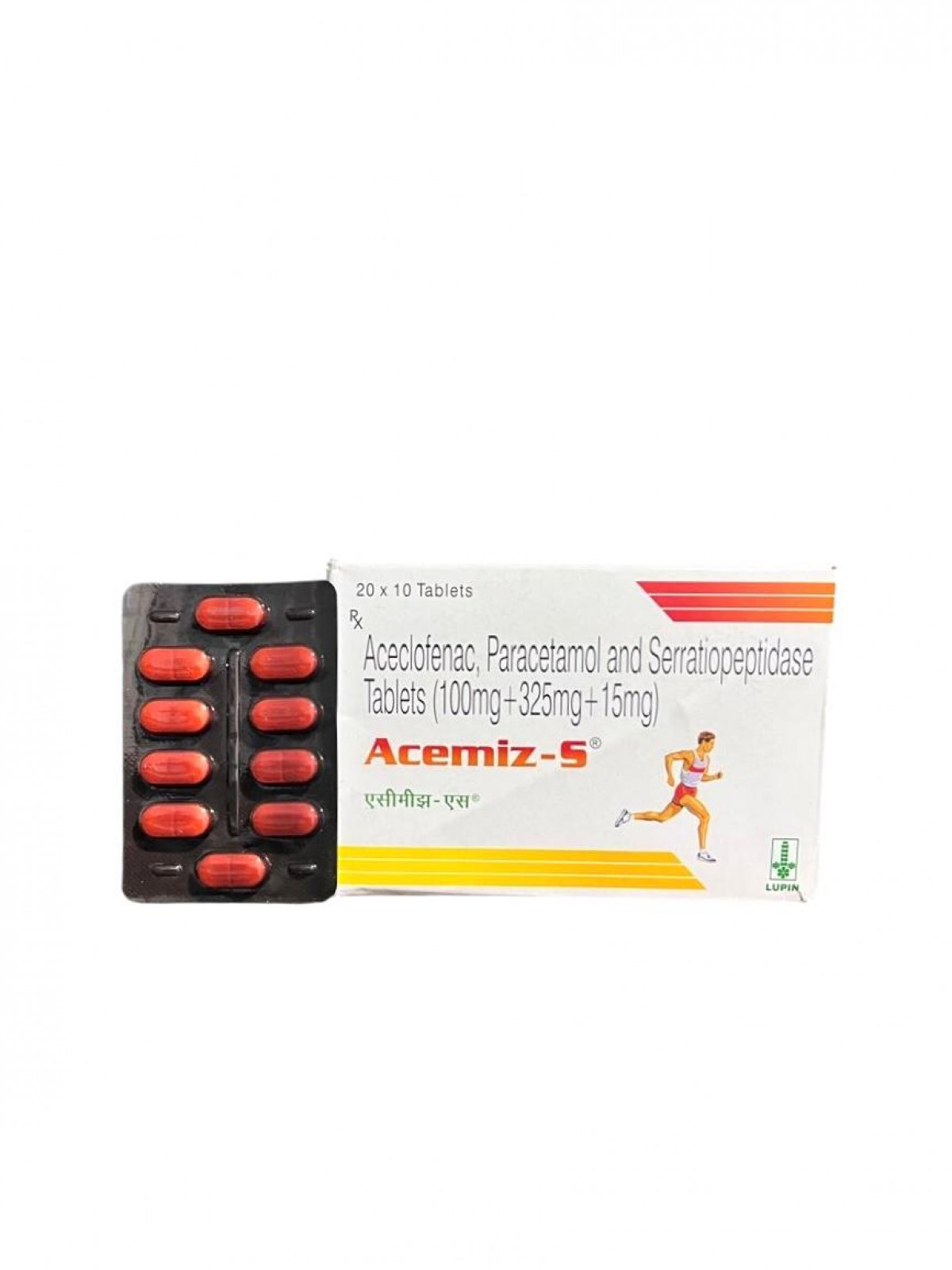
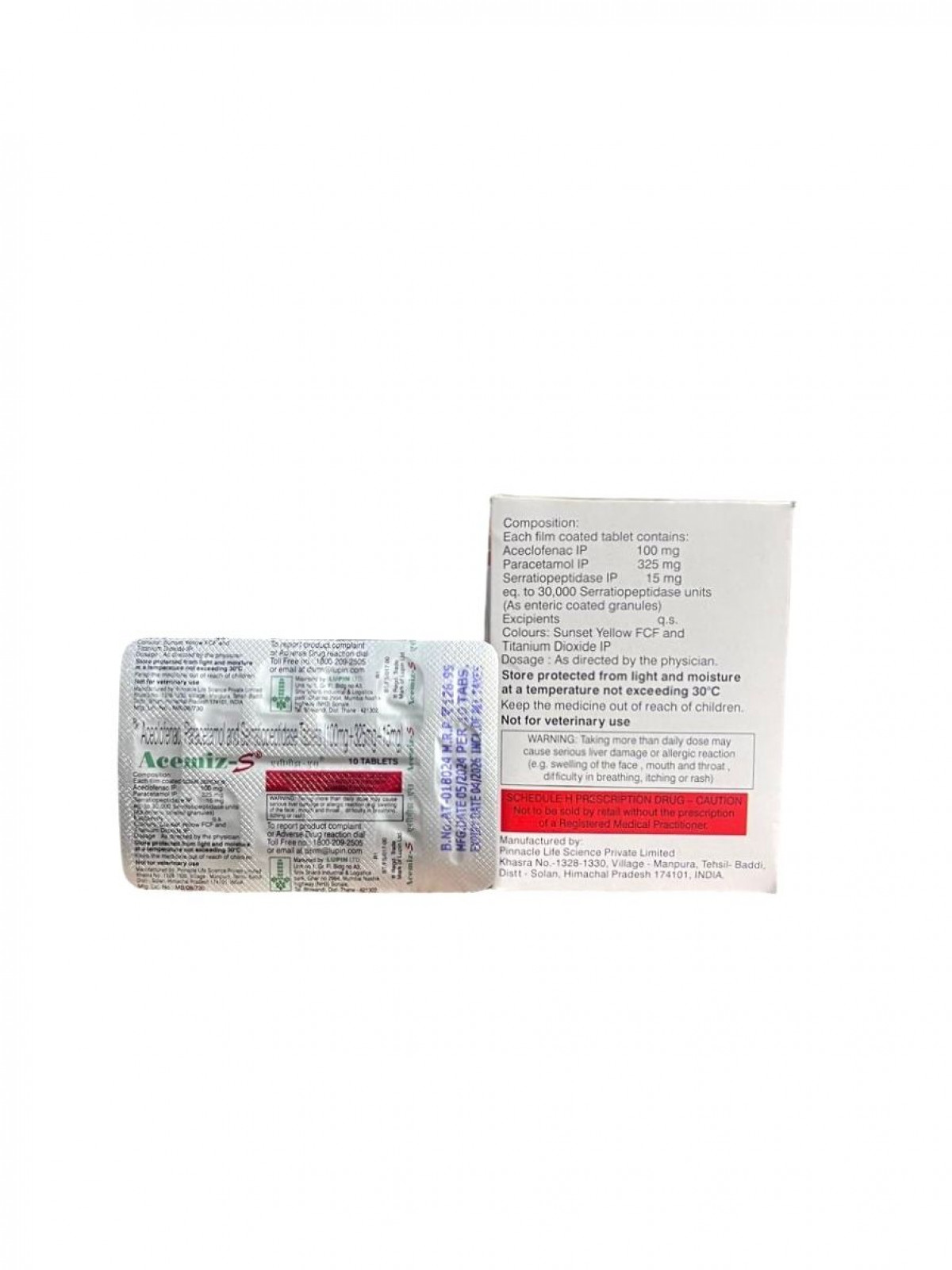
Uses / Indications:
Pain and inflammation in osteoarthritis, rheumatoid arthritis, or ankylosing spondylitis
Musculoskeletal pain, sprains, and strains
Post-operative or post-traumatic swelling and pain
Tendonitis, bursitis, and soft tissue injuries
General anti-inflammatory and analgesic use in adults
Pregnancy interaction:
Pregnancy Interaction
Aceclofenac is an NSAID; Serratiopeptidase is a proteolytic enzyme.
NSAIDs like Aceclofenac:
Should be avoided in the 3rd trimester due to risk of fetal heart (ductus arteriosus) and kidney issues.
Use in early pregnancy only if prescribed by a doctor.
Serratiopeptidase: Limited data; avoid unless prescribed.
Overall, use only under medical supervision during pregnancy.
Caution is advised while breastfeeding.
Expert advice:
Take exactly as prescribed; do not exceed the recommended dose.
Take with food, milk, or water to minimize stomach upset.
Avoid alcohol while taking this medicine, as it may increase the risk of stomach irritation.
Inform your doctor if you have kidney, liver, heart problems, or gastrointestinal issues.
Report any unusual bruising, black stools, or severe abdominal pain immediately.
Side Effects:
Common:
Nausea or vomiting
Mild stomach pain or indigestion
Heartburn
Dizziness
Less common:
Diarrhea or constipation
Skin rash or itching
Serious (rare):
Stomach or intestinal ulcers, bleeding
Liver or kidney dysfunction
Severe allergic reactions
Swelling or shortness of breath
How to use:
Take 1 tablet orally, twice daily or as prescribed by your doctor.
Swallow the tablet whole with water, preferably after food.
Do not crush or chew.
Follow the full course as prescribed, even if symptoms improve early.
How it works:
Aceclofenac: A nonsteroidal anti-inflammatory drug (NSAID) that inhibits cyclooxygenase (COX) enzymes, reducing prostaglandin formation, which causes pain, swelling, and inflammation.
Serratiopeptidase: A proteolytic enzyme that breaks down proteins in inflamed tissues, helping to reduce swelling and improve healing.
The combination provides pain relief, anti-inflammatory action, and faster recovery from tissue injury.
Faq for medicine:
Q. What is ACEMIZ-S used for?
It is used to reduce pain, inflammation, and swelling in conditions like arthritis, musculoskeletal disorders, and post-surgical inflammation.
Q. Can it be used for fever?
It is primarily for pain and inflammation, not routine fever reduction.
Q. Is it safe for long-term use?
Long-term NSAID use may increase the risk of stomach ulcers, kidney issues, or heart problems. Use only as prescribed.
Q. Can children take this medicine?
Not generally recommended for children unless prescribed by a doctor.
Q. Can it be taken with food?
Yes, taking with food reduces stomach irritation.
Medicine interaction:
May interact with other NSAIDs, increasing risk of gastrointestinal bleeding.
May enhance effects of anticoagulants (blood thinners) → increased bleeding risk.
May interact with ACE inhibitors, diuretics, or lithium → kidney or blood pressure issues.
Avoid combining with alcohol or other ulcer-causing drugs.